5th Wheel vs Travel Trailer: Your Ultimate Guide to Choosing the Perfect RV
Dreaming of hitting the open road, exploring national parks, or simply enjoying the freedom of a mobile home? For many, the first big decision in RV ownership comes down to two popular choices: a 5th wheel or a travel trailer. Both offer incredible ways to travel, but they have key differences that greatly impact your experience.
Choosing the right RV is more than just picking a size. It involves understanding how you’ll tow it, how much space you need, and what kind of adventures you plan to have. This guide will break down everything you need to know about 5th wheels and travel trailers. By the end, you’ll feel confident in picking the perfect RV for your lifestyle and budget. Let’s dive in and find your ideal home on wheels!
Key Takeaways
- Towing Differences: 5th wheels connect to a special hitch in a truck’s bed, offering more stability. Travel trailers connect to a bumper hitch, making them more flexible with tow vehicles.
- Interior Space: 5th wheels often provide more vertical space and separate living areas due to their raised front section. Travel trailers typically have a single-level floor plan.
- Tow Vehicle Requirements: 5th wheels almost always need a heavy-duty pickup truck (3/4 ton or 1-ton). Many travel trailers can be towed by lighter trucks or even some SUVs.
- Cost Considerations: Travel trailers often have a lower initial purchase price. However, the total cost depends on size, features, and tow vehicle needs for both types.
- Maneuverability: 5th wheels can be easier to back up and maneuver in tight spots due to their pivot point being over the truck’s rear axle.
Understanding the Basics: What Are They?
Before we compare them, let’s get clear on what a 5th wheel and a travel trailer actually are. Both are types of towable recreational vehicles, meaning they don’t have their own engine. You need a separate vehicle to pull them.
What is a Travel Trailer?
A travel trailer is an RV that hitches to the back of a tow vehicle using a standard ball hitch. This hitch is usually mounted on the bumper or a frame-mounted receiver. They come in a huge range of sizes, from small
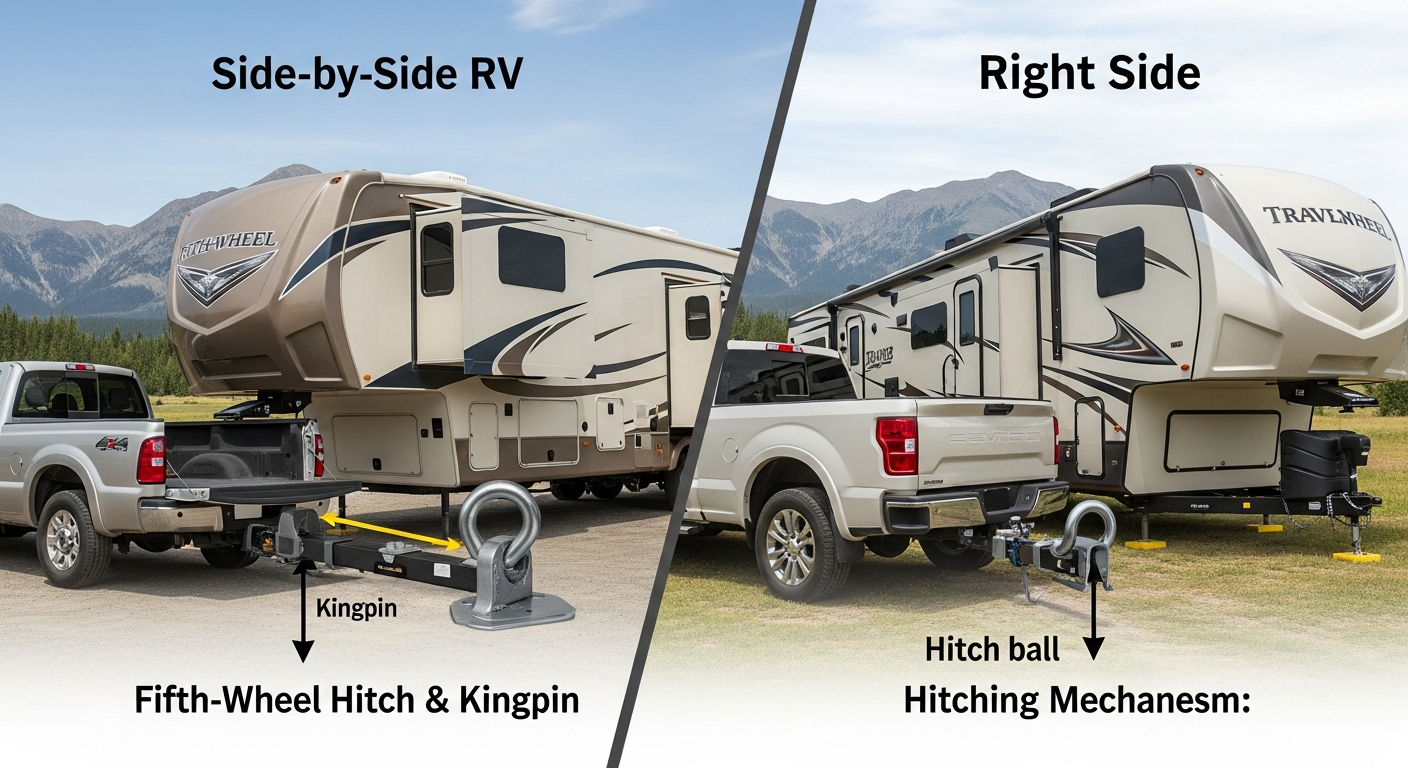
teardrops to massive units over 40 feet long. They are generally more affordable and offer a wide variety of floor plans. Their versatility in tow vehicles is a big draw, as many half-ton trucks and even some large SUVs can handle smaller to mid-sized travel trailers. However, their bumper-hitch connection can sometimes lead to more sway during towing compared to a 5th wheel, especially in windy conditions or when passed by large trucks. Travel trailers are popular for their accessibility, diverse options, and often lower maintenance costs. They are perfect for weekend warriors, small families, or those who prefer a more straightforward towing setup.
What is a 5th Wheel?
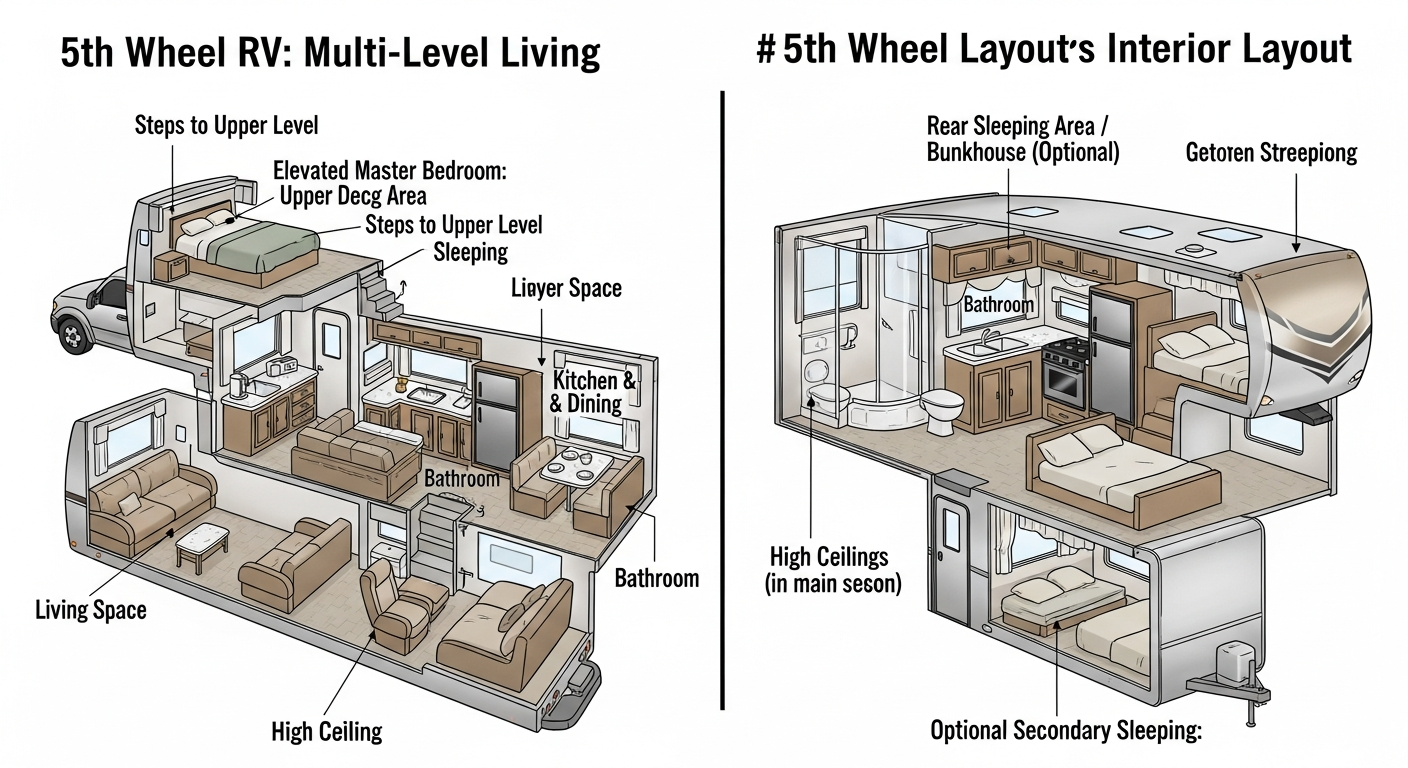
A 5th wheel is distinguished by its unique gooseneck-like extension that overlaps the bed of a pickup truck, connecting to a special 5th wheel hitch directly over the rear axle. This design provides a more stable and secure towing experience, significantly reducing sway and offering a tighter turning radius. The raised front section of a 5th wheel often creates a split-level interior, allowing for higher ceilings in the main living area and a dedicated bedroom or storage space above the truck bed. They are generally larger and heavier than most travel trailers, requiring a heavy-duty pickup truck (3/4-ton or 1-ton) for safe towing. 5th wheels are often favored by those seeking more residential-style living, with ample storage, larger kitchens, and more distinct living zones, making them a popular choice for full-timers or extended trips.
In-Depth Comparison: 5th Wheel vs. Travel Trailer
Now that we understand the basics, let’s dive into a more detailed comparison of these two popular RV types across various critical factors.
1. Towing Experience and Stability
- 5th Wheel: The hitch placement directly over the truck’s rear axle is the game-changer here. This central pivot point provides superior stability, reduces sway, and makes the RV feel more like an extension of the truck. Many drivers find 5th wheels easier to back up and maneuver in tight spaces, as the pivot point is closer to the driver. The weight distribution is also more favorable, putting less strain on the truck’s rear bumper.
- Travel Trailer: Towed via a bumper-mounted hitch, travel trailers are prone to more sway, especially longer units or in adverse weather conditions. While weight distribution hitches and sway control devices greatly mitigate this, a travel trailer will generally feel less stable than a 5th wheel. Backing up can be more challenging for beginners due to the longer pivot point behind the tow vehicle.
2. Interior Space and Layout
- 5th Wheel: The defining feature of a 5th wheel’s interior is its split-level design. The raised front section typically houses the master bedroom, often with higher ceilings and more storage than you’d find in a travel trailer bedroom. This design also allows for taller ceilings in the main living area, creating a more open and spacious feel. Many 5th wheels offer multiple slide-outs, expanding living areas, kitchens, and sometimes even bathrooms, providing a true home-like environment with distinct zones.
- Travel Trailer: Most travel trailers feature a single-level floor plan, which can be advantageous for those with mobility issues or who prefer a more continuous flow. While they come in all sizes, the vertical space is generally more limited than in a 5th wheel. However, modern travel trailers are incredibly efficient with space, often featuring clever storage solutions and innovative layouts. They can also offer significant living space, especially in larger models with multiple slide-outs.
3. Tow Vehicle Requirements
- 5th Wheel: This is where 5th wheels have a more stringent requirement. Almost all 5th wheels necessitate a heavy-duty pickup truck – typically a 3/4-ton (2500/250) or 1-ton (3500/350) model. The truck must have the payload capacity to handle the 5th wheel’s pin weight (the weight resting on the hitch in the truck bed) and the towing capacity for its gross vehicle weight rating (GVWR). Diesel engines are often preferred for their torque and towing longevity.
- Travel Trailer: Travel trailers offer much more flexibility. Smaller units can be towed by some SUVs, minivans, or half-ton (1500/150) pickup trucks. Mid-sized travel trailers are well within the capabilities of most half-ton trucks. Larger travel trailers, especially those over 30 feet, may still require a 3/4-ton truck for optimal safety and performance. Always check the specific trailer’s GVWR and your vehicle’s towing capacity.
4. Cost Considerations
- Initial Purchase Price: Travel trailers generally have a lower entry price point. You can find small, new travel trailers for under $20,000, while larger, feature-rich models can go upwards of $80,000-$100,000. 5th wheels typically start higher, often in the $40,000-$60,000 range for smaller models, and luxury units can easily exceed $150,000-$200,000.
- Tow Vehicle Cost: This is a significant factor. If you don’t already own a heavy-duty truck suitable for a 5th wheel, you’ll need to factor in the considerable expense of purchasing one, which can easily add $50,000 to $90,000+ to your total investment. The cost of a tow vehicle for a travel trailer might be less if you already own a capable SUV or a half-ton truck.
- Maintenance & Insurance: Maintenance costs can be similar for comparable sizes, though 5th wheels might have more complex systems due to their larger size. Insurance premiums can also vary, often reflecting the RV’s value.
5. Maneuverability and Parking
- 5th Wheel: As mentioned, the hitch placement above the axle makes 5th wheels generally easier to back into campsites and navigate tight turns. The trailer follows the truck more closely, reducing the ‘jackknifing’ effect. However, their overall length, including the truck, can be considerable, making some smaller campgrounds a challenge.
- Travel Trailer: While modern travel trailers with good sway control are manageable, backing up can have a steeper learning curve. The pivot point being further back means the trailer reacts differently to steering input. Their shorter combined length (truck + trailer) in some configurations might make them easier to fit into certain spots.
6. Resale Value
Both RV types generally hold their value well, especially if maintained properly. Demand for both remains strong. Factors like brand reputation, condition, features, and floor plan popularity will have a greater impact on resale value than the type itself.
Who is a Travel Trailer Best For?
- Budget-Conscious Buyers: Generally lower initial purchase price and often less expensive tow vehicle requirements.
- Variety of Tow Vehicles: Ideal if you want to use your existing SUV or half-ton truck for towing.
- Weekend Warriors & Shorter Trips: Easy to hook up and disconnect for quick getaways.
- Families with Diverse Needs: A wide range of sizes and floor plans to suit different family sizes and preferences.
- Those Who Want to Detach and Explore: Easily unhitch the trailer and use your tow vehicle for sightseeing without moving your entire setup.
- First-Time RVers: Often seen as a more accessible entry point into RVing.
Who is a 5th Wheel Best For?
- Full-Timers & Extended Stays: Offers a more residential feel, larger living spaces, and ample storage for long-term living.
- Those Prioritizing Towing Stability: Superior stability and reduced sway for comfortable long-distance travel.
- Owners of Heavy-Duty Trucks: If you already own a 3/4-ton or 1-ton truck, a 5th wheel becomes a more viable option.
- Couples or Small Families Seeking Luxury & Space: Often come with higher-end finishes, larger kitchens, and more amenities.
- Those Who Value a Dedicated Bedroom: The raised front section often creates a more private and spacious master suite.
Conclusion
Choosing between a 5th wheel and a travel trailer ultimately comes down to your personal priorities, budget, and lifestyle. If you’re looking for an accessible, versatile, and often more affordable option that allows you to use a wider range of tow vehicles, a travel trailer might be your perfect match. It’s fantastic for weekend adventures and exploring with the flexibility to unhitch and go.
However, if you prioritize superior towing stability, a more spacious and residential interior, and are prepared to invest in a heavy-duty tow vehicle, a 5th wheel could be your ultimate home on wheels. It’s ideal for extended trips, full-timing, or those who simply desire more comfort and luxury on the road.
Carefully consider your towing capabilities, desired interior space, budget, and how you plan to use your RV. Whichever you choose, both a 5th wheel and a travel trailer promise unforgettable adventures and the freedom of the open road.
FAQ
Q: Can I tow a 5th wheel with an SUV?
A: No, 5th wheels require a pickup truck with a bed for the specialized hitch. SUVs do not have the necessary bed or typically the payload capacity for a 5th wheel.
Q: Are 5th wheels harder to back up than travel trailers?
A: Many people find 5th wheels easier to back up due to their pivot point being over the truck’s rear axle, which makes the trailer respond more intuitively to steering input. Travel trailers, with their longer pivot point, can have a steeper learning curve for backing.
Q: Which type of RV is better for full-time living?
A: While some people full-time in larger travel trailers, 5th wheels are generally considered superior for full-time living due to their larger interior space, higher ceilings, more distinct living areas, and often greater storage capacity.
Q: Do I need a special driver’s license to tow a 5th wheel or large travel trailer?
A: In most U.S. states, a standard Class D driver’s license is sufficient for recreational towing, as long as the combined weight (truck + RV) does not exceed 26,000 pounds. However, some states have specific requirements for heavier RVs, so always check your local DMV regulations.
Q: Can I tow a travel trailer with a half-ton truck?
A: Yes, many travel trailers, especially those under 30 feet, can be safely towed by a half-ton pickup truck (e.g., Ford F-150, Ram 1500, Chevy Silverado 1500). Always verify your specific truck’s towing capacity and the trailer’s GVWR before purchasing.