Your Essential Guide to 60 Day Travel Insurance
Embarking on a journey that lasts two months or more is an exciting prospect. Whether you are exploring new cultures, working remotely, or visiting loved ones, a longer trip brings unique joys and challenges. One crucial aspect often overlooked is comprehensive travel insurance tailored for extended stays. Standard travel policies usually cover shorter trips, often up to 30 days. For those planning a 60-day adventure, a specialized 60 day travel insurance policy becomes not just a recommendation, but a necessity.
This guide will walk you through everything you need to know about protecting your two-month journey. We will cover what 60 day travel insurance offers, who benefits most, key coverage areas, and how to select the best policy for your specific needs. Understanding your options now can save you significant stress and financial hardship later, ensuring your focus remains on enjoying your travels.
Key Takeaways for Your 60 Day Trip Protection
- Extended Coverage is Crucial: Standard policies often fall short for trips lasting two months. Look specifically for 60 day travel insurance.
- Comprehensive Medical Protection: Ensure your policy covers emergency medical treatment, hospital stays, and emergency evacuation for the entire duration.
- Trip Interruption & Cancellation: Protect your financial investment against unforeseen events that could alter or end your trip early.
- Baggage & Personal Belongings: Guard against loss, theft, or damage to your luggage and valuables while abroad.
- Read the Fine Print: Pay close attention to exclusions, deductibles, and pre-existing condition clauses before purchasing.
What Exactly is 60 Day Travel Insurance?
60 day travel insurance is a type of travel insurance designed specifically for journeys lasting up to 60 consecutive days. Unlike single-trip policies that might cap coverage at 30 or 45 days, these plans provide continuous protection for your entire two-month adventure. They are tailored to the unique risks and needs associated with longer stays away from home.
Beyond the Basics: Understanding Coverage Duration
The most significant difference is the length of time you are covered. A standard travel insurance policy might seem cheaper upfront. However, if your trip extends beyond its maximum duration, you could find yourself completely unprotected. A 60 day policy ensures you have a safety net for the full duration, from the moment you depart until you return home.

This extended coverage is vital for peace of mind. It means you will not have to worry about your policy expiring while you are still abroad, potentially facing an emergency without support. Always confirm the exact start and end dates of your coverage when purchasing.
Why 60 Days? Common Trip Lengths Explained
The 60-day timeframe is popular because it aligns with many common travel scenarios. Many visas allow stays of up to 60 or 90 days. People often plan two-month sabbaticals, extended backpacking trips, or longer visits to family. For these travelers, a policy that specifically covers 60 days removes the hassle of trying to combine multiple shorter policies or risking being underinsured.
It is a sweet spot for many travelers, offering ample time for exploration without committing to a full multi-month or annual plan. This makes 60 day travel insurance a flexible and cost-effective solution for a significant portion of long-term travelers.
Who Needs 60 Day Travel Insurance Most?
While anyone planning a two-month trip can benefit, certain groups find 60 day travel insurance particularly indispensable. Understanding if you fall into one of these categories can help you prioritize this essential protection.
Digital Nomads and Extended Vacations
Digital nomads often travel for extended periods, working from different locations around the world. A 60-day policy perfectly suits those who move between countries every couple of months. Similarly, individuals taking a long vacation to thoroughly explore a region will find this coverage ideal. It provides the necessary protection without the commitment of an annual multi-trip policy, which might not be suitable if you only travel once a year for a long duration.
Business Travelers on Longer Assignments
Some business assignments require employees to stay abroad for several weeks. A 60 day travel insurance plan ensures that these professionals are covered for any health emergencies, travel delays, or lost equipment during their extended work trip. It protects both the individual and the company from unexpected financial burdens.
Backpackers and Adventurers
Backpackers often embark on multi-country tours that can easily stretch to 60 days. These travelers frequently engage in activities that carry higher risks, such as hiking, diving, or exploring remote areas. A specialized 60 day policy can offer crucial medical and emergency evacuation coverage, which is vital when far from advanced healthcare facilities. It is especially important for those venturing off the beaten path.
Core Benefits of a 60 Day Policy
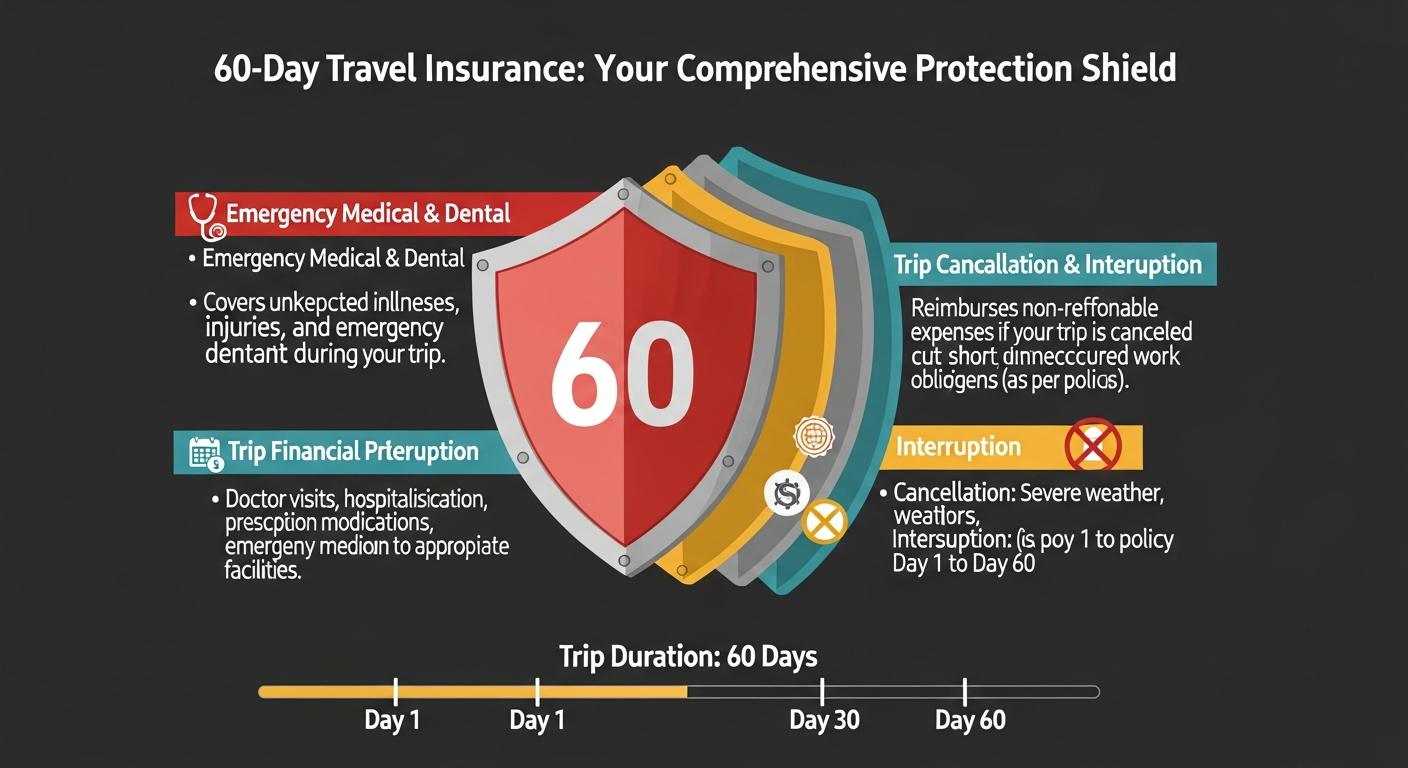
Opting for a 60 day travel insurance policy provides a robust shield against various travel-related risks. Here are the main benefits you can expect:
- Emergency Medical Expenses: This is often the most critical component. It covers hospital stays, doctor visits, surgery, and prescription medications due to unexpected illness or injury during your trip. Medical costs abroad can be astronomical, making this coverage invaluable.
- Emergency Medical Evacuation: If you suffer a severe injury or illness in a remote area, this benefit covers the cost of transporting you to the nearest appropriate medical facility or even back to your home country.
- Trip Cancellation and Interruption: Many policies also include coverage for trip cancellation or interruption. This means if your trip is cut short or you cannot go due to covered reasons, you could get your money back. Imagine planning a two-month adventure across Southeast Asia. If a sudden family emergency forces you to return home early, your 60 day travel insurance could help cover the costs of your unused trip segments and your unexpected flight back. It offers a financial safety net when the unexpected happens far from home.
- Baggage Loss, Delay, or Damage: Losing your luggage can be a nightmare. This benefit helps cover the cost of replacing essential items if your bags are lost, stolen, or damaged. It also provides funds for emergency purchases if your luggage is delayed for an extended period.
- Travel Delay: If your flight or other transportation is significantly delayed, this coverage can reimburse you for unexpected expenses like meals and accommodation during the delay.
- Personal Liability: This protects you if you accidentally cause injury to another person or damage their property while traveling. It covers legal defense costs and any compensation you might be required to pay.
Key Coverage Areas to Look For
When comparing 60 day travel insurance policies, it is essential to look closely at the details of each coverage area. Not all policies are created equal, and what one covers generously, another might limit. Here is a comparison of typical coverage you should consider:
| Coverage Type | What it Typically Includes | Why it Matters for 60 Days |
| **Emergency Medical** | Doctor visits, hospital stays, surgery, prescription drugs, ambulance services. | Longer trips increase exposure to illnesses or accidents. High medical costs abroad. |
| **Medical Evacuation** | Transport to medical facilities or repatriation to home country. | Crucial for remote destinations or severe conditions requiring specialized care. |
| **Trip Cancellation/Interruption** | Reimbursement for non-refundable costs if trip is canceled or cut short for covered reasons. | Protects significant financial investment in a longer, potentially more expensive trip. |
| **Baggage & Personal Items** | Reimbursement for lost, stolen, or damaged luggage and personal belongings. | Higher chance of incidents over two months. Essential for replacing necessities. |
| **Travel Delay** | Funds for accommodation, meals, and transport during covered travel delays. | More opportunities for delays on longer or multi-leg journeys. |
| **Personal Liability** | Legal costs and compensation if you accidentally injure someone or damage property. | Added protection for unforeseen accidents in unfamiliar environments. |
Choosing the Right 60 Day Travel Insurance
Selecting the best 60 day travel insurance policy requires careful consideration of your personal circumstances and travel plans. Do not just pick the cheapest option; ensure it truly meets your needs.
Assessing Your Needs: Destination, Activities, Health
Start by evaluating your trip specifics:
- Destination: Are you going to a country with high medical costs, like the USA, or a region with limited healthcare infrastructure? This impacts the medical coverage limits you need.
- Activities: Do you plan on engaging in adventure sports like skiing, scuba diving, or mountaineering? Many standard policies exclude these. You might need an add-on or a specialized adventure sports policy.
- Health: Do you have any pre-existing medical conditions? Be sure the policy covers these, often requiring a medical screening or specific waiver.
- Valuables: Are you traveling with expensive electronics or jewelry? Check the coverage limits for personal belongings and consider additional coverage if needed.
Comparing Policies: Deductibles, Limits, Exclusions
Once you know your needs, compare policies by looking at these key elements:
- Deductibles: This is the amount you pay out of pocket before your insurance kicks in. A higher deductible usually means a lower premium, but it also means more initial expense for you if you make a claim.
- Coverage Limits: Check the maximum amount the policy will pay for each category, especially medical expenses and emergency evacuation. Ensure these limits are sufficient for your destination and planned activities.
- Exclusions: This is perhaps the most important part. Read what the policy does not cover. Common exclusions include acts of war, self-inflicted injuries, and sometimes even specific high-risk activities unless an add-on is purchased.
- Customer Service: Look for providers with good reputations for customer service, especially their 24/7 emergency assistance. This is critical when you are in a different time zone and need help quickly.
Common Pitfalls and How to Avoid Them
Even with the best intentions, travelers can sometimes fall into traps when purchasing or using travel insurance. Being aware of these common pitfalls can help you avoid them.
Pre-Existing Conditions: The Fine Print
Many policies have strict rules about pre-existing medical conditions. A condition is typically considered pre-existing if you have received treatment or advice for it within a certain period (e.g., 60-180 days) before purchasing the policy or your trip departure date. Failing to declare these conditions can lead to your claim being denied. Always be honest and thorough when applying for insurance, even if it means a higher premium. Some policies offer waivers or specific coverage for stable pre-existing conditions.
Adventure Sports and High-Risk Activities
If your 60-day trip involves activities like bungee jumping, whitewater rafting, or even certain types of skiing, check if your policy covers them. Many standard plans exclude these ‘hazardous’ activities. You might need to purchase an additional rider or a specialized adventure travel insurance policy. Do not assume your policy covers everything; always confirm before you participate.
Understanding Policy Exclusions
Beyond pre-existing conditions and adventure sports, other exclusions can catch travelers off guard. These might include: travel to certain high-risk countries (check government travel advisories), claims related to alcohol or drug use, or specific events like civil unrest or natural disasters that were foreseeable when you bought the policy. A thorough review of the policy document’s exclusion section is essential to prevent unpleasant surprises.
“Travel insurance is not a luxury; it’s a fundamental part of responsible travel, especially for longer journeys. The cost of a good policy pales in comparison to the financial and emotional burden of an uninsured emergency abroad.” – *Travel Safety Expert*
Maximizing Your 60 Day Travel Insurance Value
Once you have purchased your 60 day travel insurance, there are steps you can take to ensure you get the most out of your policy and are fully prepared for any eventuality.
Reading the Policy Document Carefully
It cannot be stressed enough: read your entire policy document. Understand what is covered, what is excluded, the claims process, and the emergency contact information. Do not just skim the summary. Keep a digital and a physical copy with you, or at least know where to access it easily.
Knowing the details empowers you. It ensures you follow the correct procedures if you need to make a claim, such as reporting lost items within a specific timeframe or getting pre-authorization for medical treatments. This knowledge prevents misunderstandings and makes the claims process smoother.
Keeping Emergency Contacts Handy
Before you leave, save your insurance provider’s 24/7 emergency assistance number in your phone. Share it with a trusted travel companion or family member back home. Also, know your policy number and have it readily accessible. In a medical emergency, you will not have time to search for this information. Being prepared can make a critical difference in getting timely help.
Consider the Financial Conduct Authority for guidance on insurance regulations. Always ensure the insurance provider is reputable and licensed. This due diligence helps you avoid scams and ensures your policy is valid when you need it most. A solid 60 day travel insurance plan gives you the freedom to explore with confidence, knowing you are protected.
Conclusion
Planning an extended trip is an exciting endeavor, and ensuring you have the right protection is key to a worry-free experience. 60 day travel insurance offers comprehensive coverage specifically designed for journeys lasting up to two months, protecting you from unexpected medical emergencies, trip disruptions, and lost belongings. By carefully assessing your needs, comparing policy details, and understanding the fine print, you can choose a plan that provides true peace of mind.
Do not let unforeseen circumstances derail your adventure. Invest in a robust 60 day travel insurance policy and focus on creating unforgettable memories, knowing you are well-protected every step of the way.
Frequently Asked Questions (FAQ)
Q1: Can I extend my 60 day travel insurance if my trip runs longer?
A1: It depends on your policy. Some providers allow extensions, often requiring you to apply before your original policy expires and potentially undergoing a new medical assessment. Always check with your insurer directly for their specific extension policies and any associated costs.
Q2: Is 60 day travel insurance more expensive than a standard policy?
A2: Generally, yes. Because it covers a longer period and potentially more risks, a 60 day policy will typically cost more than a short-term, single-trip policy. However, it offers far greater value and peace of mind for extended journeys.
Q3: What if I have a pre-existing medical condition?
A3: You must declare all pre-existing medical conditions when applying for 60 day travel insurance. Failure to do so could invalidate your policy. Some insurers offer specific coverage or waivers for stable conditions, but this often comes with a higher premium or specific terms.
Q4: Does 60 day travel insurance cover COVID-19 related issues?
A4: Many modern travel insurance policies now include some level of COVID-19 coverage, such as medical expenses if you contract the virus abroad or trip cancellation if you cannot travel due to a positive test. However, coverage varies significantly, so always review the policy details regarding pandemics and COVID-19 specifically.
Q5: What should I do if I need to make a claim while abroad?
A5: Contact your insurance provider’s 24/7 emergency assistance line immediately. They will guide you through the process, advise on next steps, and help arrange necessary services. Keep all relevant documents, such as medical reports, police reports for theft, or receipts for expenses, as these will be needed for your claim.