
The single most useful fact about Thai weather: the two coasts run on opposite monsoon calendars — so somewhere in Thailand, it is always beach season. November to March is the celebrated cool-dry window when the whole country behaves at once, but the smarter play is knowing which coast to pick in every other month: Phuket’s rainy season is Koh Samui’s sunny one, the north has a smoky spring secret nobody warns you about, and April brings the world’s biggest water fight. Here’s Thailand month by month — weather, festivals, crowds, and prices — so you book the right coast instead of the right cliché.
Climate notes are long-term seasonal patterns — individual years vary, and festival dates (especially lunar ones) shift annually; confirm current dates before booking around an event. Written August 2026.
The Three Thailands (Weather-Wise)
| Region | Dry & prime | Wet season | The nuance |
|---|---|---|---|
| Bangkok & Central | November–February | May–October | March–May is brutally hot (40°C days happen); rains are afternoon bursts, not washouts |
| North (Chiang Mai, Pai) | November–February — cool, even chilly nights | May–October | Burning season ~February–April: agricultural smoke can make air quality genuinely bad — avoid if sensitive |
| Andaman coast (Phuket, Krabi, Phi Phi) | November–April | May–October — rougher seas, some boat routes reduced | Wettest around September–October |
| Gulf coast (Koh Samui, Koh Phangan, Koh Tao) | January–August | Wettest October–December | The opposite calendar — this is your monsoon-season escape hatch |
High Season: November–February
The postcard window — dry nearly everywhere, humidity down, northern nights cool enough for a jacket, seas calm on the Andaman side. It’s also peak pricing and peak crowds: Christmas–New Year is the single most expensive fortnight, with island accommodation booking out months ahead. November is the connoisseur’s pick — high-season weather before full high-season prices, plus Loy Krathong and Chiang Mai’s Yi Peng lantern festival (lunar dates, usually November — the floating lights over the Ping River are among Asia’s great spectacles).
Shoulder & Secret Seasons
- March–May (hot season): the mercury peaks — Bangkok in April is a physical experience — but it’s also Songkran (April 13–15), the Thai New Year water festival that turns every street into a soaking, joyous battle. Islands stay workable; the north smokes (see below).
- The burning-season caveat: roughly February–April, crop burning across the north (and neighboring countries) can push Chiang Mai’s air quality to unhealthy levels for days at a time. If you’re asthmatic or traveling with kids, do the north in November–January instead.
- June–August (“green season”): the underrated window — landscapes at their most lush, prices down, rain mostly in dramatic hour-long afternoon bursts. This is also prime Gulf-coast time: Samui, Phangan, and Tao are at their driest while Phuket gets its rain. European summer-holiday travelers: aim Gulf, not Andaman.
- September–October: the true low — wettest on the Andaman coast and Bangkok, ferry schedules thin on rough days. The reward is the year’s lowest prices and emptiest temples; the Gulf begins its own wet spell late October.
Month by Month, One Line Each
| Month | The one-liner |
|---|---|
| January | Peak perfection everywhere — book ahead, pay accordingly |
| February | Still prime; north starts to haze late month |
| March | Heat builds; Gulf islands lovely; northern smoke thickens |
| April | Hottest month + Songkran soaks the country (Apr 13–15) |
| May | First rains south and central; prices drop fast |
| June | Green season begins — Gulf coast shines |
| July | Gulf prime time; Andaman showery; Europe’s holiday sweet spot |
| August | Same playbook: Samui sun, Phuket squalls |
| September | Wettest on the Andaman and in Bangkok — deepest discounts |
| October | Rains taper centrally; Gulf’s wet spell approaches |
| November | The connoisseur’s month — dry season opens + lantern festivals |
| December | Glorious and priced like it; Christmas–NY books out early |
Booking Logic
- Pick the coast to fit the month, not the month to fit the coast — the itinerary bends, the monsoon doesn’t.
- December–January islands: book 3+ months out. The famous beach bungalows are small and finite.
- North in November–January, never late-February–April if air quality matters to you.
- Songkran is a commitment: everything closes, everything soaks, transport jams — brilliant if it’s the plan, chaotic if it’s a surprise.
- Entry first: 60 days visa-free for most passports plus the mandatory free TDAC arrival card — the full rules are in our Thailand visa guide, and the route itself in the 10-day itinerary.
Frequently Asked Questions
What is the best month to visit Thailand?
November — dry-season weather across the country, lantern festivals in the north, and prices still shy of the December–January peak. For pure island time on a budget, July on the Gulf coast is the smart alternative.
When is the rainy season in Thailand?
Roughly May–October for Bangkok, the north, and the Andaman coast (Phuket/Krabi) — but the Gulf coast (Koh Samui) runs opposite, wettest October–December. One coast is almost always dry.
Is Thailand worth visiting in the rainy season?
Genuinely yes — rain comes in short afternoon bursts more than all-day washouts, prices drop hard, and the Gulf islands are at their best June–August.
What is Songkran?
Thai New Year, April 13–15 — celebrated as a nationwide water fight. Expect soaked streets, closed offices, packed transport, and one of the world’s most joyful festivals.
When is burning season in Chiang Mai?
Roughly February to April, when agricultural burning can make northern air quality unhealthy. Visit the north November–January for cool air and clear skies instead.
When should I visit Koh Samui vs Phuket?
Phuket (Andaman): November–April. Koh Samui (Gulf): January–August, with June–August the clever pick. Their monsoons alternate — choose the coast by your dates.
Sources
- Long-term Thai Meteorological Department seasonal patterns; festival dates from official announcements — confirm each year’s dates
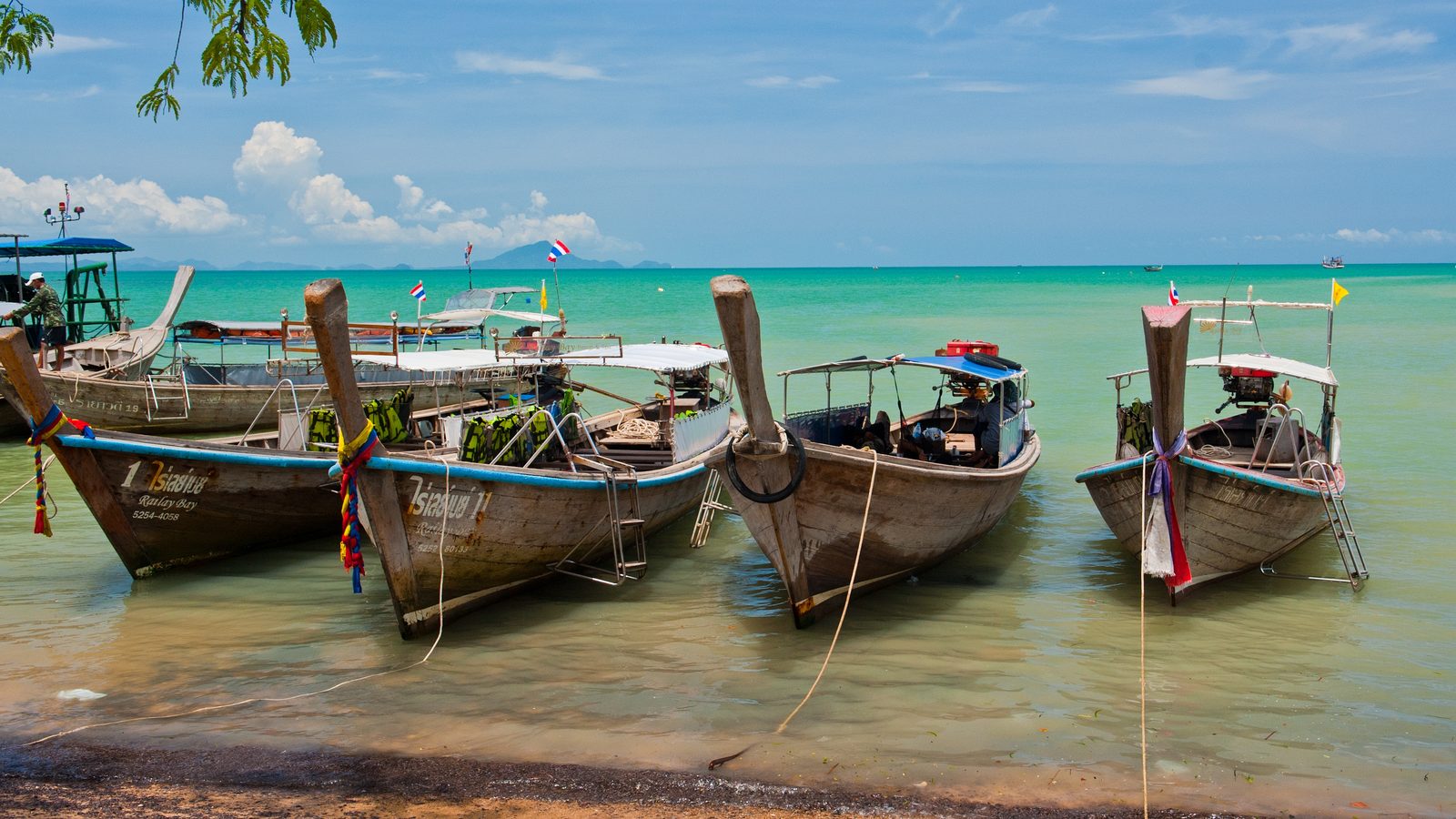
- Photo: Longtail boats at Ao Nang, Krabi — Александр Ф, Wikimedia Commons, CC BY-SA 3.0
Disclaimer: Seasonal patterns are long-term averages and vary by year; lunar festival dates shift annually. Written August 3, 2026.
Official sources to check before you apply or travel
- GOV.UK foreign travel advice (entry requirements by country)
- Government of Canada travel advice and advisories
Visa rules, fees, processing times and entry requirements change often. Always confirm the current requirements on the official government website, or with the embassy or consulate, before you apply, pay or travel. One Visa Center is an independent information site, not a law firm or government agency, and this article is not legal advice. Read how we research, fact-check and use AI tools in our Editorial Policy.
Get visa, passport, and travel-planning guides like this one sent straight to your inbox — plus first access to new country guides and scholarship roundups.

.jpg)