Capital One Travel Insurance: Your Ultimate Guide to Protected Journeys
Planning a trip is exciting, filled with visions of new sights and memorable experiences. Yet, the unexpected can sometimes turn dream vacations into stressful situations. This is where travel insurance becomes a crucial safety net. For many, the question arises: does my credit card offer protection? If you are a Capital One cardholder, the answer is often yes, and understanding these benefits can save you both money and peace of mind.
Capital One provides various travel insurance benefits on many of its credit cards, particularly premium offerings. These benefits are not a one-size-fits-all solution; they vary significantly depending on the specific card you carry. Knowing what your card covers, from trip cancellation to rental car insurance, is essential before you embark on your next adventure.
We will explore the types of protection available, who is eligible, and how to navigate the claims process. Our goal is to empower you with the knowledge needed to travel confidently, knowing you have a reliable backup plan. Let us dive into the details of securing your travels with Capital One.
Key Takeaways
- Diverse Coverage: Capital One travel insurance benefits vary greatly by card, with premium cards like Venture X offering comprehensive protection.
- Automatic Enrollment: Many benefits are automatic when you use your eligible Capital One card to book your travel.
- Primary vs. Secondary: Rental car insurance is often primary with certain cards, a significant advantage over many other credit cards.
- Timely Claims: Understanding the specific deadlines and documentation required for filing a claim is crucial for successful reimbursement.
- Gap Analysis: While robust, credit card travel insurance might not cover every scenario; consider supplemental policies for specific needs or higher coverage limits.
Understanding Capital One Travel Insurance Benefits
Capital One travel insurance benefits are designed to protect cardholders from various travel-related mishaps. These protections are not standalone insurance policies you purchase separately. Instead, they are perks that come with owning and using specific Capital One credit cards. The level and type of coverage depend heavily on the card in your wallet.
For instance, a premium travel card like the Capital One Venture X Rewards Credit Card offers a far more extensive suite of benefits compared to a standard cash back card. It is vital to consult your card’s Guide to Benefits, which provides the authoritative details on what is covered, the limits, and any exclusions. This document is your go-to resource for accurate information.
What is Covered?

The scope of coverage can include several important protections. Here are some of the most common benefits you might find with an eligible Capital One card:
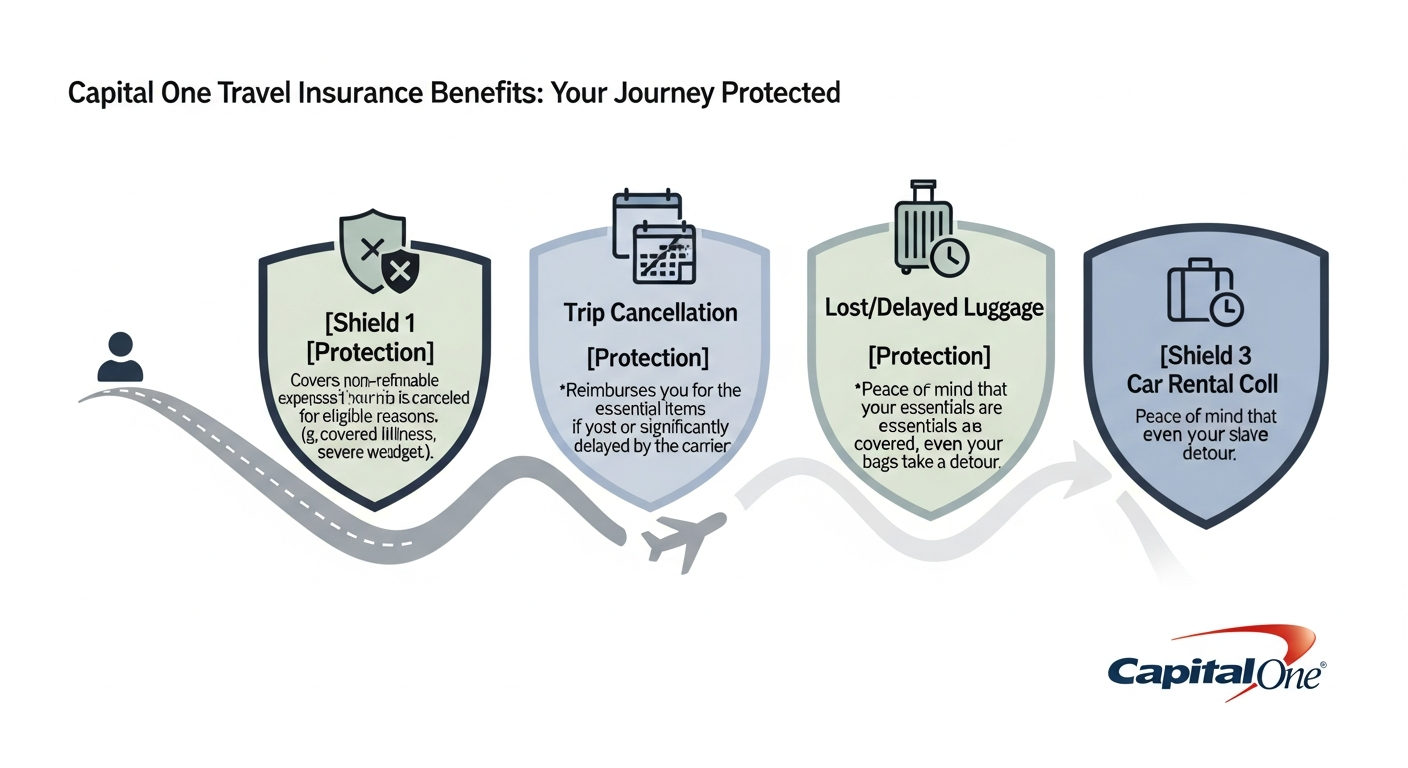
- Trip Cancellation and Interruption: Reimburses you for non-refundable travel expenses if your trip is canceled or cut short due to covered reasons like illness, injury, or severe weather.
- Trip Delay Reimbursement: Provides compensation for reasonable expenses such as meals and lodging if your common carrier travel is delayed for a specified period (e.g., 6 hours or more).
- Lost Luggage Reimbursement: Offers coverage for checked or carry-on luggage and its contents if they are lost or stolen while traveling on a common carrier.
- Baggage Delay Reimbursement: Helps cover the cost of essential items (like toiletries and clothing) if your luggage is delayed for a certain number of hours.
- Travel Accident Insurance: Provides coverage for accidental death or dismemberment while traveling on a common carrier.
- Auto Rental Collision Damage Waiver (CDW): Offers coverage for damage due to collision or theft of a rental vehicle.
It is important to remember that each benefit has its own terms, conditions, and coverage limits. For example, trip cancellation might cover up to a certain amount per person per trip, and there will be a list of specific reasons that qualify for reimbursement.
Who is Eligible?
Eligibility for Capital One travel insurance benefits typically extends to the primary cardholder and often their immediate family members or traveling companions. To be eligible, you generally must use your Capital One card to pay for the entire travel expense. This includes airfare, hotel bookings, or rental car charges.
For example, if you are relying on your card for trip delay protection, the flight must have been purchased with that specific Capital One card. Similarly, for rental car insurance, the full cost of the rental must be charged to the card, and you must decline the rental company’s collision damage waiver. Always check your specific card’s terms to confirm who is covered and under what circumstances. Eligibility rules are strict, and not meeting them can lead to a denied claim.
Diving Deeper: Specific Card Benefits
The strength of Capital One’s travel insurance offerings truly shines through its premium cards. Understanding the differences between popular cards like the Venture X, Venture, and Quicksilver is key to knowing your protection level.
Venture X vs. Venture vs. Quicksilver
Let us compare the travel benefits offered by some of Capital One’s most popular cards. This table provides a general overview, but always refer to your card’s specific Guide to Benefits for the most current and detailed information.
| Benefit Category | Capital One Venture X Rewards Credit Card | Capital One Venture Rewards Credit Card | Capital One Quicksilver Cash Rewards Credit Card |
| **Trip Cancellation/Interruption** | Up to $10,000 per person, $20,000 per trip | Up to $1,500 per person, $5,000 per trip | No |
| **Trip Delay Reimbursement** | Up to $500 per ticket for delays over 6 hours or requiring an overnight stay | No | No |
| **Lost Luggage Reimbursement** | Up to $3,000 per passenger | Up to $3,000 per passenger | No |
| **Baggage Delay Reimbursement** | Up to $100 per day for 3 days after 6 hours delay | Up to $100 per day for 3 days after 6 hours delay | No |
| **Travel Accident Insurance** | Up to $1,000,000 | Up to $250,000 | No |
| **Auto Rental CDW** | Primary coverage | Secondary coverage | Secondary coverage |
| **Emergency Medical & Dental** | No | No | No |
| **Roadside Assistance** | Yes (fee based) | Yes (fee based) | Yes (fee based) |
As you can see, the Venture X card offers significantly more robust travel protection compared to the Venture and Quicksilver cards. This detailed comparison highlights why choosing the right card for your travel habits is so important. For frequent travelers, the enhanced benefits of a premium card can offer substantial value.
How Capital One Travel Insurance Works
Understanding the mechanics of your Capital One travel insurance is just as important as knowing what is covered. The process typically involves a few key steps, from the moment an incident occurs to the final resolution of your claim. Being prepared and knowing what to expect can greatly streamline the experience.
It is crucial to act promptly when an incident happens. Many benefits have specific timeframes within which you must report an incident or file a claim. Missing these deadlines can result in a denied claim, even if your situation would otherwise be covered.
Initiating a Claim
If you experience a situation covered by your Capital One card’s travel insurance, the first step is to contact the benefits administrator. The contact information is usually found in your card’s Guide to Benefits or by calling the customer service number on the back of your card.
Here is a general outline of the claim initiation process:
- Report the Incident: As soon as possible after the event (e.g., flight delay, lost luggage, car accident), notify the relevant parties. Obtain written confirmation or incident reports.
- Contact the Benefits Administrator: Call the number provided in your Guide to Benefits to report the claim. They will provide you with a claim form and explain the necessary documentation.
- Gather Documentation: Begin collecting all required documents immediately. This is perhaps the most critical part of the process.
Required Documentation
The benefits administrator will provide a specific list of documents needed for your claim. While this list can vary depending on the type of claim, common requirements include:
- Proof of Purchase: Receipts showing the travel expenses were paid with your eligible Capital One card.
- Explanation of Benefits (EOB): If applicable, a statement from your primary insurance carrier (e.g., for auto rental CDW if secondary coverage).
- Incident Reports: Official reports from airlines for lost or delayed luggage, police reports for theft, or medical reports for illness/injury.
- Common Carrier Statements: Documentation from airlines or other carriers confirming delays, cancellations, or other disruptions.
- Itemized Receipts: For expenses incurred due to a delay or lost luggage (e.g., toiletries, clothing, meals, lodging).
- Copy of Your Card’s Guide to Benefits: While the administrator has this, it is good to have your own copy for reference.
- Completed Claim Form: Duly filled out and signed.
Submitting a complete and accurate set of documents is vital. Any missing or incorrect information can delay your claim or lead to its denial.
Maximizing Your Capital One Travel Protection
Simply having an eligible Capital One card is the first step; maximizing its travel protection requires a bit of strategic planning. By understanding how to best use your benefits and when to consider additional coverage, you can ensure a truly worry-free journey.
Best Practices Before You Travel
Before you even pack your bags, take these proactive steps to leverage your Capital One travel insurance:
- Read Your Guide to Benefits: This cannot be stressed enough. It is the definitive source for your card’s specific coverage, limits, and exclusions.
- Pay with Your Card: Always use your eligible Capital One card to book the entire trip. This includes flights, hotels, and rental cars, as this is typically a prerequisite for coverage.
- Decline Rental Car CDW: If your Capital One card offers primary auto rental collision damage waiver, decline the rental company’s often expensive insurance. Make sure you understand your card’s specific CDW terms first.
- Know Your Limits: Be aware of the maximum reimbursement amounts for each benefit. If your trip value significantly exceeds these limits, you might want to consider supplemental insurance.
- Save Important Numbers: Keep the benefits administrator’s contact information readily accessible, along with your card number and policy details. Store them in your phone and a physical copy.
- Document Everything: Keep all receipts, booking confirmations, and communications related to your travel. These are crucial if you need to file a claim.
When to Consider Additional Coverage
While Capital One’s travel insurance benefits are valuable, they might not always be enough for every traveler or every trip. Consider purchasing a separate travel insurance policy in these scenarios:
- High-Value Trips: If your trip costs significantly exceed your card’s trip cancellation or interruption limits.
- Medical Emergencies Abroad: Credit card travel insurance typically does not include emergency medical treatment or evacuation. A standalone policy is essential for this.
- Pre-Existing Conditions: Many credit card policies exclude pre-existing medical conditions. Supplemental insurance can offer coverage for these.
- Adventure Activities: If your trip involves high-risk activities like skydiving, scuba diving, or mountaineering, a specialized policy might be necessary.
- “Cancel for Any Reason” Coverage: This premium option is rarely offered by credit cards and provides flexibility if you need to cancel for a non-covered reason.
- Longer Trips: For extended travels, the limits and types of coverage on a credit card might be less comprehensive than a dedicated annual travel insurance plan.
By following these best practices and knowing when to look beyond your credit card, you can create a robust travel protection strategy that suits your individual needs.
Common Misconceptions About Card Travel Insurance
Many cardholders have misunderstandings about what their credit card travel insurance actually covers. Clearing up these common myths is crucial for realistic expectations.
“Many people assume their credit card offers full, comprehensive travel insurance, similar to a standalone policy. However, credit card benefits are often secondary, have lower limits, and exclude critical coverages like emergency medical treatment. Always verify your specific card’s Guide to Benefits before relying solely on it.” – Travel Insurance Expert
Here are a few key misconceptions:
- Myth 1: It covers everything. False. Credit card insurance is typically limited in scope and dollar amounts. It rarely includes medical emergencies, political unrest, or “cancel for any reason” coverage.
- Myth 2: It is always primary insurance. Not true. While some premium cards offer primary auto rental CDW, many other benefits, like baggage loss, might be secondary, meaning your personal insurance pays first.
- Myth 3: I am covered regardless of how I paid. Incorrect. You almost always must use the eligible Capital One card to pay for the travel component you want to be covered.
- Myth 4: Filing a claim is impossible. While it requires diligence, filing a claim is straightforward if you follow the instructions, provide all documentation, and meet deadlines.
Pros and Cons of Capital One Travel Insurance
Like any financial product, Capital One travel insurance benefits come with their own set of advantages and disadvantages. Understanding these can help you decide if they meet your travel protection needs.
Pros:
- Cost-Effective: The primary advantage is that these benefits come at no additional cost beyond your annual credit card fee (if any). You do not pay extra premiums.
- Convenience: Coverage is automatic when you use your eligible card for bookings, eliminating the need to research and purchase separate policies for basic protections.
- Primary Rental Car CDW: Some premium Capital One cards offer primary auto rental collision damage waiver, which is a significant perk. It means your personal auto insurance policy is not affected.
- Peace of Mind: Knowing you have a baseline of protection for common travel mishaps can reduce stress and allow you to enjoy your trip more fully.
- Easy Access: Your Guide to Benefits and customer service are readily available for questions and claim assistance.
Cons:
- Limited Coverage: The scope of benefits is generally narrower than a comprehensive travel insurance policy. Critical areas like emergency medical care or medical evacuation are typically excluded.
- Lower Limits: Reimbursement limits for trip cancellation, lost luggage, and other benefits are often lower than what a dedicated travel insurance policy would offer.
- Specific Exclusions: Credit card policies often have more specific exclusions, such as pre-existing medical conditions, certain types of travel (e.g., adventure sports), or specific destinations.
- Not All Cards Qualify: Only select Capital One cards offer robust travel insurance benefits. Many entry-level or cash-back cards offer very little or no travel protection.
- Primary vs. Secondary Confusion: While some benefits are primary, others are secondary, requiring you to file with your personal insurance first. This can be confusing and lead to delays.
- Claim Process Rigor: While not impossible, the claim process requires careful documentation and adherence to strict deadlines, which can be challenging during or after a stressful travel event.
Comparing Capital One with Other Providers
When evaluating Capital One travel insurance, it is helpful to place it in context with what other providers offer. Generally, credit card travel insurance, including Capital One’s, sits in a unique niche. It is more robust than having no insurance at all but less comprehensive than a dedicated travel insurance policy from a third-party provider.
- Credit Card Companies (e.g., Chase, Amex): Other major credit card issuers also offer travel benefits, often mirroring or competing with Capital One’s premium offerings. Chase Sapphire Reserve, for example, is known for its strong travel protections, often including primary rental car insurance and comprehensive trip delay. American Express offers various benefits, but its primary rental car coverage often comes with an extra fee. Comparing specific cards is always necessary.
- Third-Party Travel Insurance Providers (e.g., Allianz, Travelex, World Nomads): These companies specialize in travel insurance. Their policies are typically more comprehensive, offering higher coverage limits, extensive medical and evacuation coverage, and options like “cancel for any reason.” They are ideal for high-cost trips, international travel, or travelers with specific medical needs. However, they come with an additional premium cost.
- Airline/Tour Operator Insurance: While convenient to purchase directly when booking, these policies are often less comprehensive and more expensive than independent third-party options. They might also have conflicts of interest if the issue is with the airline or operator itself.
Capital One travel insurance excels as a free, automatic layer of protection for many common travel annoyances. For basic trip cancellation, delay, and rental car coverage, especially with premium cards, it offers substantial value. However, for serious medical concerns, high-value trips, or specialized travel, a separate, dedicated travel insurance policy is often a wiser investment. The best approach for many travelers is to use their Capital One card’s benefits as a foundation and supplement with a third-party policy if their specific trip or personal circumstances warrant it.
Conclusion
Navigating the world of travel insurance can seem daunting, but understanding the benefits offered by your Capital One credit card is a powerful first step towards worry-free travel. From trip cancellation and delay protection to valuable auto rental collision damage waivers, Capital One provides a significant safety net for many common travel mishaps. Remember, the key to unlocking these benefits lies in knowing your specific card’s Guide to Benefits, paying for your travel with the eligible card, and understanding the claims process.
While Capital One’s offerings are robust, especially with premium cards like the Venture X, they are not a substitute for comprehensive standalone travel insurance for every situation. For high-value trips, international medical emergencies, or specific adventure activities, supplementing your card’s benefits with a dedicated policy is often a prudent choice. By combining the convenience and cost-effectiveness of your Capital One card with a strategic approach to additional coverage when needed, you can embark on your journeys with confidence, knowing you are well-protected against the unexpected.
Travel smart, travel prepared, and let your Capital One card help pave the way for memorable and secure adventures.
FAQ
Q1: Does every Capital One card come with travel insurance?
A1: No, not every Capital One card offers travel insurance benefits. These benefits are typically found on premium travel rewards cards, such as the Capital One Venture X, and to a lesser extent, the Capital One Venture card. Basic cash back or starter cards usually do not include extensive travel protections. Always check your specific card’s Guide to Benefits for precise details.
Q2: Is Capital One’s rental car insurance primary or secondary?
A2: For some premium Capital One cards, like the Venture X, the auto rental collision damage waiver (CDW) is primary. This means it pays out before your personal car insurance. For other Capital One cards, the coverage might be secondary, requiring you to file with your personal insurance first. Always verify the terms for your specific card.
Q3: What should I do if my trip is delayed and I want to use my Capital One benefits?
A3: If your trip is delayed, first gather documentation from the common carrier (airline, train, etc.) confirming the delay and its duration. Keep all receipts for reasonable expenses incurred due to the delay, such as meals and lodging. Then, contact your Capital One benefits administrator as soon as possible to initiate a claim and understand the specific requirements for your card.
Q4: Does Capital One travel insurance cover medical emergencies while abroad?
A4: Generally, Capital One credit card travel insurance benefits do not include coverage for emergency medical treatment or medical evacuation while traveling abroad. These benefits are typically limited to accident insurance. For comprehensive medical coverage overseas, it is highly recommended to purchase a separate travel insurance policy from a third-party provider.
Q5: Can I get reimbursed for a trip I canceled for any reason with my Capital One card?
A5: Capital One’s trip cancellation benefits usually cover specific, unforeseen circumstances outlined in your Guide to Benefits, such as illness, injury, or severe weather. They do not typically offer “cancel for any reason” coverage, which allows you to cancel for non-covered reasons. If you need this flexibility, you would need to purchase a separate travel insurance policy that includes this specific option.