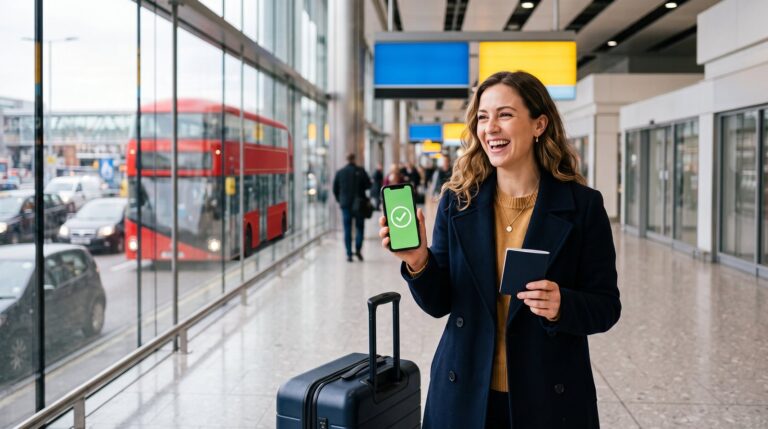

While 50 countries now stroll into China visa-free, Americans got a different door — and it’s better than most realize: ten days in China, no visa, no fee, completely legal. China’s 240-hour visa-free transit covers nationals of 55 countries — the United States among them — who pass through China en route to somewhere else. Played correctly, “transit” is a real trip: Beijing’s hutongs, the Great Wall, Shanghai’s Bund, and out to Tokyo or Bangkok on day ten. Played incorrectly, it’s a denied boarding at your US departure gate. The difference is one rule — the third-country requirement — and this guide covers it, plus the ports, the paperwork, and the routings that work.
Verified against China’s National Immigration Administration announcements (via the Chinese Embassy, June 2025 update: 55 countries) and US State Department guidance as of August 3, 2026. Rules change — confirm before booking. Not legal advice.
Part of our complete China travel & visa hub — visa-free entry, the 240-hour transit, payments, the firewall, safety, and the 10-day route.
The Deal in One Table
| Element | The rule |
|---|---|
| Who | Nationals of 55 countries — including the US, UK, Canada, EU states, Australia, Japan (the NIA’s June 2025 update added Indonesia as #55) |
| How long | Up to 240 hours (10 days) — the border stamps a temporary entry permit; treat the deadline printed on it as gospel |
| The golden rule | You must be in transit to a third country or region — A → China → C, where C is not the country you came from |
| Where | Enter via any of 60 designated ports across 24 provinces — including Beijing, Shanghai, Guangzhou, Shenzhen, Chengdu, Xi’an — and stay within the participating areas |
| What you can do | Tourism, business, family visits, exchange — normal travel. Not allowed: work, study, journalism |
| Cost | Free |
The Third-Country Rule, Illustrated
This is where itineraries live or die. Your onward ticket must leave China for a different country or region than the one you arrived from:
- ✅ New York → Shanghai → Tokyo — qualifies (US in, Japan out)
- ✅ Los Angeles → Beijing → Bangkok → Los Angeles — qualifies (the China exit goes to Thailand; what happens after Bangkok is your business)
- ✅ San Francisco → Shanghai → Hong Kong — qualifies: Hong Kong and Macao count as separate regions for this policy, which makes a US round-trip surprisingly easy to structure
- ❌ New York → Beijing → New York — does not qualify; a simple US round-trip is not “transit.” For that itinerary you need the $140 visa
Two operational details: your onward ticket must be a real, confirmed booking (airlines verify it at check-in before they’ll board you), and both your entry and exit should run through eligible ports. Book the full routing before you fly.
At the Border: What Actually Happens
- At US check-in, the airline asks for your onward ticket out of China — no ticket, no boarding. Carry it printed or in the airline app.
- On arrival, follow signs for the visa-free transit / 240-hour counter (at big hubs it’s clearly marked). Present passport, arrival card, and onward ticket.
- You receive a temporary entry permit — a stamp/endorsement stating your permitted stay. Check the exit date on it before leaving the counter; that date, not your own math, is the law.
- Register within 24 hours. Hotels handle it automatically at check-in; staying with friends means a trip to the local police station with your host. Re-register when you change cities.
Making Ten Days Count
The classic first-timer’s build: 3–4 days Beijing (Forbidden City, Temple of Heaven, a Great Wall day at Mutianyu, roast duck), bullet train to Shanghai (4.5 hours, book via the official 12306 app or Trip.com), 3–4 days Shanghai (the Bund, French Concession, a Suzhou or Hangzhou day trip), then out to Tokyo, Seoul, Bangkok, or Hong Kong. Practical intel that saves the trip:
- Set up Alipay or WeChat Pay before you fly — both accept foreign Visa/Mastercard links, and street-level China (taxis, food, tickets) runs on them. Foreign cards alone are a daily struggle.
- Expect a firewalled internet: Google, Gmail, WhatsApp, and Instagram don’t work on Chinese networks without preparation. International roaming (which tunnels via your home carrier) is the low-effort fix; sort it before departure.
- Stay inside the permitted areas. The policy covers designated areas of the 24 participating provinces — the major tourist circuit (Beijing, Shanghai, Guangzhou, Chengdu, Xi’an) is comfortably inside, but if you’re planning remote detours, check the NIA’s current area list first.
- Don’t flirt with the deadline. Overstaying a transit permit is a genuine legal problem, not a fine-and-wave. Build a buffer day; if something forces a longer stay (illness, cancellation), contact the local exit-entry administration immediately.
Transit vs the Visa: Which Do You Need?
| Your trip | Your route |
|---|---|
| US → China → third country, ≤10 days | 240-hour transit — free, no paperwork beyond the onward ticket |
| Simple US → China → US round-trip | Visa required — transit doesn’t apply |
| Longer than 10 days, or multiple China trips ahead | The $140 visa — typically issued for 10 years of entries, each stay much longer |
| UK / Canadian / EU passport | Skip both — you’re on the 30-day visa-free list |
Frequently Asked Questions
Do US citizens qualify for China’s 240-hour visa-free transit?
Yes — the US is on the NIA’s 55-country eligibility list. You need a valid passport and a confirmed onward ticket to a third country or region, entering and exiting via designated ports.
Can I fly US → China → US on the transit policy?
No — a simple round-trip is not transit. Your China exit must go to a different country or region than you arrived from. Routing home via Hong Kong, Tokyo, or Seoul fixes this.
Does Hong Kong count as a third region?
Yes — Hong Kong and Macao count as separate regions under the policy, so US → mainland China → Hong Kong qualifies, and you can fly home from there.
Can I leave the airport during a 240-hour transit?
Absolutely — that’s the point. You can tour, do business, and visit family for up to 10 days within the participating areas; only work, study, and journalism are excluded.
Which Chinese airports accept 240-hour transit?
60 ports across 24 provinces, including all the majors: Beijing (both airports), Shanghai, Guangzhou, Shenzhen, Chengdu, Xi’an, and more — check the NIA’s current port list when routing.
What if I want more than 10 days in China?
Apply for the standard visa — $140 for US citizens, typically issued as a 10-year multiple-entry visa, with simplified documents since 2024.
Sources
- NIA via Chinese Embassy — 240-hour transit extended to 55 countries (June 2025)
- US State Department — China entry and transit guidance
- Photo: Pudong skyline from the Bund, Shanghai — Mgmoscatello, Wikimedia Commons, CC BY-SA 3.0
Disclaimer: Verified against official sources as of August 3, 2026 — transit rules, ports, and areas change, and border officers decide entry. Confirm current NIA guidance before booking. Not legal advice.
Official sources to check before you apply or travel
- GOV.UK foreign travel advice (entry requirements by country)
- Government of Canada travel advice and advisories
Visa rules, fees, processing times and entry requirements change often. Always confirm the current requirements on the official government website, or with the embassy or consulate, before you apply, pay or travel. One Visa Center is an independent information site, not a law firm or government agency, and this article is not legal advice. Read how we research, fact-check and use AI tools in our Editorial Policy.
Get visa, passport, and travel-planning guides like this one sent straight to your inbox — plus first access to new country guides and scholarship roundups.