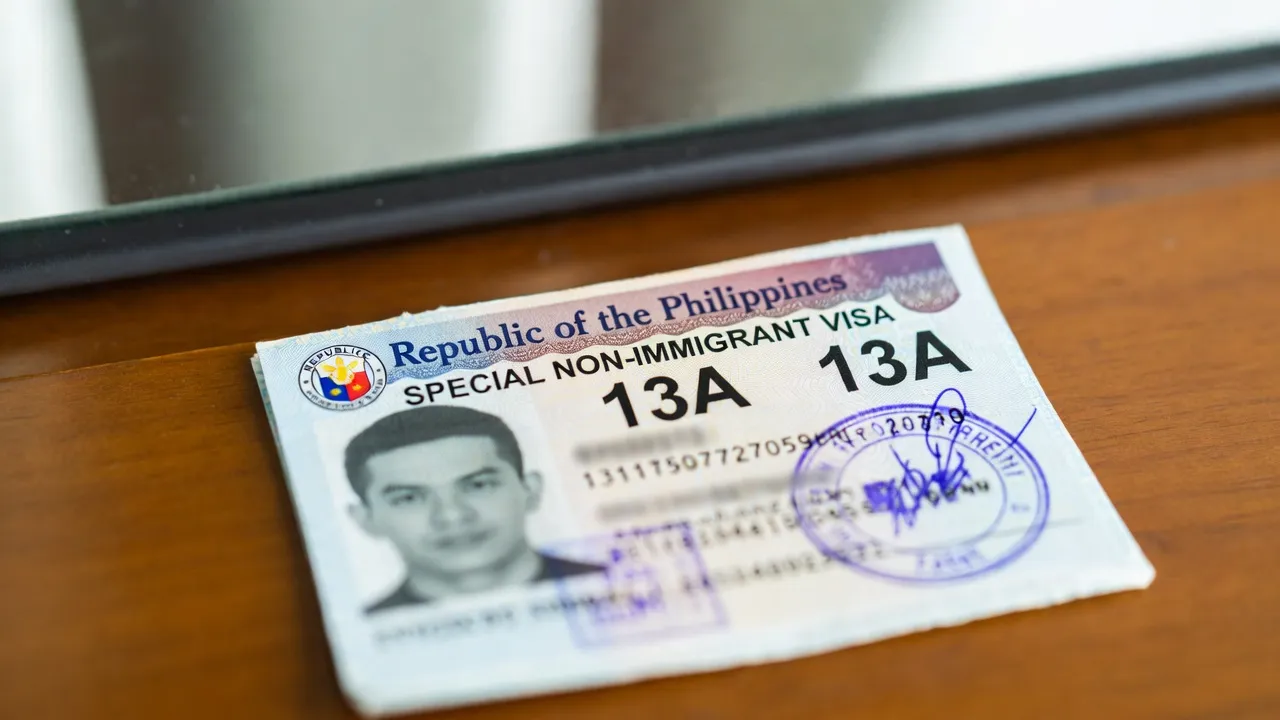

The Philippines 13A visa lets foreign nationals married to Filipino citizens live permanently in the country. This marriage visa is one of the most popular ways for spouses of Filipinos to gain residency rights. Here is everything you need to know about the requirements, process, and costs.
Key Takeaways
Here are the most important points about the Philippines 13A visa:
- Only for married couples where one spouse is a Filipino citizen
- Starts as probationary for one year, then converts to permanent
- Main documents needed: PSA marriage certificate, birth certificates, NBI clearance, medical certificate, and proof of finances
- Official fees start at PHP 8,620 plus USD $50 for the ACR I-Card
- Processing takes weeks to months depending on your documents and BI workload
- Both spouses must attend the hearing together
- Documents expire after 6 months so time your application carefully
What is the Philippines 13A Visa?
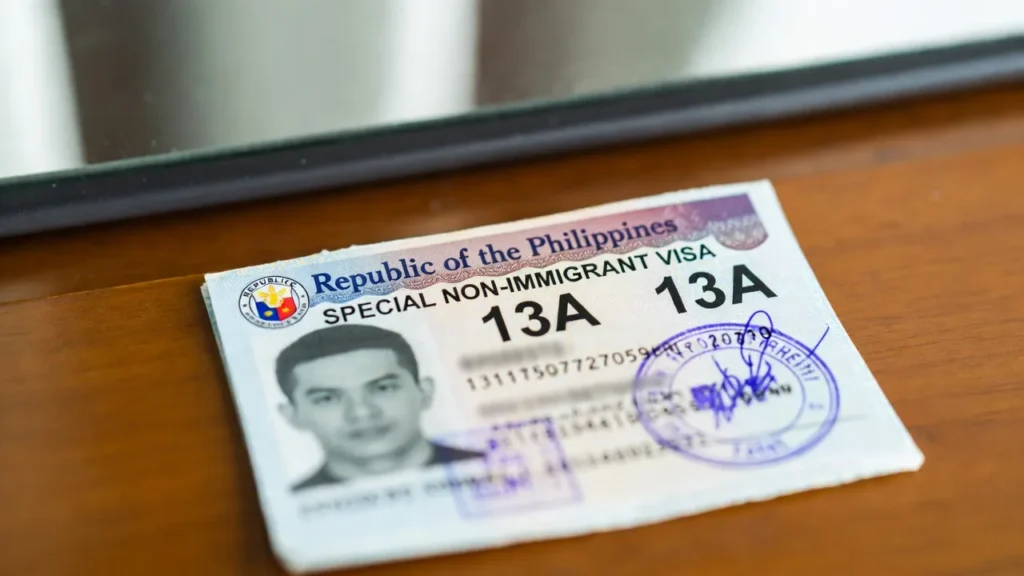
The 13A visa is an immigrant visa based on marriage to a Philippine citizen. It falls under Section 13(a) of the Philippine Immigration Act of 1940. This visa gives foreign spouses the right to live, work, and study in the Philippines without needing additional permits.
“The 13(a) Non-Quota Visa is issued to foreign nationals who have contracted a valid marriage, recognized by Philippine laws, with a Filipino citizen.”
The visa comes in two stages. First, you get a probationary status for one year. After that year, you can apply for permanent resident status which must be renewed every five years.
Who Can Apply for the 13A Visa?
Not everyone qualifies for this visa. You must meet specific requirements before applying:
Basic Eligibility Requirements:
- Be a foreign national legally married to a Filipino citizen
- Your marriage must be valid under Philippine law
- Your Filipino spouse must be living in the Philippines
- You cannot be classified as an “excludable alien” under Philippine immigration law
- Your home country must have a reciprocal agreement with the Philippines
Who Cannot Apply:
- People with serious criminal records
- Those with dangerous or contagious diseases
- Citizens from countries without reciprocity agreements with the Philippines
- Applicants whose marriages are not recognized under Philippine law
Complete List of Required Documents
Gathering the right documents is the most important part of your application. Missing or incomplete paperwork will delay your visa.
Applicant Documents (Foreign Spouse)
Filipino Spouse Documents
| Document | Details |
|---|---|
| PSA Birth Certificate | Original copy from Philippine Statistics Authority |
| Valid Government ID | Philippine passport, SSS ID, GSIS ID, or Voter’s ID |
Joint Documents (Both Spouses)
- PSA Marriage Certificate or Report of Marriage for overseas marriages
- Joint letter of request addressed to the Commissioner of the Bureau of Immigration
- Proof of financial capacity such as bank statements, employment records, or property ownership
Medical and Clearance Documents
You need to prove you are healthy and have no criminal background:
- Medical Certificate signed by a licensed doctor with:
- Police clearance from your home country (apostilled)
- NBI clearance if applying from within the Philippines
Important: Medical exams and police clearances expire after 6 months. Time your documents carefully so they do not expire before your application is processed.
Step by Step Application Process
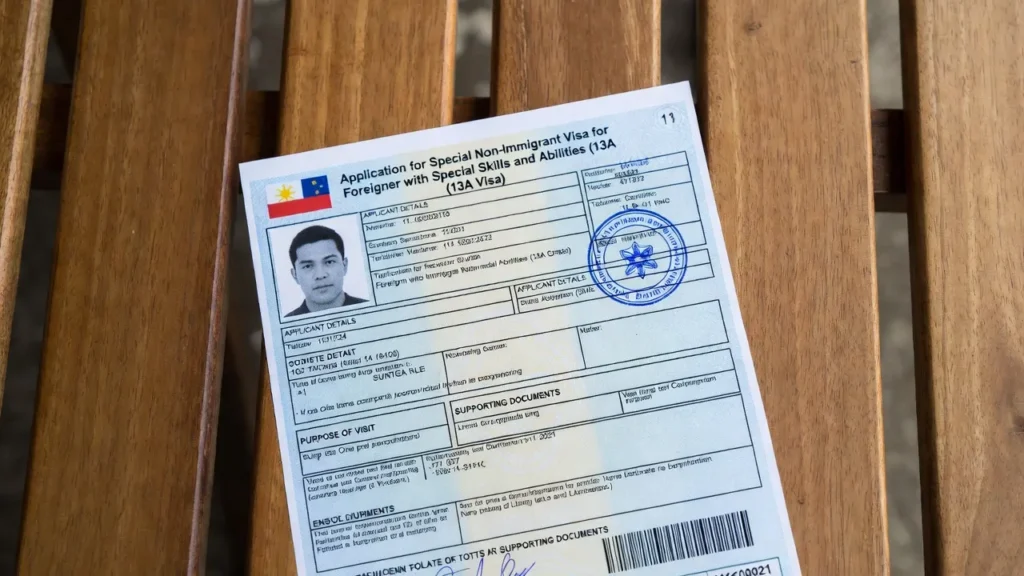
Here is how to apply for the 13A visa at the Bureau of Immigration :
Step 1: Get the Application Form
Download the Consolidated General Application Form (CGAF) from the official Bureau of Immigration website or pick it up at the BI Main Office .
Step 2: Gather All Documents
Collect all required documents listed above. Make sure you have originals and photocopies of everything.
Step 3: Submit for Pre-screening
Bring your documents to the Central Receiving Unit (CRU) at the BI Main Office or to an authorized Immigration Office . Staff will check if your documents are complete.
Step 4: Pay the Fees
After pre-screening, you will receive an Order of Payment Slip (OPS). Pay the required fees at the designated payment counter .
Step 5: Attend the Hearing
Both you and your Filipino spouse must attend an interview. The hearing verifies your marriage is real and your application is legitimate. Check your Official Receipt for the hearing schedule and location .
Step 6: Biometrics Capture
Go to the Alien Registration Division (ARD) counter for fingerprinting and photograph capture . This data goes on your ACR I-Card.
Step 7: Wait for Approval
Check the BI website to see if your application has been approved . Processing takes several weeks to a few months depending on your documentation and BI workload.
Step 8: Get Your Visa Stamp
Once approved, submit your passport for the 13A visa implementation stamp .
Step 9: Claim Your ACR I-Card
When your Alien Certificate of Registration I-Card is ready, collect it from the BI office .
13A Visa Fees and Costs
The official fees for the 13A visa are set by the Bureau of Immigration :
| Applicant Type | Official Fee |
|---|---|
| Principal applicant | PHP 8,620 |
| Dependent spouse | PHP 8,620 |
| Dependent child (16 and above) | PHP 8,370 |
| Dependent child (below 14) | PHP 7,870 |
| ACR I-Card (1 year) | USD $50 |
Total Estimated Cost: If you handle everything yourself, expect to spend around PHP 15,000 to PHP 20,000 including all fees and document processing.
Additional costs may include:
- NBI clearance fee
- Medical examination fee
- Document apostille fees
- Transportation costs
- Notary fees
Processing Time
How long does the 13A visa take? It varies based on several factors:
- Best case: Several weeks
- Typical case: 2 to 4 months
- Complex cases: Up to 6 months or longer
Factors that affect processing time:
- Completeness of your documents
- Current workload at the Bureau of Immigration
- Whether additional documents are requested
- Scheduling of your hearing date
“Processing of a 13A visa can take several weeks to a few months, depending on the completeness of the applicant’s documentation and the workload of the BI.”
Pro Tip: Apply well before your current visa expires. Expedited processing is usually not available for 13A visas.
Probationary vs Permanent Status
The 13A visa has two stages that every applicant goes through:
Probationary Status (Year 1)
When you first receive your 13A visa, it is probationary. This means:
- Valid for one year from the implementation date
- You get an ACR I-Card marked “13A Probationary”
- You have full rights to live and work in the Philippines
- You must prove your marriage is still valid after one year
Permanent Status (After Year 1)
After completing the probationary year, you can apply for permanent resident status:
- Apply 3 to 4 months before your probationary visa expires
- Submit updated documents proving your marriage is still valid
- Get an ACR I-Card valid for five years (renewable)
- Enjoy long-term stability in the Philippines
Conversion Requirements
To convert from probationary to permanent status, you need:
- Similar documents as the initial application (fewer required)
- Proof that your marriage is still valid
- Updated NBI clearance
- Fresh proof of financial capacity
Benefits of the 13A Visa
The 13A visa offers many advantages for foreign spouses:
- Right to work without needing a separate work permit
- Right to study at any Philippine educational institution
- Multiple entry privileges for travel in and out of the country
- Path to permanent residency after the probationary period
- Dependent visa available for unmarried children under 21
- Lower renewal requirements compared to other visa types
Common Mistakes to Avoid
Many applicants make errors that delay or cause rejection of their 13A visa application:
Where to Apply
You have options for where to submit your 13A visa application :
From Within the Philippines:
- Bureau of Immigration Main Office in Manila
- Authorized BI district offices
- BI satellite offices in your province
From Outside the Philippines:
Note: If applying through a consulate abroad, the documentary requirements may differ slightly. Contact the specific embassy or consulate for their checklist.
Frequently Asked Questions
How long is the 13A visa valid?
The initial probationary visa is valid for one year. After conversion, permanent status is valid for five years and can be renewed.
Can I work in the Philippines with a 13A visa?
Yes. The 13A visa gives you the right to work in the Philippines without needing a separate work permit. You have the same working rights as Filipino citizens.
What happens if my Filipino spouse dies?
If your Filipino spouse passes away, your eligibility for the 13A visa ends. You would need to downgrade to tourist status or apply under a different visa category.
Can my children get a 13A visa too?
Yes. Unmarried children under 21 years old can be included as dependents on your 13A visa application . They need to provide proof of their relationship to you.
Do I need to be in the Philippines to apply?
No. You can apply from within the Philippines at a BI office, or from abroad through a Philippine Embassy or Consulate. The process differs slightly depending on where you apply.
What is the difference between 13A and 13G visa?
The 13A visa is for spouses of Filipino citizens. The 13G visa is for returning former Filipino citizens who lost their citizenship. They have different eligibility requirements.
Can same-sex couples apply for the 13A visa?
Currently, the 13A visa requires a marriage valid under Philippine law. Same-sex marriages are not yet recognized in the Philippines, so same-sex couples cannot apply for this visa at this time.
How much money do I need to show for financial proof?
There is no fixed amount required. You need to demonstrate that you or your spouse can support yourselves during your stay. Bank statements, employment records, property ownership, and investment certificates all work as proof.
Related Articles
- Thailand Visa Rules 2026: 60-Day Entry & the TDAC
- What are the requirements for Turkish passport
- EB-2 NIW Requirements: The 2026 Self-Petition Guide
Official sources to check before you apply or travel
- GOV.UK foreign travel advice (entry requirements by country)
- Government of Canada travel advice and advisories
Visa rules, fees, processing times and entry requirements change often. Always confirm the current requirements on the official government website, or with the embassy or consulate, before you apply, pay or travel. One Visa Center is an independent information site, not a law firm or government agency, and this article is not legal advice. Read how we research, fact-check and use AI tools in our Editorial Policy.
Get visa, passport, and travel-planning guides like this one sent straight to your inbox — plus first access to new country guides and scholarship roundups.