Unleash Creativity: The Ultimate Guide to Travel 3D Printers
Imagine you’re far from home, perhaps on a remote adventure or a crucial business trip, and suddenly you need a specific part. Maybe a small gear for your camera breaks, or a custom bracket would make your fieldwork much easier. What if you could simply print it on the spot? This incredible possibility is no longer a dream but a reality, thanks to the rise of the travel 3D printer.
Portable 3D printers are changing how we think about manufacturing and repair. They bring the power of creation directly to your backpack, allowing for on-demand fabrication wherever your journey takes you. From rapid prototyping in the field to creating custom tools for a unique project, these compact marvels are opening new doors for adventurers, innovators, and everyday problem-solvers.
This comprehensive guide will explore everything you need to know about travel 3D printers. We’ll dive into what makes them unique, why they’re becoming essential gear for many, and how to choose the perfect one for your needs. Get ready to discover a new level of creative freedom and practical problem-solving on the go.
Key Takeaways
- Portability Redefined: Travel 3D printers offer true mobility, allowing fabrication anywhere, anytime.
- Versatile Applications: Ideal for on-site repairs, rapid prototyping, educational fieldwork, and creative projects far from a workshop.
- Crucial Features: Look for compact size, low weight, robust build, efficient power use, and user-friendly software.
- Smart Planning: Proper packing, power solutions, and material sourcing are vital for successful mobile 3D printing.
- Future Growth: The market for portable 3D printers is rapidly evolving, promising even more compact and powerful devices.
What Exactly is a Travel 3D Printer?
A travel 3D printer is, at its core, a compact and often lightweight version of a traditional desktop 3D printer. The key difference lies in its design philosophy: every aspect is optimized for mobility. This means they are built to be easily transported, set up quickly, and operate reliably in various environments, often without needing a constant power supply.
Defining Portability in 3D Printing
When we talk about portability for these devices, we’re not just referring to something you can move from one room to another. True portability means the printer can fit comfortably into a backpack or carry-on luggage. It should be light enough to carry for extended periods and robust enough to withstand the bumps and jostles of travel.
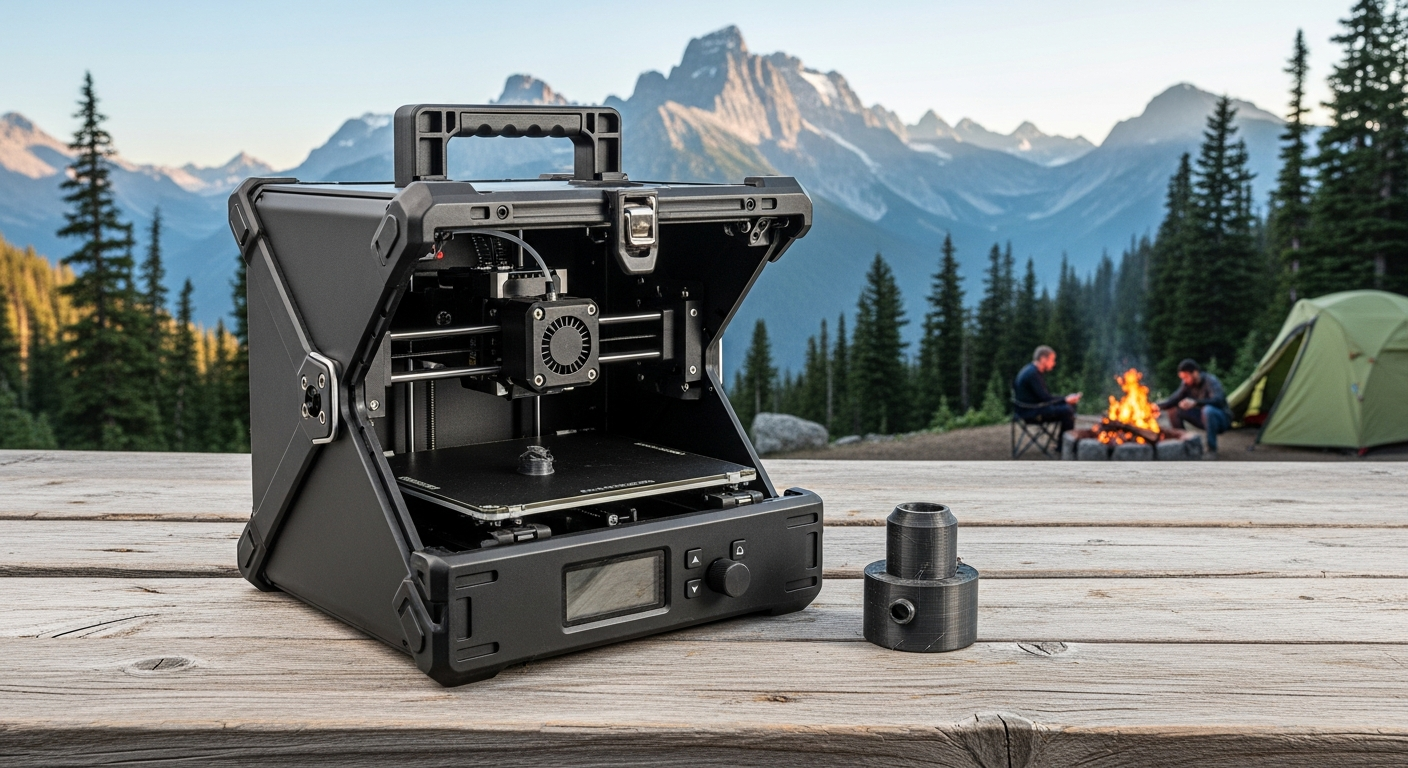
Many models feature foldable designs, integrated carrying handles, and protective cases to enhance their travel-friendliness. The goal is to make 3D printing as accessible as using a laptop or a portable projector, allowing you to take your workshop with you.
How They Differ from Desktop Models
Desktop 3D printers prioritize build volume and print speed, often at the expense of size and weight. They are designed to sit on a workbench and usually require a stable power source. Travel 3D printers, on the other hand, make calculated trade-offs. Their build volumes are typically smaller, and print speeds might be slightly reduced to maintain stability and efficiency on the move. They often feature simpler interfaces and more durable components to withstand the rigors of travel.
Consider the power source as another major difference. While desktop models plug into a wall outlet, many travel 3D printers are designed to run on battery power or can be powered by portable battery packs, making them truly independent of fixed infrastructure. This allows for printing in remote locations where electricity might be scarce.
Why You Need a Portable 3D Printer on Your Adventures
The applications for a travel 3D printer are incredibly diverse and often surprisingly practical. From emergency fixes to fostering creativity, these devices offer a unique blend of utility and innovation for anyone on the move.
On-Demand Repairs and Replacements
One of the most compelling reasons to own a travel 3D printer is the ability to create spare parts or make repairs instantly. Imagine a crucial component of your camping gear breaks, or a small part of your drone needs replacing in the middle of a remote shoot. With a travel 3D printer, you can design and print a replacement part right there, avoiding costly delays or the need to cut your trip short. This capability is invaluable for adventurers, field researchers, and even small businesses attending trade shows.
Creative Freedom Anywhere
For artists, designers, and hobbyists, a travel 3D printer unlocks a new dimension of creative freedom. You can prototype ideas on the fly, create custom accessories for your projects, or even print small souvenirs inspired by your surroundings. This allows for spontaneous creativity, letting your environment influence your designs and bringing your ideas to life almost instantly, no matter where inspiration strikes.
Educational and Fieldwork Applications
Educators and researchers often work in environments far from traditional labs or workshops. A portable 3D printer can be a powerful tool for creating teaching aids, scientific models, or custom tools directly in the field. For example, archaeologists could print replicas of artifacts, or biologists could create custom enclosures for specimens. This enhances learning experiences and provides practical solutions for complex field challenges.
Key Features to Look for in a Travel 3D Printer
Choosing the right travel 3D printer involves balancing several important factors. Each feature contributes to its overall portability, performance, and suitability for your specific needs. Understanding these aspects will help you make an informed decision.
Size and Weight Considerations
This is perhaps the most critical factor. A truly portable printer should be compact enough to fit into your luggage without taking up too much space. Look for models with foldable frames or modular designs that can be easily disassembled and reassembled. Weight is also crucial; a lighter printer is easier to carry for extended periods, especially if you’re hiking or flying.
Power Requirements and Battery Life
Many travel 3D printers are designed to operate on low power, making them compatible with portable power banks or even solar chargers. Check for models that offer internal battery power for complete independence. A good battery life ensures you can complete prints without constantly searching for an outlet, which is vital for remote use. Some printers can even be powered via a car’s 12V socket.
Durability and Build Quality
Travel means bumps, vibrations, and sometimes less-than-ideal conditions. A robust build quality is essential. Look for printers made with durable materials, strong frames, and components designed to withstand movement. A sturdy design reduces the risk of damage during transit and ensures consistent print quality in varied environments. Some models even come with built-in protective cases.
Ease of Use and Software
When you’re on the go, you don’t want to struggle with complex setups. A travel 3D printer should be easy to set up, calibrate, and operate. Look for intuitive touchscreen interfaces, simple leveling procedures, and user-friendly slicing software. Wireless connectivity, such as Wi-Fi or Bluetooth, can also be a huge advantage, allowing you to control the printer from your smartphone or laptop without cables.
Material Compatibility
Most travel 3D printers work with common filaments like PLA, which is biodegradable and easy to print. However, if your projects require more robust materials like PETG or ABS, ensure your chosen printer can handle them. Check the printer’s hot end temperature range and bed heating capabilities to confirm compatibility with your preferred materials. This flexibility can expand the range of items you can create.
Top Travel 3D Printer Models: A Comparison
Several excellent options exist in the market for those seeking a portable 3D printer. Here’s a comparison of some popular archetypes, highlighting their strengths and ideal use cases.
| Feature | Compact Cartridge Printer (e.g., XYZprinting da Vinci mini w) | Foldable Frame Printer (e.g., Creality Ender-2 Pro) | All-in-One Portable (e.g., Monoprice Mini Delta) |
| **Portability** | Very High (Smallest footprint, light) | High (Folds for transport, moderate weight) | High (Compact, lightweight, easy carry) |
| **Build Volume** | Small (e.g., 130x130x130mm) | Medium (e.g., 165x165x180mm) | Small (e.g., 110x110x110mm) |
| **Ease of Use** | Excellent (Often plug-and-play, auto-calibration) | Good (Requires some assembly/calibration) | Excellent (Pre-assembled, auto-leveling) |
| **Material Comp.** | Limited (Often proprietary cartridges, PLA/PETG) | Good (Open filament system, PLA/PETG/TPU) | Good (Open filament, PLA/ABS/PETG) |
| **Power Options** | AC Adapter Only | AC Adapter (some moddable for battery) | AC Adapter (some moddable for battery) |
| **Durability** | Moderate (Plastic housing) | Good (Metal frame, open design) | Very Good (Robust frame, enclosed electronics) |
| **Price Range** | Low to Mid | Low to Mid | Low to Mid |
| **Ideal For** | Beginners, simple prints, travel with minimal fuss | Hobbyists, more complex projects, modding | Fieldwork, educational, quick prototypes |
Getting Started: Tips for Traveling with Your 3D Printer
Bringing a 3D printer on your travels requires a bit of planning, but with the right approach, it can be a smooth and rewarding experience. Here are some expert tips to ensure your mobile fabrication journey is successful.
Packing and Transporting Safely
Proper packing is crucial to protect your travel 3D printer from damage. Always refer to the manufacturer’s guidelines for packing. If possible, use the original packaging or a dedicated protective case. Remove any loose parts, secure the print head, and ensure the build plate is either removed or firmly locked in place. For air travel, check airline regulations regarding electronics and batteries. It’s often best to carry the printer in your carry-on luggage if allowed, to prevent damage from rough handling.
Powering Your Printer on the Go
Before you leave, understand your printer’s power needs. If it runs on a battery, fully charge it. If you plan to use an external power bank, ensure it has enough capacity and the correct output voltage and amperage for your printer. Don’t forget international travel adapters if you’re heading abroad. Consider a solar charger for truly off-grid printing, though these typically require more time to charge large power banks.
Sourcing Materials Abroad
While some common filaments like PLA are widely available, specialized materials might be harder to find in certain regions. Plan ahead by bringing a sufficient supply of your preferred filaments. Store them in airtight bags with desiccant to protect against moisture, which can degrade filament quality. Research local suppliers at your destination if you anticipate needing more, or consider shipping some ahead of time.
Maintenance in the Field
Even robust travel 3D printers require basic maintenance. Pack a small toolkit with essential items like Allen wrenches, pliers, nozzle cleaning needles, and spare nozzles. Learn how to perform basic troubleshooting, such as clearing filament jams or re-leveling the print bed. Regular cleaning of the print surface and ensuring the moving parts are free of debris will help maintain print quality and prevent issues while you’re away from your home workshop.
The Future of Portable 3D Printing
The field of 3D printing is constantly evolving, and the travel 3D printer segment is no exception. We can expect exciting advancements in the coming years that will make these devices even more powerful, user-friendly, and integrated into our mobile lives.
Innovations on the Horizon
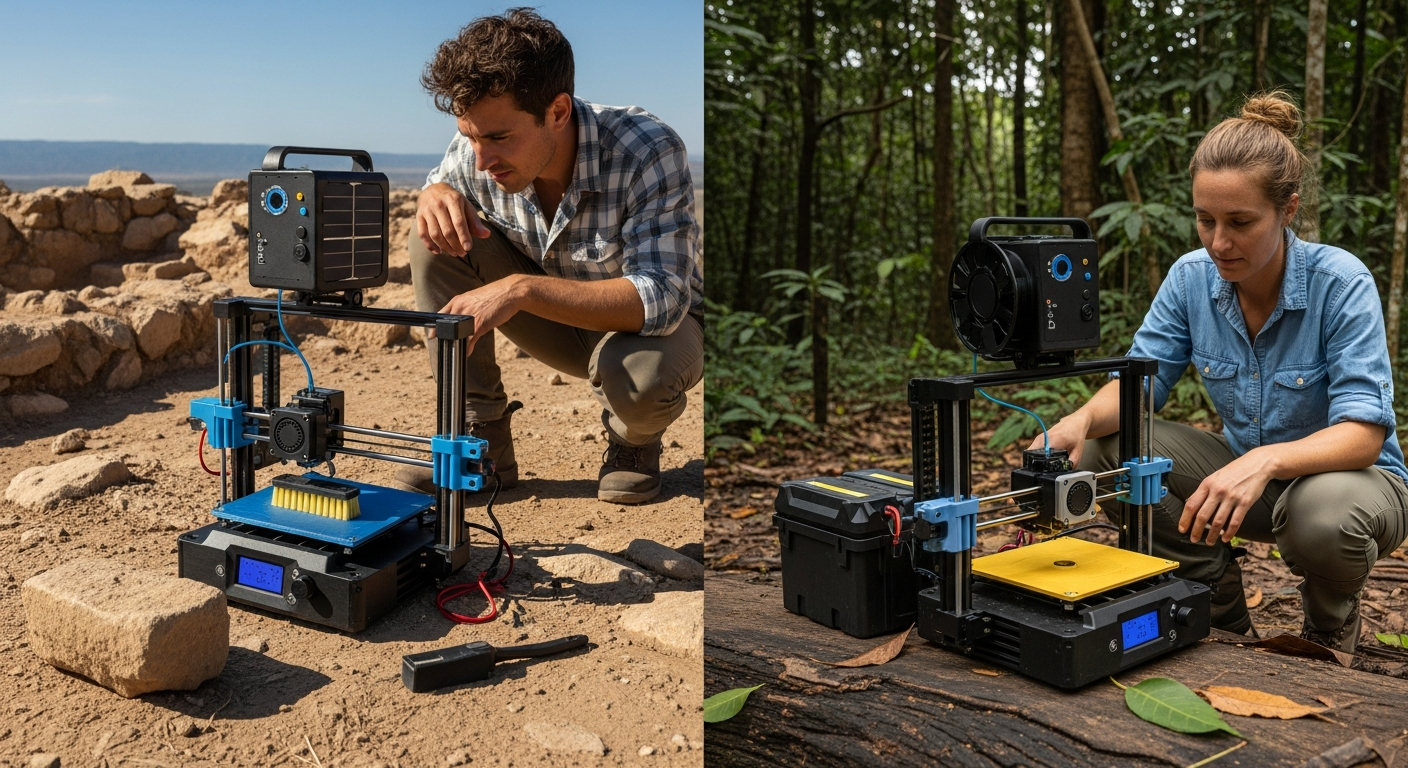
Future travel 3D printers are likely to feature increased build volumes within smaller footprints, thanks to more efficient designs and material science breakthroughs. We’ll see longer-lasting batteries, faster charging capabilities, and improved connectivity options, including direct cloud printing from anywhere. Multi-material printing in a portable format could also become more common, expanding the versatility of what can be created on the go. Imagine a printer that can switch between different colors or material types automatically.
Expanding Applications
As these printers become more sophisticated, their applications will broaden. Emergency services could use them for rapid deployment of custom tools or medical devices in disaster zones. Architects and engineers might print on-site models for clients, making design reviews more interactive. Even space exploration could benefit, with astronauts printing necessary parts or tools directly on other planets or space stations. The potential is truly limitless, transforming how we approach problem-solving and creation globally.
Conclusion
The travel 3D printer is more than just a gadget; it’s a tool that empowers creativity, problem-solving, and self-sufficiency on a global scale. Whether you’re an intrepid adventurer needing a quick repair, a field researcher requiring custom equipment, or a creative spirit wanting to bring ideas to life anywhere, these portable machines offer unparalleled freedom. By understanding their features, planning for travel, and embracing the evolving technology, you can unlock a world of possibilities. The future of mobile fabrication is here, and it fits right into your bag.
FAQ
Q1: Are travel 3D printers difficult to use for beginners?
A1: Many travel 3D printers are designed with ease of use in mind, making them suitable for beginners. Look for models with features like auto-leveling, intuitive touchscreens, and simple software. Some even come pre-assembled, so you can start printing almost immediately after unboxing. Online communities and tutorials also offer great support for new users.
Q2: What kind of objects can I print with a travel 3D printer?
A2: You can print a wide variety of small to medium-sized objects, depending on the printer’s build volume. Common uses include spare parts for gadgets, custom tools, decorative items, prototypes, educational models, and small figures. The type of filament you use will also determine the properties of your printed object, such as its strength or flexibility.
Q3: How do I power a travel 3D printer when there’s no outlet?
A3: Many travel 3D printers are designed to be powered by large portable power banks, often referred to as power stations. Some models have built-in batteries. You’ll need to ensure the power bank can supply enough voltage and amperage for your specific printer. For extended off-grid use, solar panels can be used to recharge your power bank.
Q4: Is it safe to fly with a 3D printer and filament?
A4: Generally, yes, but it’s important to check current airline and airport security regulations. Most airlines allow 3D printers in both carry-on and checked luggage. Filaments are usually allowed, but it’s best to keep them in their original packaging. Always ensure any batteries are within the airline’s specified limits for capacity and are properly stored.
Q5: What’s the main limitation of a travel 3D printer compared to a desktop model?
A5: The primary limitation is typically the build volume. To achieve portability, these printers often have smaller printing areas than their desktop counterparts. This means you might be limited to printing smaller objects or needing to print larger items in multiple sections. Print speed can also sometimes be slightly lower to maintain accuracy and stability in a portable design.