Xenos Travel: Unlocking Humanity’s Interstellar Future
Since ancient times, humanity has gazed at the stars, dreaming of journeys beyond our home planet. From the earliest stargazers to modern astronauts, the call of the cosmos has always been a powerful force. While we’ve made incredible strides in exploring our solar system, a new frontier beckons: xenos travel. This isn’t just about reaching the Moon or Mars; it’s about venturing to stars and planets far beyond our current reach.
Imagine a future where distant exoplanets are no longer just points of light but potential destinations. Xenos travel represents the ultimate ambition of space exploration: to transcend the vast distances between star systems. It promises to redefine our understanding of life, the universe, and our place within it. This article will explore what xenos travel truly means, the science that could make it possible, and the profound impact it could have on our civilization.
We will delve into the incredible technologies being imagined, from warp drives to wormholes, and discuss the immense challenges that stand in our way. From the physics of faster-than-light travel to the ethical questions of encountering new life, xenos travel is a topic rich with wonder and complexity. Join us as we journey into the speculative yet scientifically grounded world of interstellar exploration, a future that could be closer than we think.
Key Takeaways
- Definition of Xenos Travel: Refers to interstellar or intergalactic travel, far beyond our solar system, pushing the boundaries of current spaceflight.
- Theoretical Foundations: Concepts like warp drives, wormholes, and advanced propulsion systems are central to making xenos travel feasible, though currently speculative.
- Potential Destinations: Offers access to potentially habitable exoplanets, rich resources, and entirely new cosmic phenomena across the galaxy.
- Transformative Impact: Could revolutionize human society, science, economics, and our understanding of life itself, leading to unprecedented growth.
- Significant Challenges: Faces enormous hurdles in physics, engineering, resource allocation, and ethical considerations, requiring global collaboration and innovation.
What is Xenos Travel?
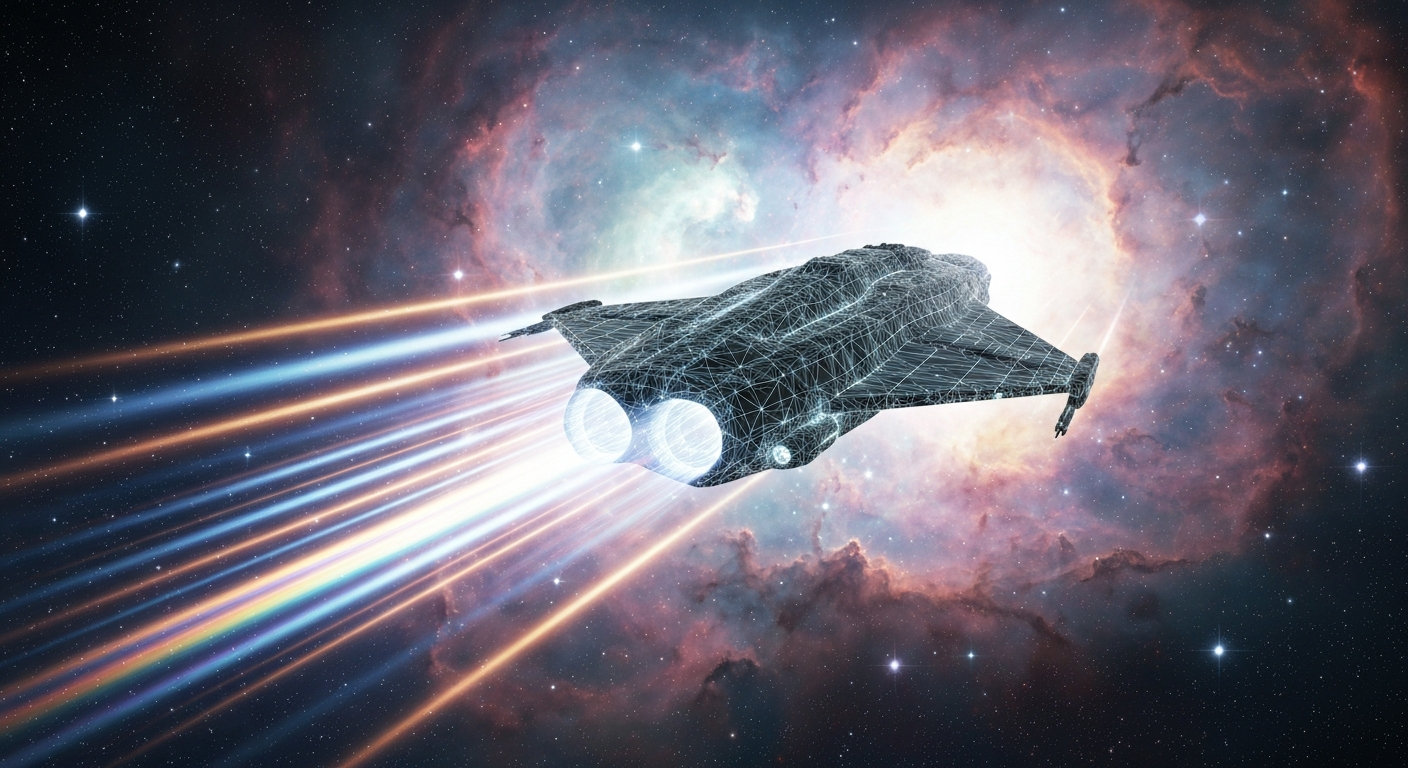
Xenos travel, at its core, refers to journeys beyond our immediate solar system to other star systems or even galaxies. The word “xenos” comes from Greek, meaning “foreign” or “stranger,” perfectly capturing the essence of venturing into truly alien cosmic territories. Unlike traditional space travel, which focuses on planets within our solar system, xenos travel aims for destinations light-years away. It’s the difference between a road trip across your country and an expedition to another continent, but on a cosmic scale.
This concept pushes the boundaries of our current understanding of physics and engineering. It requires overcoming immense distances, often measured in light-years, which represent trillions of miles. To put this into perspective, even our closest star, Proxima Centauri, is over four light-years away. With current technology, a journey there would take tens of thousands of years.
Therefore, xenos travel isn’t just about faster rockets. It’s about entirely new ways of moving through space and time. It involves theoretical breakthroughs that could bend the very fabric of spacetime or tap into energy sources we can only dream of today. This pursuit represents humanity’s ultimate quest for exploration, a desire to know what lies beyond our cosmic neighborhood.
Distinguishing Xenos Travel from Solar System Exploration
While missions to Mars or Jupiter are incredible feats of engineering, they remain within the gravitational influence of our Sun. Xenos travel, however, means breaking free from this gravitational tether. It requires technologies capable of sustained, ultra-high-speed travel or even something faster than light.
Consider the differences:
- Distance: Solar system travel covers millions or billions of miles. Xenos travel covers trillions of miles, measured in light-years.
- Timeframe: Solar system missions take months or years. Xenos travel, without revolutionary tech, would take centuries or millennia.
- Technology: Current rockets suffice for solar system travel. Xenos travel demands entirely new propulsion and energy systems.
- Destinations: Planets, moons, and asteroids in our solar system versus exoplanets orbiting other stars, nebulae, or even other galaxies.
The Science Behind Xenos Travel
Making xenos travel a reality requires monumental scientific and technological advancements. Current rocket technology, even the most advanced, is simply too slow to cross interstellar distances in a human lifetime. Therefore, scientists and engineers are exploring highly theoretical and groundbreaking concepts.
Faster-Than-Light (FTL) Concepts
The idea of traveling faster than light is perhaps the most exciting and challenging aspect of xenos travel. According to Albert Einstein’s theory of relativity, nothing with mass can travel at or exceed the speed of light. However, some theoretical concepts explore ways to bypass this limit without actually breaking it.
- Warp Drives (Alcubierre Drive): This concept, proposed by physicist Miguel Alcubierre, suggests that a spacecraft could travel faster than light by warping spacetime around it. Instead of the ship itself moving quickly, space in front of the ship would be contracted, and space behind it would be expanded. The ship would effectively ride a wave of spacetime distortion, allowing it to cover vast distances rapidly without violating local speed limits.
- Wormholes: Also known as Einstein-Rosen bridges, wormholes are theoretical tunnels through spacetime that could connect two distant points in the universe. Imagine folding a piece of paper and poking a hole through it to connect two points that were far apart on the flat surface. A wormhole would act similarly, offering a shortcut across cosmic distances. The existence and stability of wormholes are still purely theoretical.
- Other Exotic Propulsion: Researchers also consider concepts like antimatter propulsion, which offers incredible efficiency but is extremely difficult and dangerous to produce and store, and fusion propulsion, which is more achievable but still far from sufficient for FTL travel.
Energy Requirements and Resource Management
Regardless of the method, xenos travel would require an unimaginable amount of energy. Powering a warp drive or stabilizing a wormhole would demand energy levels far exceeding anything we currently harness. This leads to questions about how such energy could be generated and stored efficiently over extended periods.
Furthermore, interstellar journeys would necessitate robust life support systems, advanced recycling capabilities, and potentially the ability to harvest resources from interstellar space or destination planets. The sheer scale of resources needed for construction, fuel, and sustenance makes xenos travel a monumental engineering challenge.
Potential Destinations: Where Could We Go?
The universe is teeming with billions of galaxies, each containing billions of stars. The potential destinations for xenos travel are virtually limitless, offering an awe-inspiring array of possibilities for discovery and exploration.
Exoplanets and Habitable Zones
Thanks to advanced telescopes like the Kepler Space Telescope and the James Webb Space Telescope, we’ve discovered thousands of exoplanets – planets orbiting stars other than our Sun. Many of these are located in their star’s “habitable zone,” where conditions might be right for liquid water to exist, a key ingredient for life as we know it.
- Proxima Centauri b: Our closest exoplanet neighbor, orbiting Proxima Centauri, is a prime candidate. It’s a rocky planet within its star’s habitable zone, making it a fascinating target for early xenos missions.
- TRAPPIST-1 System: This system features seven Earth-sized planets, several of which are in the habitable zone of their ultra-cool dwarf star. It represents a cluster of potential worlds waiting to be explored.
- “Super-Earths” and “Ocean Worlds”: Many exoplanets are larger than Earth but still rocky, or are covered entirely in oceans. These offer unique environments that could harbor diverse forms of life and valuable resources.
Beyond Planets: Nebulae and Other Galaxies
Xenos travel isn’t limited to finding new planets. It could also allow us to explore other incredible cosmic phenomena:
- Star-forming Nebulae: Regions like the Orion Nebula are stellar nurseries, vibrant with the birth of new stars and planetary systems. Exploring these could provide unprecedented insights into cosmic evolution.
- Black Holes and Neutron Stars: Studying these extreme objects up close, from a safe distance, could unlock secrets of gravity, spacetime, and the fundamental laws of physics.
- Other Galaxies: The ultimate xenos travel goal would be intergalactic journeys, perhaps to the Andromeda Galaxy, our closest galactic neighbor. This would represent an unimaginable leap, potentially revealing entirely different cosmic ecosystems and histories.
The Impact of Xenos Travel on Humanity
Should humanity achieve xenos travel, the implications would be profound and far-reaching, transforming nearly every aspect of our civilization. It would usher in a new era of discovery, innovation, and perhaps, existential change.
Scientific and Technological Revolution
The pursuit of xenos travel would drive unprecedented advancements across all scientific disciplines. Physics, materials science, propulsion engineering, and artificial intelligence would experience rapid growth. Discoveries on other worlds could revolutionize biology, medicine, and our understanding of life’s diversity.
- New Resources: Distant planets and asteroids could hold vast quantities of rare elements and energy sources, alleviating resource scarcity on Earth.
- Astrophysical Insights: Direct observation of distant cosmic phenomena would provide data impossible to gather from Earth, leading to new theories about the universe’s origins and future.
- Biological Discoveries: Encountering extraterrestrial life, even microbial, would fundamentally change our understanding of biology and the conditions necessary for life.
Societal and Economic Transformation
Xenos travel would inevitably reshape human society and economics on a global scale. The sheer scale of the endeavor would require international cooperation, potentially fostering a more unified human identity.
Table: Potential Societal & Economic Impacts of Xenos Travel
| Aspect | Positive Impact | Negative Impact |
| **Unity** | Fosters global cooperation, shared purpose, and a sense of common humanity. | Potential for new conflicts over interstellar resources or colonization rights. |
| **Economy** | Creates new industries, jobs, and resource markets; fuels technological boom. | Enormous upfront costs; risk of widening wealth gaps between space-faring nations. |
| **Culture** | Inspires art, literature, philosophy; expands human perspective on existence. | Cultural shock from alien encounters; potential loss of unique Earth cultures. |
| **Population** | Offers new habitats for humanity, alleviating Earth’s population pressure. | Ethical dilemmas of terraforming; potential for unchecked expansion and exploitation. |
| **Knowledge** | Unprecedented scientific discoveries; answers fundamental questions about life. | Overwhelming influx of information; potential for existential crises. |
The Search for Extraterrestrial Life
One of the most compelling aspects of xenos travel is the potential for first contact with extraterrestrial intelligence. Whether it’s simple microbial life or advanced civilizations, such an encounter would be the most significant event in human history. It would force us to re-evaluate our place in the universe and potentially lead to new forms of communication, technology, and understanding.
Challenges and Ethical Considerations
While the promise of xenos travel is immense, the challenges are equally daunting, encompassing technological, biological, and ethical dimensions.
Technological Hurdles
- Propulsion Systems: Developing FTL or near-FTL propulsion remains the biggest hurdle. Current theories for warp drives and wormholes require exotic matter or energy densities that are currently beyond our capabilities to create or even detect.
- Long-Term Habitation: Interstellar journeys could take decades or centuries, even with advanced propulsion. This requires closed-loop life support systems, radiation shielding, and solutions for the psychological effects of extreme isolation.
- Navigation and Communication: Navigating across light-years and communicating with Earth over such vast distances presents enormous challenges due to light-speed delays and the precision required.
Biological and Environmental Factors
- Radiation Exposure: Deep space exposes travelers to high levels of cosmic radiation, which can be lethal. Robust shielding and potential biological countermeasures are essential.
- Microgravity Effects: Long-term exposure to microgravity causes bone density loss, muscle atrophy, and other health issues. Artificial gravity solutions would be critical.
- Planetary Protection: Upon reaching a new world, strict protocols would be needed to prevent contaminating it with Earth microbes and to avoid introducing harmful alien pathogens to Earth.
Ethical and Societal Dilemmas
- First Contact: How do we approach potential alien life? What are the protocols for interaction? Should we even make contact? These questions carry immense ethical weight.
- Resource Exploitation: The potential for new resources raises concerns about exploitation, similar to historical colonial practices on Earth. Establishing ethical guidelines for interstellar resource management is crucial.
- Interstellar Governance: Who owns newly discovered planets? How would disputes be resolved? The need for a framework for interstellar governance would become paramount.
- Cost and Prioritization: The immense cost of xenos travel would require significant global investment. Debates over whether such resources are better spent addressing Earth-bound problems are inevitable.
The Future of Xenos Travel
The journey to xenos travel is not a sprint, but a marathon spanning generations. While the full realization of interstellar travel might seem like science fiction, the foundational research and conceptual work are happening today.
Current Research and Development
Scientists around the world are actively engaged in theoretical physics research that could one day lead to breakthroughs in propulsion. Organizations like NASA and private space companies are investing in advanced propulsion concepts, even if they are decades away from practical application. Projects like Breakthrough Starshot, which aims to send tiny probes to Proxima Centauri, demonstrate the ambition and early steps towards interstellar exploration.
International Collaboration and Vision
Xenos travel will undoubtedly be a global endeavor, requiring unprecedented international cooperation. Sharing resources, knowledge, and expertise will be vital to overcome the monumental challenges. Imagine a unified humanity, working together towards a common goal of exploring the cosmos, fostering a sense of shared purpose that transcends national borders.
The dream of xenos travel represents humanity’s innate drive to explore, to understand, and to push the boundaries of what is possible. It is a vision of a future where the stars are not just distant lights but reachable destinations, offering new homes, new knowledge, and perhaps, new definitions of what it means to be human.
Conclusion
Xenos travel stands as humanity’s grandest ambition: to journey beyond our solar system and explore the myriad wonders of the cosmos. From the theoretical elegance of warp drives and wormholes to the incredible potential of discovering new worlds and life, the concept of interstellar travel ignites our imagination and challenges our scientific limits. While the hurdles are immense – from the physics of FTL travel to the ethical dilemmas of first contact – the pursuit itself drives innovation and inspires a unified vision for our future.
The path to the stars is long and complex, but every scientific breakthrough, every technological advancement, brings us one step closer. Xenos travel is more than just a means of transport; it is a testament to the human spirit of exploration, a quest that promises to redefine our place in the universe and unlock an unimaginable future for generations to come. The journey outward is also a journey inward, shaping who we are and what we can achieve together.
Frequently Asked Questions (FAQ)
Q1: Is xenos travel scientifically possible right now?
A1: No, xenos travel, especially faster-than-light travel, is not scientifically possible with current technology and understanding. Concepts like warp drives and wormholes are purely theoretical and require breakthroughs in physics that are still decades or centuries away, if ever achievable.
Q2: How long would it take to reach the nearest star with current technology?
A2: Using our fastest current spacecraft (like the Voyager probes), it would take tens of thousands of years to reach Proxima Centauri, the nearest star to our Sun. This highlights why new propulsion methods are essential for practical xenos travel.
Q3: What is the main difference between xenos travel and space tourism?
A3: Space tourism typically refers to short trips into Earth orbit or potentially to the Moon, focusing on leisure and experience. Xenos travel, in contrast, involves long-duration, high-speed journeys to other star systems or galaxies for exploration, scientific discovery, and potential colonization.
Q4: What are the biggest ethical concerns surrounding xenos travel?
A4: Key ethical concerns include the potential for contaminating alien environments, the responsibility of first contact with extraterrestrial life, the fair distribution of resources discovered on other planets, and the immense costs involved versus pressing issues on Earth.
Q5: Could xenos travel help solve Earth’s overpopulation or resource issues?
A5: In the very distant future, if xenos travel becomes feasible and scalable, it could theoretically offer new habitats and access to vast resources, potentially alleviating pressures on Earth. However, this is a long-term, speculative solution that does not diminish the importance of addressing current global challenges.