
Ghana rewards a simple shape: base in Accra, go west to the castles, then pick one adventure — the Volta’s waterfalls or a northern safari. That’s the route this itinerary follows, because it matches how the country actually lays out: the coast carries the history, Accra carries the energy, and everything beyond is a choose-your-own extension. Seven days covers the essential Ghana without rushing the parts that deserve stillness — Cape Coast Castle is not a stop you clip to forty-five minutes. Here’s the day-by-day, with the transport, budget, and food intel that first-timers usually learn the expensive way.
Prices and journey times are approximate as of August 2026 and shift with fuel costs and season — treat ranges as planning figures, not quotes. Not affiliated with any operator.
Part of our complete Ghana visa & travel hub — visas, passports, itineraries, and every route in and out of Ghana.
Before Anything: The Ten-Minute Admin Check
- Visa: most Western passport holders need one before flying — here’s the full process for US citizens (UK/EU applicants follow the same shape via their local Ghana mission). African passport holders may qualify for Ghana’s free e-visa.
- Yellow fever certificate — an entry requirement; pack the card with your passport. Start malaria tablets per your travel clinic.
- Season check: November–March is the classic window; August is the coast’s secret dry spell — the full calendar is in our best time to visit guide, and the safety picture in Is Ghana Safe to Visit.
- Money: cedis in cash plus a Visa/Mastercard for hotels. ATMs are everywhere in cities; mobile money (MoMo) runs the street economy. Buy a local SIM at the airport (MTN or Telecel — bring your passport) and install Bolt/Uber/Yango before you land.
Days 1–2: Accra — Arrival and the Capital
Day 1: Land at Kotoka, ride-hail to your base (Osu for nightlife and walkability, East Legon or Airport City for quieter comfort), then keep it gentle: an evening on Oxford Street in Osu, dinner of jollof or banku & grilled tilapia, early night.
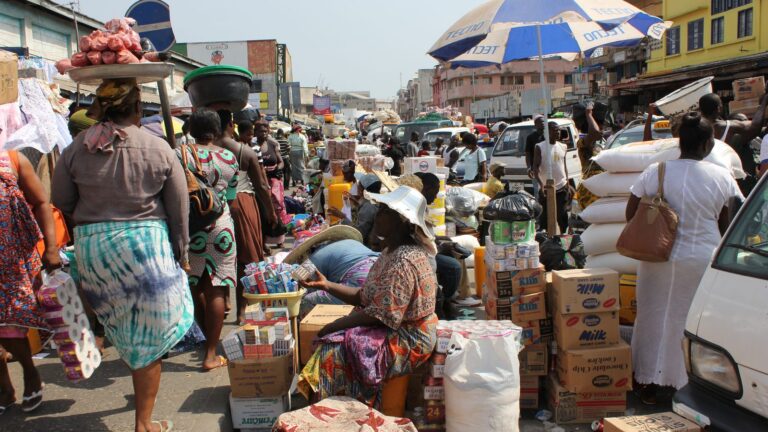
Day 2: The capital circuit — Kwame Nkrumah Memorial Park (independence history, recently renovated and genuinely moving), Black Star Square, then old Accra: a guided walking tour of Jamestown, the fishing-harbour district beneath the colonial lighthouse (go with a local guide — better stories, better welcome). Afternoon at Makola Market if you enjoy beautiful chaos, or the Arts Centre for crafts — haggling expected, start around half. Evening: live highlife or Afrobeats; kelewele (spiced fried plantain) from a street stall on the way home.
Days 3–4: Cape Coast & Elmina — The Heavy Heart of the Trip
Day 3: Head west along the coast (~145 km; 3–4 hours by road — take an STC/VIP morning coach or a hired car with driver). Afternoon at Cape Coast Castle: the dungeons, the Door of No Return, the museum. Take the guided tour, and give it the time and emotional room it demands — for many visitors, especially from the diaspora, this is the reason for the whole journey. Sleep in Cape Coast or at a beach lodge nearby.
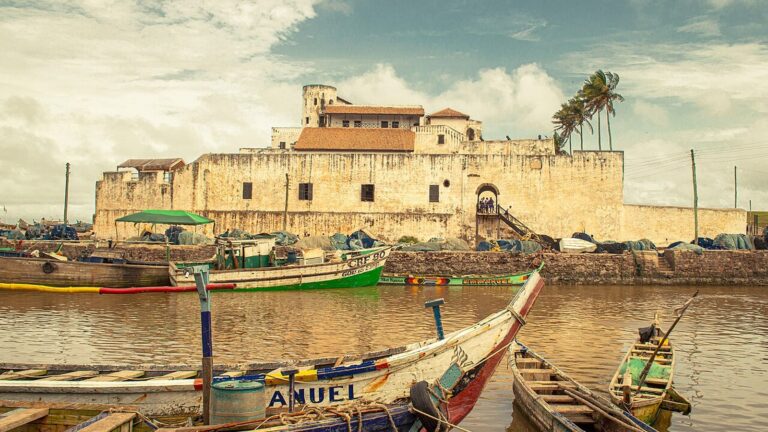
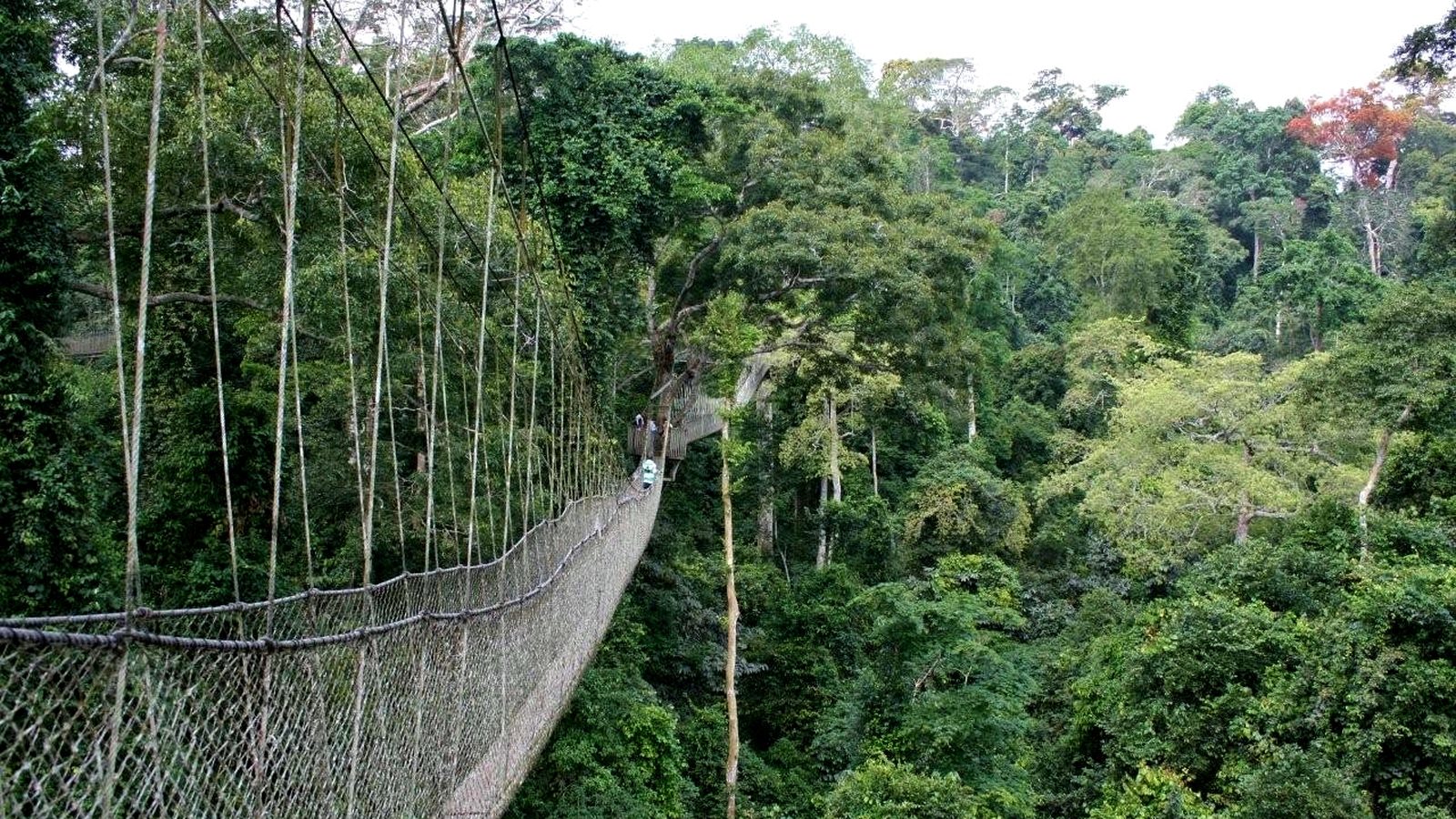
Day 4: Early start to Kakum National Park (~45 minutes north) for the famous canopy walkway — seven rope bridges strung 30–40 metres up in the rainforest; arrive at opening time to beat tour buses. Afternoon at Elmina: St George’s Castle (the oldest European building in sub-Saharan Africa, 1482) and the wildly photogenic fishing harbour below it, pirogues stacked with flags and nets. Overnight again on the coast — or roll back toward Accra with a stop at a beach town like Anomabo.
Day 5: Beach Day, Earned
After the castles, you’ll want the ocean. Options by taste: Anomabo or a Cape Coast–area lodge (quiet, on your route back), Kokrobite near Accra (backpacker-reggae energy), or Accra’s own Labadi Beach (busy, horses, live music on weekends). Respect the Atlantic: currents are strong and lifeguards scarce — swim shallow and never alone.
Days 6–7: Pick Your Ghana
Option A — Volta day-trip or overnight: east to the Shai Hills reserve (baboons, savannah walks, ~1 hour out) and the Akosombo dam area on Lake Volta, or push further for Wli Falls — West Africa’s tallest waterfall, an easy 45-minute forest walk to the lower falls (~4 hours’ drive, better as an overnight). Option B — Aburi & crafts: the cool botanical gardens in the Akuapem hills plus wood-carving villages, an easy unwind day. Day 7: last market run (Arts Centre for gifts: kente, beads, shea butter), a proper waakye lunch, and out — Kotoka likes you there 3 hours before intercontinental departures.
Have 10 Days? Add the North (Mole Safari)
| Day | Plan |
|---|---|
| Day 7 | Fly Accra → Tamale (about an hour; domestic carriers fly daily), transfer ~2.5–3 hrs by road to Mole National Park |
| Day 8 | Morning walking safari — elephants at the waterholes (best January–March), antelope, warthogs, 300+ bird species; afternoon pool overlooking the escarpment |
| Day 9 | Second game drive + the ancient mud-and-stick Larabanga Mosque nearby; overnight Mole or Tamale |
| Day 10 | Fly back to Accra, souvenir sweep, depart |
Prefer green to savannah? Swap the north for a full Volta circuit: Wli Falls, the sacred monkeys of Tafi Atome, and a sunrise hike up Mount Afadja (Afadjato), Ghana’s highest peak.
Budget: What a Week Actually Costs
| Style | Per day (per person) | What that looks like |
|---|---|---|
| Backpacker | ~$40–60 | Guesthouses/hostels, trotros and STC buses, street food (a full chop-bar meal can run a few dollars) |
| Mid-range | ~$90–150 | 3-star hotels/beach lodges, ride-hailing + intercity coaches or occasional driver, restaurant dinners, all entry fees |
| Comfort | $200+ | 4–5-star (Accra has genuinely good ones), private car and driver throughout, domestic flights |
Eat These Before You Leave
Jollof (order it everywhere, join the Ghana-vs-Nigeria debate on Ghana’s side while in country), waakye (rice-and-beans breakfast of champions, wrapped in leaves), banku & grilled tilapia with hot pepper sauce, red-red (bean stew with fried plantain), kelewele (ginger-chilli fried plantain, the king of street snacks), and chichinga (suya-spiced kebabs). Drink: fresh coconuts, Club or Star beer, sobolo (hibiscus). Water: bottled or sachet from reputable brands.
Frequently Asked Questions
Is 7 days enough for Ghana?
Yes — a week covers Accra, the Cape Coast–Elmina castles, Kakum, and a beach or Volta day without rushing. Ten days adds a Mole safari or the full Volta circuit comfortably.
How do I get from Accra to Cape Coast?
It’s ~145 km west: 3–4 hours by road. STC and VIP run comfortable coaches; a hired car with driver gives flexibility for the Kakum–Elmina triangle. Leave in the morning — never ride intercity after dark.
Is Mole National Park worth it?
If you have 10 days, absolutely — walking-level elephant encounters at a fraction of East African safari prices. Fly to Tamale (about an hour) rather than driving; January–March is prime viewing.
Do I need to rent a car in Ghana?
Self-driving isn’t recommended for first-timers — traffic is assertive and signage thin. Use Bolt/Uber/Yango in cities, coaches or a car-with-driver between them.
How much does a 10-day Ghana trip cost?
Very roughly $900–1,500 per person mid-range on the ground (lodging, transport, food, entries) excluding international flights — less for backpackers, much more in December.
Do I need a guide for Cape Coast Castle?
Guided tours are included with entry and genuinely essential — the history is the point. In Jamestown (Accra), a local guide is also the difference between a walk and an experience.
Sources
- Ghana Tourism Authority — attraction and festival information (visitghana.com)
- Operator schedules and park fees — confirm current rates directly before travel
- Photo: Kakum National Park canopy walkway — Chiappinik, Wikimedia Commons, CC BY 2.5 IT
Disclaimer: Journey times, fees, and prices are good-faith planning estimates as of August 3, 2026 and change with season and fuel costs — confirm locally. Not legal or travel-agency advice.
Get visa, passport, and travel-planning guides like this one sent straight to your inbox — plus first access to new country guides and scholarship roundups.