
Updated August 6, 2026. The best time to visit Bali is May, June, or September — you get the dry season’s sunshine without July–August’s peak crowds and prices. The dry season runs roughly April through October; the wet season (November–March) brings daily tropical downpours that usually pass within a couple of hours, lower prices, and the island at its greenest. The one date every planner must check: Nyepi, the Balinese Day of Silence in March, when the entire island — including the airport — shuts down for 24 hours. Here’s the month-by-month reality, plus the surf, dive, and crowd calendars that should actually drive your dates.
Bali’s two seasons, honestly
Dry season (April–October): sunny mornings, low humidity by tropical standards, calm seas on the south coast. This is postcard Bali — and everyone knows it, so July and August bring Europe’s summer holidays and Australia’s school breaks at once.
Wet season (November–March): “wet” means afternoon bursts, not all-day rain — mornings are often glorious, waterfalls and rice terraces peak in intensity of green, and hotel rates drop meaningfully. The trade-offs: higher humidity, occasional flooded streets in the south, rougher boat crossings, and more mosquitoes. December holidays are the exception within the season: peak crowds AND rain.
Month by month
| Month | Weather | Crowds & prices | Verdict |
|---|---|---|---|
| January | Wettest stretch | Low (after NY exodus) | Cheapest; embrace the rain |
| February | Wet, hot | Low | Quiet green Bali; good value |
| March | Rain easing | Low–medium | Watch for Nyepi — check the date |
| April | Dry season begins | Medium | Shoulder sweet spot |
| May | Dry, warm, clear | Medium | Top pick |
| June | Dry, coolest nights | Medium–high | Top pick |
| July | Driest, breezy | Peak | Book months ahead |
| August | Dry, windy afternoons | Peak | Great weather, worst crowds |
| September | Dry, seas calm | Medium, falling | Top pick |
| October | Dry ending, humid | Medium | Good value before the rains |
| November | Rains build | Low | Deals return |
| December | Wet + holiday surge | Peak prices | The worst of both — avoid if flexible |
Nyepi: the day Bali stops
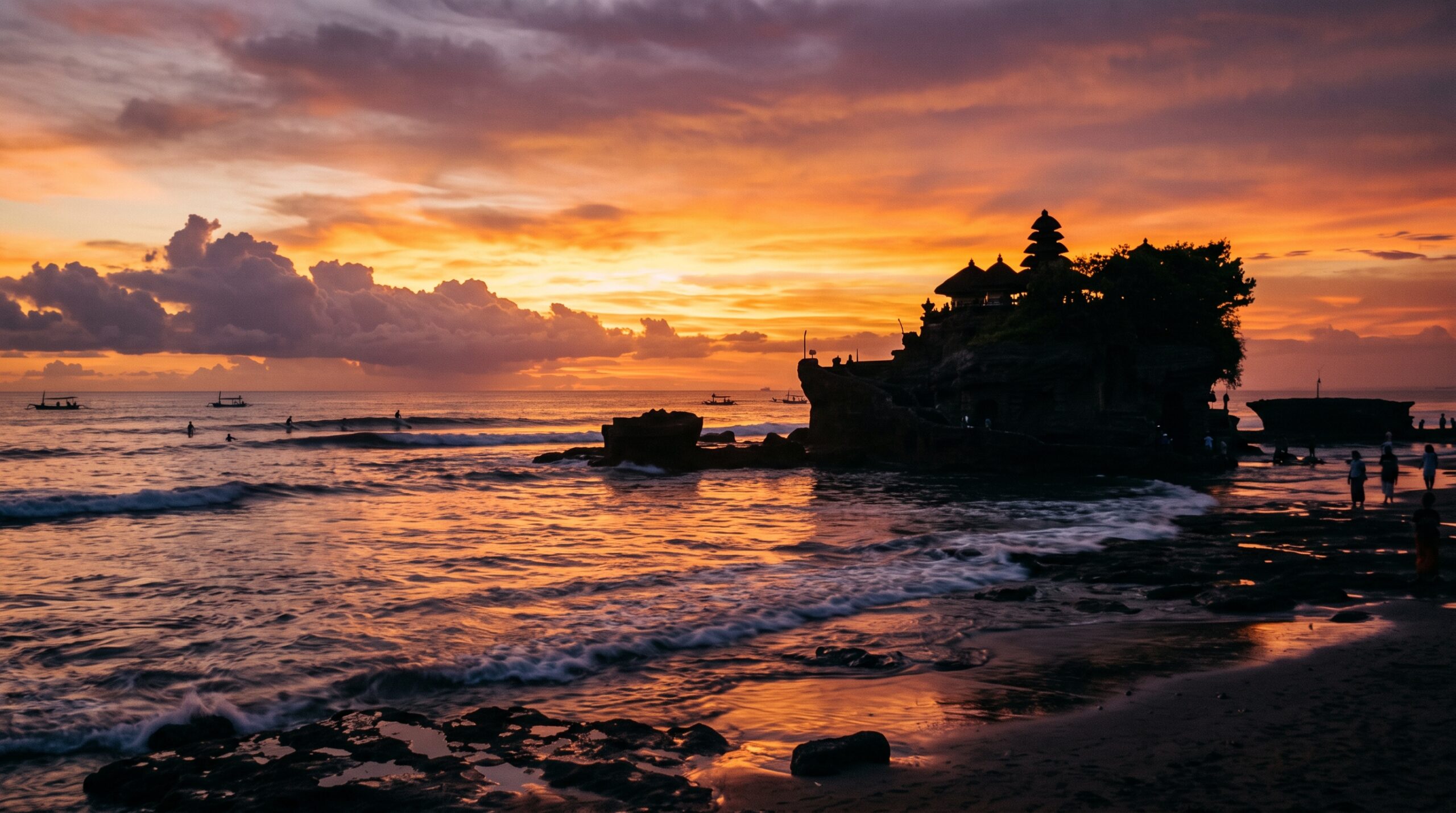
Nyepi, the Balinese Saka New Year, falls in March (occasionally very late February or early April — the date follows the lunar Saka calendar, so verify the current year’s date before booking). For 24 hours from 6 a.m., the island observes total silence: no flights in or out of DPS, no vehicles, no lights after dark, and everyone — tourists included — stays inside their hotel. The night before brings the ogoh-ogoh demon parades, one of the most spectacular things you can see in Bali. Either plan around Nyepi or plan for it; don’t discover it at the airport.
The surf calendar
- Dry season (Apr–Oct): the west coast fires — Uluwatu, Padang Padang, Canggu — with offshore trade winds and the year’s most consistent swell.
- Wet season (Nov–Mar): winds flip; the east coast (Keramas, Nusa Dua, Sanur reefs) gets its turn. Beginners can surf Canggu and Kuta year-round between storms.
The dive and snorkel calendar
- April–November: best visibility overall; calm crossings to Nusa Penida and Lembongan.
- July–October: Mola mola (oceanic sunfish) season around Nusa Penida — the bucket-list sighting that fills dive boats.
- Year-round: manta rays at Manta Point, the USAT Liberty wreck at Tulamben; wet-season rain reduces visibility near river mouths more than on offshore sites.
Crowd waves worth knowing
- July–August: European summer + dry-season peak.
- Australian school holidays (roughly April, July, September/October, December–January): Bali is Australia’s beach house; southern resort areas fill fast.
- Christmas–New Year: peak pricing despite wet weather; Canggu and Seminyak fully book.
- Chinese New Year and Idul Fitri: shorter regional spikes worth checking against your dates.
So when should you go?
- First trip, want it all: May, June, or September.
- Tightest budget: late January–February or November.
- Surfing the famous west-coast breaks: June–September.
- Diving with mola mola: July–October.
- Culture: aim for the Galungan festival cycle (dates shift each 210-day Balinese calendar cycle) or the Nyepi eve parades.
Entry rules, the tourist levy, and where to base yourself are covered in our full Bali travel guide. Comparing Southeast Asia timing? See the best time to visit Thailand — its seasons run on a different rhythm than Bali’s. And if you’re planning to work remotely from the island, start with the digital nomad visa guide.
FAQ
What is the rainy season in Bali?
Roughly November through March, peaking December–February. Rain usually falls in intense afternoon bursts rather than all day — mornings are often sunny even in the wettest months.
Is Bali worth visiting in the rainy season?
Yes, with the right expectations: lower prices, few crowds, and the island at its greenest. Plan mornings for activities, afternoons for spas and cafés, and skip tight island-hopping schedules — boat crossings get rough.
What is the cheapest month to visit Bali?
Late January and February typically bring the year’s lowest hotel rates, with November close behind. Avoid the December 20–January 5 window, when prices peak despite the rain.
What is the hottest month in Bali?
Bali sits eight degrees south of the equator, so temperatures barely move — expect 27–31°C (80–88°F) year-round. Humidity, not temperature, is what changes: the wet season feels hotter.
When is Nyepi and can I fly that day?
Nyepi falls in March on the lunar Saka calendar — the exact date shifts each year, so check it before booking. No — the airport closes completely for 24 hours, and everyone stays indoors.
Is June or September better for Bali?
Both are excellent. June has slightly cooler nights and leads into peak season; September has warmer seas, post-peak calm, and better hotel deals. If diving with mola mola matters, take September.
Official sources to check before you apply or travel
- GOV.UK foreign travel advice (entry requirements by country)
- Government of Canada travel advice and advisories
Visa rules, fees, processing times and entry requirements change often. Always confirm the current requirements on the official government website, or with the embassy or consulate, before you apply, pay or travel. One Visa Center is an independent information site, not a law firm or government agency, and this article is not legal advice. Read how we research, fact-check and use AI tools in our Editorial Policy.
Get visa, passport, and travel-planning guides like this one sent straight to your inbox — plus first access to new country guides and scholarship roundups.