Boost Your Productivity Anywhere: The Ultimate Guide to Travel Monitors for Laptops
In today’s fast-paced world, working remotely or on the go has become more common than ever. Whether you are a digital nomad, a business traveler, or simply enjoy the flexibility of working from different locations, your laptop is your primary tool. However, anyone who has tried to manage complex tasks on a single laptop screen knows the struggle: limited screen real estate can severely hinder your efficiency.
Imagine having the power of a dual-monitor setup, not just at your desk, but wherever your travels take you. This is where a travel monitor for your laptop becomes an indispensable asset. These portable displays are designed to seamlessly extend your workspace, offering the extra screen space you need to multitask effectively, review documents side-by-side, or simply enjoy a more expansive viewing experience.
From boosting productivity during client presentations to enhancing your leisure activities like gaming or movie watching, a portable monitor can fundamentally change how you interact with your laptop. This comprehensive guide will explore everything you need to know about choosing and using the best travel monitor to elevate your mobile workstation.
Key Takeaways: Expert Insights for Your Portable Setup
- Enhanced Productivity: A second screen significantly boosts multitasking capabilities, allowing you to view multiple applications simultaneously without constant alt-tabbing.
- Portability is Key: Look for lightweight, slim designs with durable builds that can withstand the rigors of travel.
- Connectivity Matters: USB-C is the gold standard for single-cable power and video, but HDMI options are also valuable for broader compatibility.
- Screen Quality is Crucial: Prioritize monitors with good resolution (Full HD is common), decent brightness, and wide viewing angles for a comfortable experience.
- Consider Your Use Case: Evaluate whether you need a monitor for intensive work, casual browsing, or entertainment, as this will guide your feature priorities.
Why a Travel Monitor is a Game-Changer for Laptop Users
The appeal of a travel monitor extends far beyond just having an extra screen. It addresses core challenges faced by laptop users who need to maintain high levels of productivity and comfort outside of a traditional office setup.
For professionals, students, and creatives alike, the ability to expand your digital canvas offers immediate and tangible benefits. It is about more than just convenience; it is about reclaiming efficiency and reducing digital strain. A travel monitor empowers you to work smarter, not harder, no matter where you are.
Enhanced Productivity and Multitasking
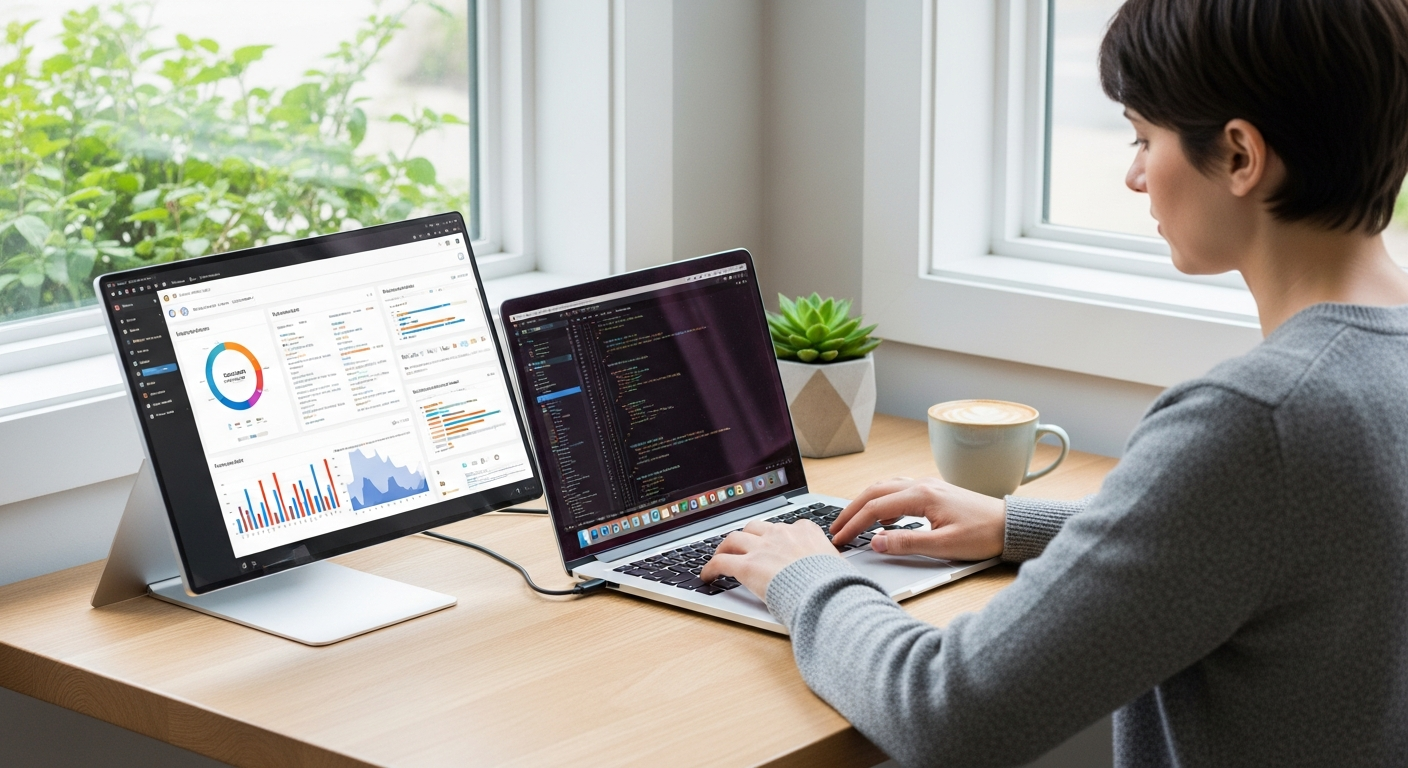
The most obvious and impactful benefit of a travel monitor is the dramatic increase in productivity. Studies consistently show that using multiple monitors can boost efficiency by 20-50%. With a second screen, you can have your main application open on your laptop and reference materials, communication tools, or research on the portable display.
This setup minimizes the time spent switching between windows, reduces errors, and allows for a more fluid workflow. Imagine editing a document on one screen while reviewing research notes on the other, or coding on your laptop with live previews on your travel monitor. The possibilities for streamlining your tasks are endless.
Improved Ergonomics and Comfort
Working for extended periods on a laptop can often lead to poor posture and eye strain. A travel monitor allows you to position a screen at a more comfortable height and distance, reducing neck and shoulder discomfort. While not a full ergonomic workstation, it offers a significant improvement over hunching over a single laptop screen.
Many portable monitors come with adjustable stands or covers that double as stands, letting you customize the viewing angle. This flexibility helps in creating a more ergonomic setup wherever you are, promoting better health and sustained concentration throughout your work sessions.
Versatility for Work and Play
Beyond professional tasks, travel monitors offer incredible versatility for personal use. They are perfect for giving presentations to small groups, mirroring your laptop screen for a shared viewing experience, or even extending your display for casual gaming or watching movies with friends while traveling. Their lightweight nature makes them ideal companions for any trip.
Gamers can enjoy a more immersive experience with an expanded view, while content creators can use the extra screen for monitoring streams or editing timelines. This adaptability makes a travel monitor a valuable investment for a wide range of users, proving its worth in both work and leisure scenarios.
Essential Features to Look for in a Travel Monitor
Choosing the right travel monitor requires understanding the key features that impact performance, portability, and usability. Not all monitors are created equal, and your specific needs will dictate which specifications are most important.
Consider how you plan to use the monitor most often. Will it be for detailed design work, casual email checking, or entertainment? Answering these questions will help you prioritize features and make an informed decision.
Size and Portability
The ideal size for a travel monitor usually ranges from 13 to 17 inches, mirroring common laptop screen sizes. A monitor that is too small might not offer enough extra real estate, while one that is too large can become cumbersome to carry. Look for models that are thin and lightweight, typically under 2 pounds, to avoid adding significant bulk to your travel bag.
Durability is also a factor. A sturdy build and a good protective case are essential for a device that will be frequently packed and unpacked. Many monitors integrate a cover that also functions as a stand, offering both protection and utility in one design.
Connectivity Options
Modern travel monitors often feature USB-C connectivity, which is highly convenient. A single USB-C cable can often transmit video, audio, and power, simplifying your setup and reducing cable clutter. This is especially useful if your laptop has multiple USB-C ports with DisplayPort Alt Mode.
Older laptops or devices without USB-C may require an HDMI connection, often paired with a separate USB cable for power. Some monitors offer a mini-HDMI or micro-HDMI port, so ensure you have the correct adapter or cable. Always check your laptop’s available ports before making a purchase.
Resolution and Panel Type
Full HD (1920×1080) resolution is standard for most travel monitors and offers a sharp, clear image for everyday tasks. Some higher-end models may offer 2K or 4K resolution, which provides even greater detail, but also comes with a higher price tag and potentially more power consumption.
IPS (In-Plane Switching) panels are generally preferred for their wide viewing angles and accurate color reproduction, making them suitable for collaborative work or media consumption. TN (Twisted Nematic) panels are faster but have poorer viewing angles and color accuracy, often found in budget or gaming-focused monitors.
Brightness and Glare Protection
When working in various environments, from brightly lit cafes to dimly lit hotel rooms, screen brightness becomes crucial. Look for a monitor with at least 250-300 nits of brightness for comfortable outdoor or well-lit indoor use. Monitors with anti-glare coatings or matte finishes can significantly reduce reflections, improving visibility and reducing eye strain.
Adjustable brightness settings are also important, allowing you to adapt the display to different lighting conditions. This flexibility ensures that your screen is always comfortable to view, no matter your surroundings.
Built-in Stand and VESA Mount
A stable, integrated stand is a practical feature for any travel monitor. Many models use a magnetic cover that folds into a stand, offering various viewing angles. This design is convenient and adds minimal bulk. Some monitors also feature a VESA mount, allowing you to attach them to a monitor arm or stand, though this is less common for truly portable setups.
Consider how the stand functions and its stability. A wobbly stand can be frustrating and impractical, especially in busy environments. Look for designs that offer robust support and easy angle adjustments.
Top Travel Monitor Picks for Different Needs
Choosing the best travel monitor depends on balancing features, budget, and your primary use case. Here is a comparison of common types and features you might find across different models, helping you decide.
| Feature/Monitor Type | Budget-Friendly Option | Mid-Range Performer | Premium Professional |
| **Typical Price Range** | $100 – $200 | $200 – $350 | $350 – $600+ |
| **Screen Size** | 13.3 – 15.6 inches | 14 – 17.3 inches | 15.6 – 17.3 inches |
| **Resolution** | Full HD (1920×1080) | Full HD (1920×1080) | Full HD, 2K, or 4K |
| **Panel Type** | TN or IPS | IPS | IPS |
| **Connectivity** | Mini-HDMI, USB-C (limited) | USB-C (full-featured), HDMI | USB-C (full-featured), HDMI, DisplayPort |
| **Brightness (Nits)** | 200 – 250 | 250 – 300 | 300 – 400+ |
| **Key Strengths** | Affordable, basic extension | Good balance of features, value | High-quality display, robust build |
| **Ideal For** | Basic email, light browsing | General work, media consumption | Graphic design, intensive multitasking |
Remember that specific models within each category will vary. Always check reviews and detailed specifications before making a final decision. Your best choice will align with your personal workflow and travel habits.
Setting Up Your Portable Dual-Screen Dream
One of the most appealing aspects of modern travel monitors is their ease of setup. Most are designed for quick deployment, allowing you to get up and running within minutes. Understanding the basic steps ensures a smooth experience every time.
Regardless of your chosen monitor, a few simple steps will have you enjoying your expanded workspace. Always refer to your monitor’s user manual for specific instructions, as minor differences can exist between brands and models.
Simple Plug-and-Play
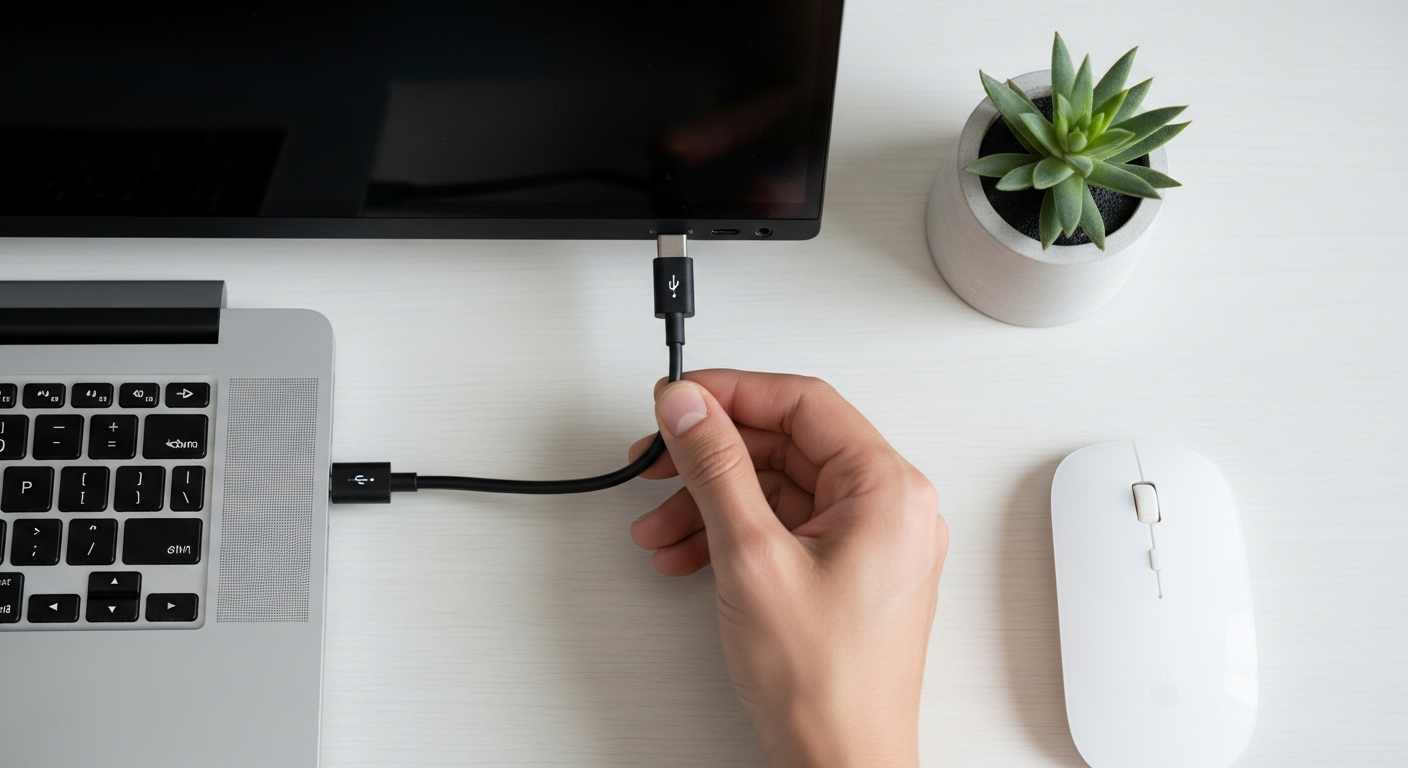
Many contemporary travel monitors are truly plug-and-play, especially those with full-featured USB-C connectivity. If your laptop has a USB-C port that supports DisplayPort Alt Mode and power delivery, a single USB-C cable is all you need. Connect one end to your laptop and the other to the monitor, and your laptop should automatically detect and extend the display.
For HDMI connections, you will typically need an HDMI cable for video and a separate USB cable (usually USB-A to USB-C or micro-USB) for power. Connect both, and the monitor should power on and display your laptop’s screen. You might need to adjust display settings in your operating system.
Driver Installation (If Needed)
While most modern monitors work without special drivers, some older models or those using specific display technologies (like DisplayLink for USB-A connections) might require a one-time driver installation. If your monitor does not automatically display an image, check the manufacturer’s website for driver downloads.
This process is usually straightforward: download the driver, run the installer, and restart your laptop if prompted. Once installed, your monitor should function correctly on subsequent uses without needing to reinstall.
Optimizing Display Settings
After connecting your travel monitor, you may want to optimize your display settings for the best experience. On Windows, go to `Settings > System > Display` to arrange your monitors, change resolution, and adjust scaling. On macOS, navigate to `System Settings > Displays`.
Here, you can choose whether to extend your display (creating a larger workspace) or duplicate it (mirroring your laptop screen). You can also set which monitor is your primary display and adjust the orientation if you prefer a vertical setup for reading documents or coding.
Maximizing Your Mobile Workstation with Accessories
To truly optimize your mobile workstation, consider a few key accessories that complement your travel monitor. These items can enhance protection, extend battery life, and improve overall comfort and productivity while you are away from your main desk.
Investing in the right accessories not only protects your gear but also makes your mobile setup more enjoyable and efficient. Each item serves a specific purpose, contributing to a seamless and powerful portable office experience.
Protective Cases and Sleeves
Given the delicate nature of screens, a good protective case or sleeve is essential for your travel monitor. Many monitors come with a smart cover that doubles as a stand, offering basic protection. However, for frequent travel, a more robust padded sleeve or a dedicated hard case can prevent scratches, dents, and impact damage.
Look for cases that fit your monitor snugly and offer additional pockets for cables and adapters. This keeps all your portable display essentials in one organized and secure place, ready for your next adventure.
Portable Power Banks
If your travel monitor is powered via USB-C from your laptop, it will draw power from your laptop’s battery. For extended work sessions, especially when power outlets are scarce, a high-capacity portable power bank can be a lifesaver. Ensure the power bank supports Power Delivery (PD) and has enough wattage to charge both your laptop and monitor.
This allows you to keep your dual-screen setup running for hours, even on long flights or during remote work trips where wall outlets are not readily available. It is a small investment that offers significant peace of mind.
Ergonomic Keyboards and Mice
While your laptop’s keyboard and trackpad are convenient, an external ergonomic keyboard and mouse can greatly improve comfort and reduce strain during long work periods. Many compact, wireless options are available that are perfect for travel.
Pairing these with your travel monitor allows you to maintain a more natural posture, especially if you position your laptop on a stand and use the external monitor as your main screen. This setup reduces wrist and neck discomfort, making your mobile workstation feel more like a permanent office.
Common Misconceptions About Travel Monitors
Despite their growing popularity, some common misunderstandings about travel monitors persist. Addressing these can help potential users make a more informed decision and appreciate the true value these devices offer.
It is important to separate fact from fiction when considering any new tech purchase. Travel monitors have evolved significantly, becoming more user-friendly and powerful than ever before.
“Many people assume travel monitors are complicated to set up or are a significant drain on laptop battery life. In reality, most modern portable displays are plug-and-play with USB-C, and while they do draw some power, the productivity gains often outweigh the minor battery impact, especially with a good power management strategy or a portable power bank.”
Another misconception is that they are only for tech-savvy individuals. The truth is, if you can connect a USB cable, you can likely set up a travel monitor. Their design prioritizes simplicity and immediate usability, making them accessible to a broad audience, from students to seasoned professionals.
Conclusion
A travel monitor for your laptop is more than just an accessory; it is a transformative tool for anyone seeking to boost productivity, enhance comfort, and maintain efficiency while on the move. From digital nomads to remote workers and students, the benefits of an extended display are undeniable.
By carefully considering features like size, connectivity, resolution, and portability, you can select a monitor that perfectly aligns with your lifestyle and work demands. Paired with the right accessories, your mobile workstation can become as powerful and comfortable as your desk setup.
Embrace the freedom and flexibility that a portable monitor offers. Step into a world where your productivity is no longer limited by screen space, and your office can truly be anywhere you choose.
Frequently Asked Questions (FAQ)
Q1: What is a travel monitor for a laptop?
A travel monitor, also known as a portable monitor, is a lightweight and compact external display designed to be easily carried and connected to a laptop or other devices to extend or duplicate its screen.
Q2: Do travel monitors need a power outlet?
Many modern travel monitors can draw power directly from your laptop via a single USB-C cable. Others may require a separate USB cable for power, which can be connected to your laptop, a wall adapter, or a portable power bank.
Q3: Are travel monitors good for gaming?
Yes, many travel monitors are suitable for casual gaming, offering a larger and more immersive display than a laptop screen. For competitive gaming, look for models with higher refresh rates and low response times, though these are less common in the ultra-portable category.
Q4: Can I connect a travel monitor to my tablet or smartphone?
Absolutely. Many travel monitors are compatible with tablets and smartphones, especially those with USB-C ports that support DisplayPort Alt Mode. This allows you to extend your mobile device’s screen for a larger viewing experience.
Q5: What is the best size for a travel monitor?
The best size depends on your preference and portability needs, but common sizes range from 13.3 to 17.3 inches. A 15.6-inch monitor often strikes a good balance between screen real estate and ease of transport for most users.