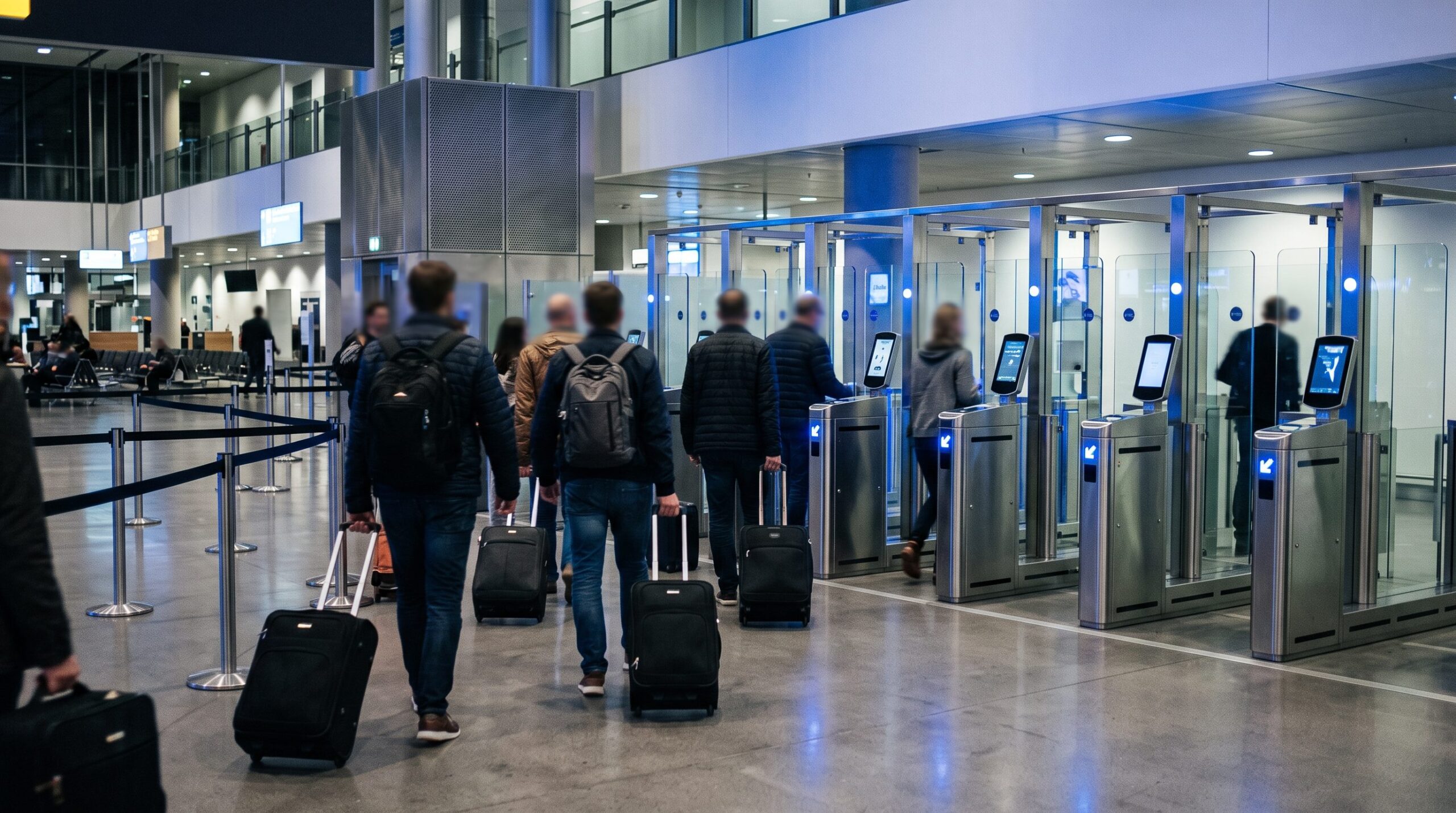

Two different European border systems, one enormous amount of confusion. Here’s the state of play for American travelers in August 2026: ETIAS — the €20 online travel authorization — is NOT yet in effect and has been delayed to 2027, per the EU agency building it. But the EES (Entry/Exit System) — biometric registration at Europe’s borders — has been fully operational since April 10, 2026 and affects you on your very next trip. If a website is offering to sell you an ETIAS today, it’s a scam. If you thought European border lines got longer this year, that’s EES.
Current as of August 2, 2026. Verified against the European Commission’s official communications. Not legal advice.
EES vs ETIAS: The Two-Minute Explainer
| EES (Entry/Exit System) | ETIAS | |
|---|---|---|
| Status | LIVE since April 10, 2026 | Delayed — expected 2027 |
| What it is | Biometric border registration (fingerprints + photo) replacing passport stamps | Pre-travel online authorization, like the US ESTA in reverse |
| What you do | Nothing in advance — happens at the border kiosk on arrival | Apply online before travel, once live |
| Cost | Free | €20 (raised from the original €7); free under 18 and over 70 |
| Validity | Data held ~3 years | 3 years or until passport expiry; multiple entries |
| Where | 30 European countries: the Schengen area (EU except Ireland, plus Iceland, Norway, Liechtenstein, Switzerland) — ETIAS additionally covers Cyprus | |
What Actually Happens at the Border Now (EES)
Since April 10, 2026, the EES is fully rolled out across the Schengen area. On your first entry, you’ll register at a kiosk or booth: fingerprints, a facial photo, and your passport details go into the system, and stamps are history. Subsequent entries within about three years are faster — biometric verification instead of full registration. Practical effects for Americans:
- Build in extra time on first entry — initial registration caused significant queues at major hubs this summer.
- The 90/180 rule is now enforced by computer. The days of a border officer eyeballing faded stamps are over: overstays are calculated automatically, and the consequences (entry bans) attach to your biometric record.
- Nothing to apply for in advance. EES has no application, no website, no fee. Anyone charging you for “EES registration” is defrauding you.
ETIAS: What It Will Be (When It Finally Arrives)
ETIAS is Europe’s answer to the US ESTA: visa-exempt travelers — Americans, Canadians, Brits, Australians, Japanese, and citizens of ~55 other countries — will complete an online application before travel. The verified facts:
- Fee: €20 (about $23), waived for under-18s and over-70s — though they still need the authorization itself.
- Valid 3 years or until your passport expires; unlimited entries within the standard 90-days-per-180 limit.
- Most approvals in minutes; up to 4 days normally, 14 with document requests, 30 if an interview is required.
- A 6-month grace period is planned after launch — travelers without ETIAS won’t initially be turned away if they meet other entry conditions.
- Apply ONLY at the official EU site (travel-europe.europa.eu) or official app when it opens. Third-party “ETIAS application” sites charging fees today are at best middlemen, at worst fraud.
Why the delay?
ETIAS was originally slated for 2021 and has been postponed repeatedly. The latest: eu-LISA, the EU agency operating the system, acknowledged a late-2026 start was no longer feasible — reporting points to 2027, partly because the EES rollout consumed this year. The EU says the real start date will be announced several months in advance.
What US Travelers Should Do
- For any 2026 Europe trip: no ETIAS needed. Expect EES biometrics at the border; arrive with time to spare on your first post-April entry.
- Check your passport’s expiry — Schengen requires validity three months beyond departure, and the practical six-month rule still applies for many itineraries. Renewing? Here’s how to expedite a US passport.
- Count your days. With EES doing the math, the 90/180 rule has real teeth now. Track your Schengen days deliberately.
- Bookmark the official ETIAS page and ignore everything else. When it launches, applying will take minutes.
Frequently Asked Questions
Do US citizens need ETIAS in 2026?
No. ETIAS is not operational and has been delayed to 2027. For 2026 travel to Europe, Americans need only a valid passport (plus EES biometric registration at the border, which requires no advance action).
Is the ETIAS fee $7 or €20?
€20. The original €7 figure was raised in July 2025. Under-18s and over-70s pay nothing but still need the authorization once the system is live.
What is the EES and do I need to register in advance?
The Entry/Exit System is biometric border registration — fingerprints and a photo captured at the border itself, live since April 10, 2026. There is no advance registration, no website, and no fee.
Will I be denied entry without ETIAS when it launches?
Not immediately — a transitional period of at least six months is planned during which travelers without ETIAS who meet the other entry conditions will still be admitted. Don’t rely on it longer than necessary.
Which countries will require ETIAS?
Thirty European countries: the full Schengen area — every EU state except Ireland, plus Iceland, Norway, Liechtenstein, and Switzerland — with Cyprus included in ETIAS as well.
Does ETIAS change how long I can stay in Europe?
No. The 90-days-in-any-180 limit for visa-free visitors is unchanged — ETIAS is an authorization to travel, not a visa or an extended stay permit.
Sources
- European Commission — Differences between EES and ETIAS (April 2026)
- European Union — Official ETIAS page
- European Union — Official EES page
Note: Dates and fees verified against official EU communications as of August 2, 2026; the ETIAS start date will be announced by the EU several months ahead of launch.
Official sources to check before you apply or travel
Visa rules, fees, processing times and entry requirements change often. Always confirm the current requirements on the official government website, or with the embassy or consulate, before you apply, pay or travel. One Visa Center is an independent information site, not a law firm or government agency, and this article is not legal advice. Read how we research, fact-check and use AI tools in our Editorial Policy.
Get visa, passport, and travel-planning guides like this one sent straight to your inbox — plus first access to new country guides and scholarship roundups.