Passport Expiring Soon? Navigate International Travel with the 6-Month Rule
Imagine planning your dream vacation, booking flights, and packing your bags, only to be turned away at the airport. For many travelers, this nightmare scenario becomes a reality due to an often-overlooked detail: passport validity. As of today, March 27, 2026, understanding your passport’s expiration date is more critical than ever, especially when considering international travel within six months of that date.
Many countries around the globe enforce a strict “6-month passport rule.” This means your passport must be valid for at least six months beyond your planned entry date, or sometimes even beyond your planned departure date, from their country. Failing to meet this requirement can lead to denied boarding by airlines or refusal of entry by immigration officials, no matter how valid your ticket or visa might be. This article will guide you through the intricacies of the 6-month rule, helping you travel confidently and avoid unexpected setbacks.
Key Takeaways
- The 6-Month Rule is Widespread: Most countries require your passport to be valid for at least six months beyond your intended stay.
- Check Destination Rules Early: Always verify the specific passport validity requirements for every country you plan to visit or transit through.
- Airlines Enforce It: Airlines will deny boarding if your passport doesn’t meet the destination country’s validity requirements.
- Renewal Takes Time: Standard passport renewal can take weeks or even months, so plan well in advance.
- Expedited Options Exist: For urgent travel, expedited renewal services are available, but they come with higher costs.
Understanding the Crucial 6-Month Passport Rule
The 6-month passport validity rule is a common international travel standard. Its primary purpose is to ensure that visitors have ample time to address unforeseen circumstances during their stay. For example, if a traveler needs to extend their trip due to an emergency, illness, or travel disruption, a passport with sufficient remaining validity prevents them from becoming undocumented.
This rule gives foreign governments a buffer. It prevents situations where a traveler’s passport might expire while they are still in the country, creating complex immigration issues. While seemingly strict, it’s a measure designed for both the traveler’s protection and the host country’s administrative ease.
Not all countries apply this rule in the same way. Some might require three months of validity, others six, and a few might only require validity for the duration of your intended stay. The key is never to assume and always to check.

Countries That Strictly Enforce the 6-Month Validity
Many popular travel destinations strictly adhere to the 6-month passport validity rule. This list includes, but is not limited to, a significant number of countries in Asia, Africa, the Middle East, and some in Central and South America. For instance, countries like China, India, Indonesia, Thailand, Malaysia, the UAE, and many nations in the Schengen Area (though often 3 months beyond intended departure for Schengen) are known for strict enforcement.
Ignoring this rule can lead to significant stress and financial loss. It’s not uncommon for travelers to be turned away at their departure airport because their passport doesn’t meet the destination’s validity requirements. The airline is responsible for ensuring passengers meet entry requirements, and they will err on the side of caution.
To help illustrate, here’s a general comparison of how different regions might approach passport validity. Remember, specific country rules can vary even within these regions.
| Region/Country Type | Passport Validity Requirement (General) | Notes |
| **Schengen Area** | 3 months beyond intended departure | Some countries may require more; always check. |
| **Most of Asia** | 6 months beyond intended entry/stay | Very common, apply to popular destinations like Thailand, Indonesia. |
| **Most of Africa** | 6 months beyond intended entry/stay | Widely enforced across the continent. |
| **Middle East** | 6 months beyond intended entry/stay | Including UAE, Saudi Arabia. |
| **Americas (North)** | Valid for duration of stay | USA, Canada generally require validity for stay. |
| **Americas (Central/South)** | Varies (3-6 months common) | Some countries like Brazil, Mexico may be more lenient, others strict. |
It is essential to check the official government website of your destination country or consult their embassy or consulate. Websites like the U.S. Department of State’s country information pages or the UK’s foreign travel advice provide up-to-date details.
The Serious Risks of Ignoring Passport Validity
The consequences of traveling with a passport that doesn’t meet the 6-month rule can be severe. The most immediate risk is being denied boarding by your airline. Airlines are fined if they transport passengers who are subsequently denied entry to a country. Therefore, they rigorously check passport validity before you even get on the plane. If your passport doesn’t meet the requirements, you will not be allowed to fly, and your ticket will likely be forfeited without a refund.
“Travelers often underestimate the power of immigration laws. A passport is not just an identification document; it’s your permission slip to enter another sovereign nation. If that slip isn’t valid by their rules, your journey ends before it begins, regardless of your flight itinerary or hotel bookings.“
Even if you somehow manage to board your flight, the risks continue. Upon arrival at your destination, immigration officials have the final say on your entry. If your passport does not meet their validity requirements, you will be denied entry. This means you’ll be put on the next available flight back to your point of origin, often at your own expense, and face immense disruption to your travel plans.
Furthermore, travel insurance policies often have clauses regarding valid travel documents. If your trip is disrupted or canceled due to an invalid passport, your travel insurance claim might be denied, leaving you fully responsible for all incurred costs. This adds another layer of financial risk to an already stressful situation.
How to Verify Your Passport and Destination Requirements
Verifying your passport’s expiration date is straightforward. Simply open your passport to the page with your personal information, and you will find the “Date of Expiry” clearly marked. Make a note of this date and always factor in the 6-month buffer when planning any international trip.
Checking destination requirements is equally vital. Do not rely on hearsay or outdated information. Always consult official sources:
- Embassy or Consulate Websites: The most authoritative source for entry requirements is the embassy or consulate of the country you plan to visit, located in your home country.
- Government Travel Advisories: Your own government’s travel advisory website (e.g., U.S. Department of State, UK Foreign, Commonwealth & Development Office, Global Affairs Canada) provides comprehensive information on entry and exit requirements for various countries.
- Airline Resources: Many airlines offer tools on their websites where you can input your nationality, destination, and passport details to check requirements. While useful, always cross-reference with official government sources.
Remember to check requirements for any transit countries as well, even if you are only passing through the airport. Some countries have specific transit visa or passport validity rules.
Your Options When Your Passport is Expiring Soon
If you discover your passport is expiring within the next six to seven months, it’s time to take action. You have several options, depending on your urgency and travel plans:
1. Standard Passport Renewal
This is the most common and cost-effective option. You apply through your country’s passport agency or post office. Standard processing times can vary significantly, often ranging from 6 to 10 weeks or even longer during peak travel seasons. For instance, in early 2026, many passport agencies recommend applying several months in advance of planned travel.
- Process: Typically involves completing an application form, providing new photos, your old passport, and proof of citizenship (if required).
- Cost: Standard government fees apply.
- Timeline: Plan for at least 2-3 months before any international travel.
2. Expedited Passport Renewal
If you have imminent travel plans (e.g., within 2-3 months) and your passport is expiring soon, expedited services are available. These services significantly reduce processing times but come with an additional fee.
- Process: Similar to standard renewal but marked for urgent processing. May require proof of urgent travel (e.g., flight itinerary).
- Cost: Higher government fees plus expedition fees.
- Timeline: Can range from 2-3 weeks down to a few business days, depending on the level of urgency paid for.
3. Emergency Passport or In-Person Agency Appointments
For truly urgent situations, such as travel within a few days or a week due to a life-or-death emergency, you may be able to secure an emergency passport or an in-person appointment at a passport agency. These are typically reserved for extreme cases.
- Process: Requires significant documentation of the emergency and proof of immediate travel.
- Cost: High, often including expedited fees.
- Timeline: Can be issued within 24-72 hours.
Always start the renewal process as soon as you notice your passport is nearing the 6-month validity mark. Procrastination is the biggest enemy of smooth international travel.
Planning Smart: Renew or Travel?
The decision to renew your passport immediately or attempt to travel depends entirely on your destination and the remaining validity. If your passport has less than six months of validity left and your destination enforces the 6-month rule, renewal is your only safe option.
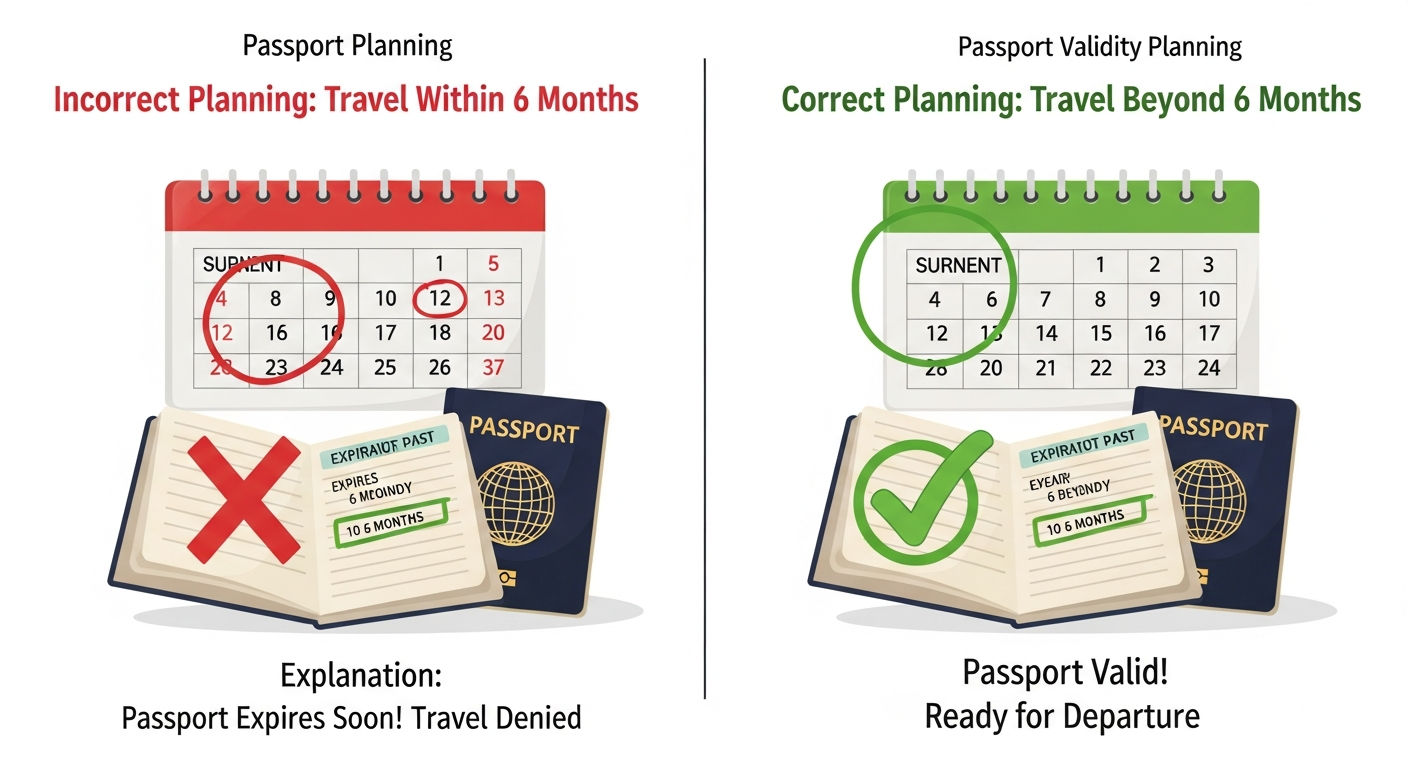
Consider these points when making your decision:
- Destination Rules: Re-confirm the exact validity requirements for your specific destination(s). If it’s a 3-month rule and you have 5 months left, you might be fine. If it’s a 6-month rule and you have 5 months left, you are not.
- Travel Dates: How soon are you traveling? If your trip is months away, a standard renewal might be feasible. If it’s weeks away, expedited services are likely necessary.
- Risk Tolerance: Are you willing to risk being denied boarding or entry? For most, the answer is no, making renewal the clear choice.
- Cost vs. Convenience: Expedited renewal costs more, but it offers peace of mind and ensures your trip proceeds as planned.
It’s always better to have more validity than less. A passport with ample validity (e.g., more than a year) offers maximum flexibility and peace of mind for spontaneous trips or unexpected changes in travel plans. Don’t wait until the last minute to check this critical detail.
Conclusion
Traveling with a passport expiring in less than six months can turn a dream trip into a logistical nightmare. The 6-month passport validity rule is a serious requirement enforced by many countries and airlines worldwide. By understanding this rule, checking your passport’s expiration date well in advance, and verifying your destination’s specific entry requirements, you can save yourself from significant stress, financial loss, and travel disruptions. When in doubt, always renew your passport. A little proactive planning goes a long way in ensuring your international adventures are smooth, enjoyable, and hassle-free.
FAQ Section
Q: Can I travel internationally if my passport expires in 5 months?
A: It depends on your destination. Many countries require your passport to be valid for at least six months beyond your intended stay. If your destination has this rule, you will likely be denied boarding or entry. Always check the specific requirements for every country you plan to visit or transit through.
Q: Which countries do not require 6 months validity on a passport?
A: Some countries, like the USA, Canada, and Mexico, generally only require your passport to be valid for the duration of your intended stay. Countries in the Schengen Area often require three months of validity beyond your intended departure date. However, these rules can change, so always verify with official government sources for your specific destination.
Q: What happens if I fly with a passport expiring in less than 6 months?
A: If your destination country enforces the 6-month rule and your passport doesn’t meet it, you will most likely be denied boarding by the airline at your departure airport. If you somehow manage to board, you will almost certainly be denied entry by immigration officials upon arrival and sent back to your point of origin at your own expense.
Q: How soon can I renew my passport?
A: You can generally renew your passport at any time before its expiration date. Many experts recommend renewing when your passport has about 9-12 months of validity remaining, especially if you travel frequently, to avoid any issues with the 6-month rule or unexpected travel plans. Standard processing can take several weeks or months, so plan well ahead.
Q: Is the 6-month passport rule for entry or exit?
A: The 6-month passport rule typically refers to the validity required upon entry to a country, extending six months beyond your intended departure date from that country. Some countries specify validity beyond entry, while others specify beyond departure. It’s crucial to check the exact phrasing for your specific destination to ensure full compliance.