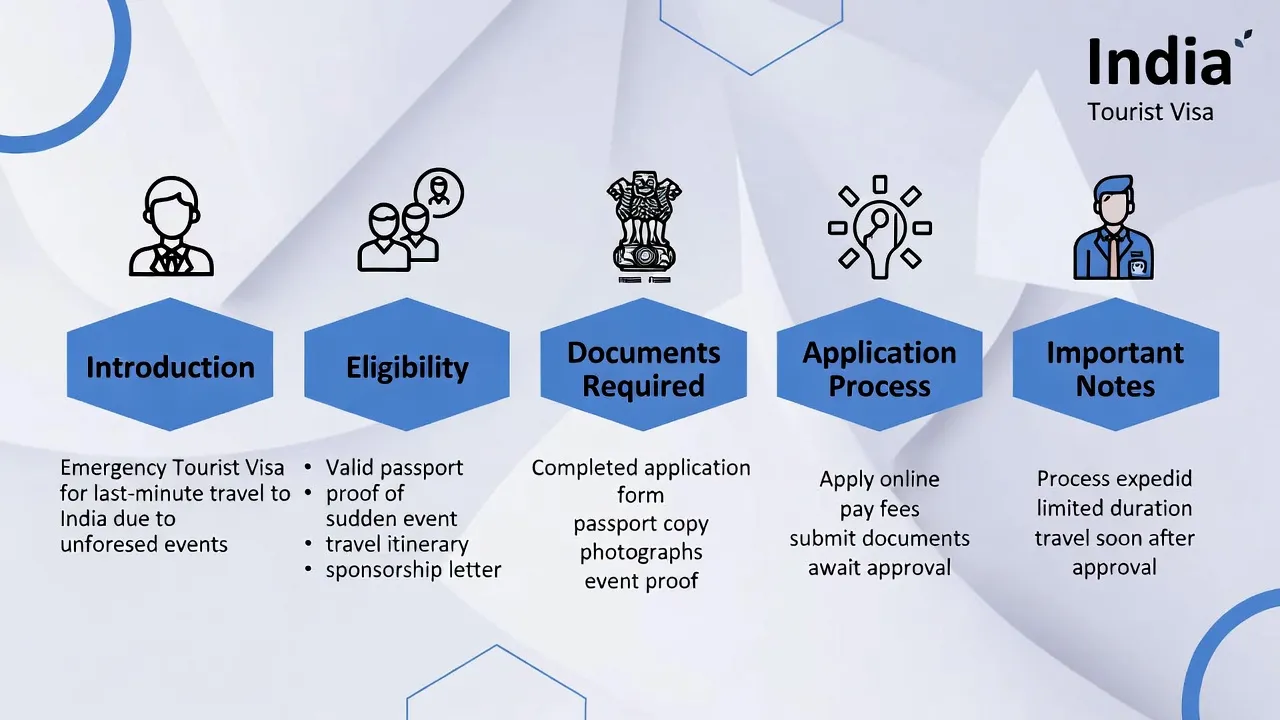

Sometimes, life happens fast. You might need to travel to India right away because of a family crisis or a medical emergency. When you cannot wait weeks for a standard visa, the India Emergency Visa is your fastest option.
In this guide, we will explain everything you need to know about getting an emergency visa in 2026. We use simple words so everyone can understand the steps. We will cover who can apply, what documents you need, and how to make sure your application is approved quickly.
1. Key Takeaways for Quick Results
If you are in a rush, here are the most important things to know:
- Definition: An Emergency Visa is for genuine life-or-death situations, like the death or serious illness of a close family member.
- Speed: It can often be processed in 24 to 48 hours, depending on your local embassy.
- Proof is Required: You must show a death certificate or a doctor’s letter from a hospital in India.
- Different from e-Visa: While a standard e-Visa is fast, an Emergency Visa (Entry-X) is handled by the embassy directly for extreme cases.
- No Extra Fees for e-Visas: The Indian government does not charge “emergency fees” for the online e-Visa, but physical embassy emergency services may have a specific service charge.
2. What is an Emergency Visa for India?
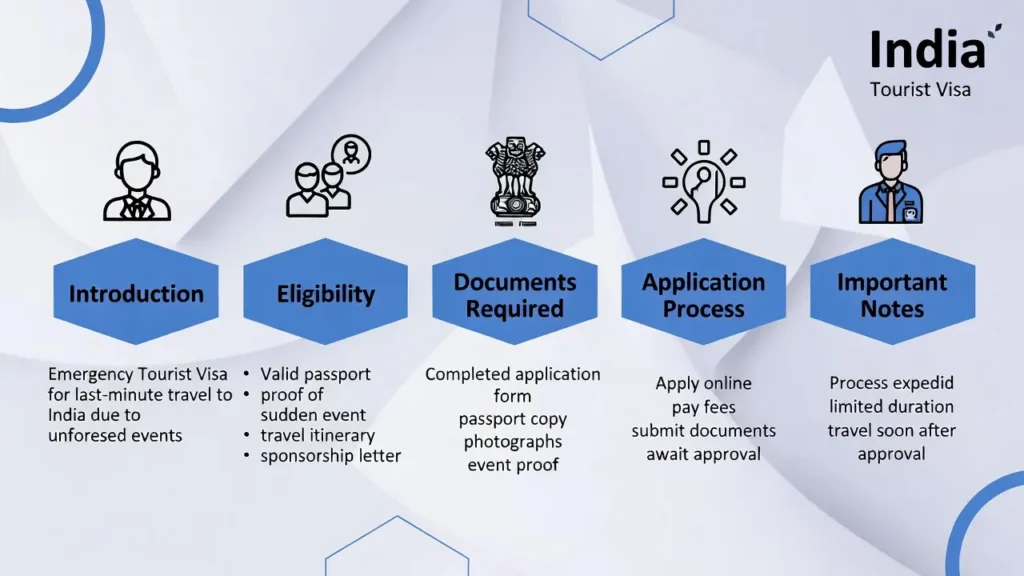
An Emergency Visa is a special type of entry permit. It is meant for people who must travel to India immediately. This is usually due to a family emergency. In 2026, the Indian government has made this process very strict to ensure only those who truly need it can get it.
Who can apply?
Most often, this visa is available for:
- People of Indian Origin (PIO): Those who used to have an Indian passport or whose parents/grandparents were Indian.
- Foreigners with Family in India: If you have a spouse or close relative in India facing a medical crisis.
- Medical Emergencies: If you are traveling for your own urgent surgery or treatment in India.
Important Note: A last-minute vacation or a missed flight does not count as an emergency. The embassy will reject your request if the reason is just for “tourism” without a crisis.
3. Comparing Visa Types: Which one is for you?
It is easy to get confused between a regular tourist visa and an emergency one. Use this table to see the difference.
Visa Comparison Table 2026
| Feature | Standard e-Tourist Visa | Emergency (Entry-X) Visa |
| Purpose | Sightseeing, visiting friends | Death or serious illness in family |
| Processing Time | 72 hours to 4 days | 24 to 48 hours |
| Application Site | Online (Indian Visa Online) | Local Embassy or VFS Global |
| Documents | Passport & Photo | Medical Proof/Death Certificate |
| Validity | 30 days, 1 year, or 5 years | Usually 6 months (single entry) |
4. How to Apply for an India Emergency Visa
The process for an emergency visa usually involves a mix of online forms and a physical visit to the embassy or a visa center like VFS Global.
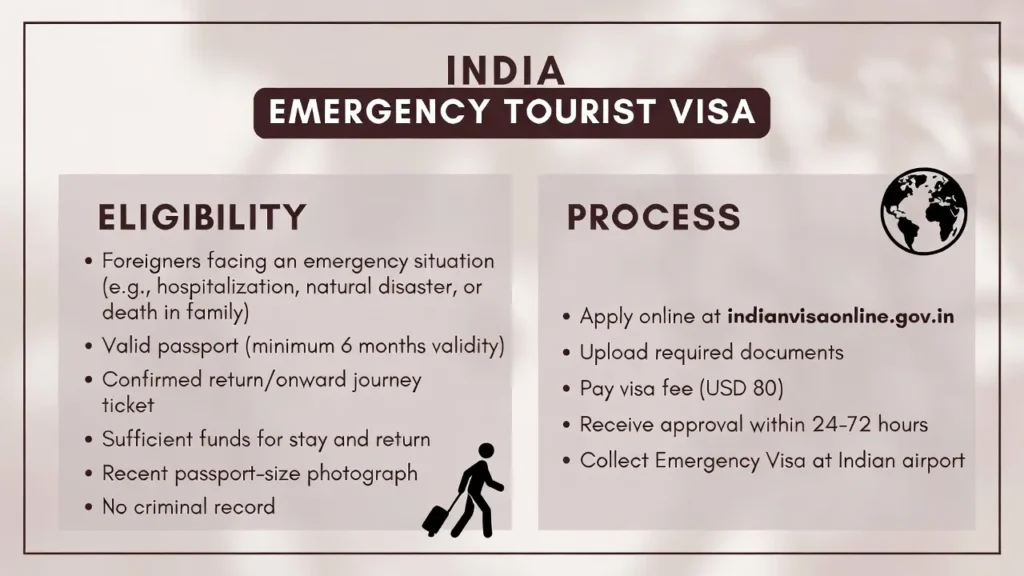
Step 1: Gather Your Proof
Before you do anything else, you need evidence. The Indian embassy will not talk to you about an emergency visa without one of these:
- A Death Certificate: If a relative has passed away.
- A Hospital Letter: A letter from a registered hospital in India explaining the patient’s critical condition.
- Cremation/Funeral Note: Evidence of the scheduled service.
Step 2: Fill out the Online Form
Even for an emergency, you must start at the Official Indian Visa Website. Select the Regular/Paper Visa Application. Do not choose e-Visa if you are going to the embassy in person for an emergency sticker.
Step 3: Contact the Emergency Helpline
In 2026, many Indian embassies (like those in the USA, UK, and Canada) have a 24/7 Emergency Helpline.
- Find your local embassy’s website.
- Look for the “Consular Services” or “Emergency Visa” tab.
- Call the number provided to explain your situation.
Step 4: Visit the Embassy
Unlike a regular visa where you might mail your passport, an emergency visa often requires you to go in person. Bring your documents, your passport, and two 2×2 inch photos.
5. Documents You Must Bring
To avoid delays, make sure your “paperwork” is perfect. The Indian government is very picky about photo sizes and signatures.
- Valid Passport: Must have at least 6 months of validity and 2 blank pages.
- Photos: Two recent color photos (2 inches by 2 inches) with a white background.
- Proof of Address: A driver’s license or a utility bill (to show you live in the area the embassy covers).
- Relationship Proof: If you are visiting a sick parent, bring your birth certificate to prove they are your parent.
- Emergency Documents: As mentioned before (Doctor’s letter or Death certificate).
- The Fee: Usually paid via money order or debit card (check your local embassy’s rules).
6. The 2026 e-Visa Option (Express Processing)
If your situation is urgent but not a “life-or-death” emergency, you might prefer the e-Tourist Visa. In 2026, the Indian e-Visa system is very fast.
- Apply 4 days early: You should apply at least 4 days before you fly.
- Receive via Email: You get an “Electronic Travel Authorization” (ETA) in your email.
- Print it out: You must carry a printed copy to the airport.
Warning: Be careful of “fake” websites. Only use the official .gov.in website. Many sites look real but charge $200 extra for “fast service” that they cannot actually provide.
7. Common Mistakes to Avoid
Many people have their emergency visa rejected because of small errors. Here is a list of what to watch out for:
- Blurry Photos: If the photo you upload is blurry or has a dark background, the system will reject it.
- Wrong Visa Category: Selecting “Tourist” when you are going for a “Medical Emergency” can cause delays.
- Mismatched Names: Ensure the name on your visa form matches your passport exactly. If your passport has a middle name, your visa form must have it too.
- Incorrect Hospital Details: If using a medical letter, ensure the hospital’s phone number and address are clearly listed. The embassy might call them to check.
8. Frequently Asked Questions (FAQ)
1. Can I get a visa on arrival in India?
No. India does not offer a standard “Visa on Arrival” for most countries. You must have either a printed e-Visa (ETA) or a physical visa sticker in your passport before you board your flight.
2. Is there an extra fee for an Emergency Visa?
Yes. Embassies usually charge an “Emergency Service Fee” on top of the regular visa price. This fee pays for the staff to process your application outside of normal hours.
3. Does a “Letter of Invitation” help?
For a tourist emergency, a letter from your family in India helps. It should state your relationship and why you need to be there immediately.
4. What if I am a former Indian citizen?
If you used to be an Indian citizen, you must provide your Renunciation Certificate. If you haven’t officially “given up” your Indian citizenship yet, the emergency process might take a little longer.
5. Can I apply on a weekend?
Many Indian consulates have an emergency officer on duty during weekends for extreme cases (like a death). Check the “Emergency Helpline” on their official website.
9. Helpful Links and Resources
- Official Visa Portal: indianvisaonline.gov.in
- Bureau of Immigration: boi.gov.in
- VFS Global (India Services): vfsglobal.com
- Internal Link: [How to Take the Perfect Visa Photo at Home]
- Internal Link: [Understanding the 180-day Rule for Indian Visas]
10. Final Checklist for Your Emergency Trip
Before you head to the airport, check this list one last time:
- [ ] Do I have my passport?
- [ ] Do I have the printed visa (or the sticker inside)?
- [ ] Did I bring the medical/death certificate (original or copy)?
- [ ] Is my flight confirmed?
- [ ] Did I check the latest 2026 health rules for India?
Traveling for an emergency is stressful. By following these steps, you can focus on your family instead of worrying about your paperwork. The Indian government wants to help people in crisis, so as long as you are honest and prepared, you will likely get your visa quickly.
Would you like me to help you find the specific emergency phone number for the Indian Embassy in your city?
Related Articles
- US Visa from Nigeria: What’s Possible in 2026
- EB-3 Visa for Nurses: Schedule A Green Card Guide 2026
- August 2026 Visa Bulletin: EB-1 to EB-4 Dates Explained
Official sources to check before you apply or travel
- GOV.UK foreign travel advice (entry requirements by country)
- Government of Canada travel advice and advisories
Visa rules, fees, processing times and entry requirements change often. Always confirm the current requirements on the official government website, or with the embassy or consulate, before you apply, pay or travel. One Visa Center is an independent information site, not a law firm or government agency, and this article is not legal advice. Read how we research, fact-check and use AI tools in our Editorial Policy.
Get visa, passport, and travel-planning guides like this one sent straight to your inbox — plus first access to new country guides and scholarship roundups.