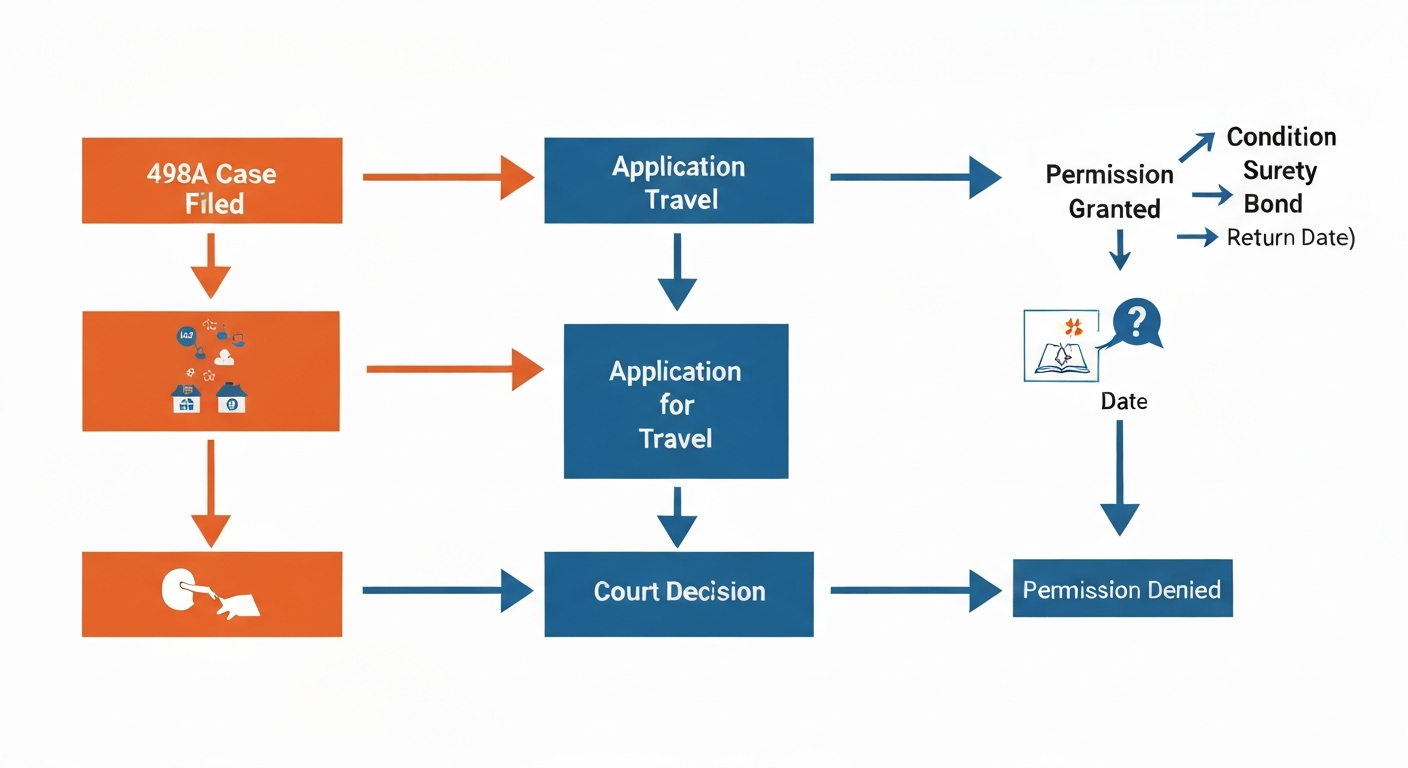
Navigating 498A: Can Husbands Travel Abroad While Facing a Case?When a husband faces a case under Section 498A of the Indian Penal Code (IPC), life can become incredibly challenging. This serious legal charge often brings with it a host of restrictions and uncertainties. One of the most pressing questions for many accused individuals is whether they are allowed to travel abroad, especially for work, family, or personal reasons. This article will thoroughly explore the legal provisions and practical steps involved, offering clear guidance on how a husband can potentially secure permission to travel internationally while a 498A case is ongoing. We aim to clarify the complexities and provide a roadmap for navigating this sensitive situation. Key Takeaways1. **Travel is Not Automatically Barred**: Facing a 498A case does not automatically stop a husband from traveling abroad, but it requires specific legal steps.2. **Court Permission is Essential**: The primary requirement for international travel is obtaining explicit permission from the court handling the 498A case.3. **Bail Conditions are Crucial**: If the husband is on bail, his travel will be governed by the conditions set during the bail order, which may include restrictions on leaving the country.4. **Detailed Application Required**: A formal application to the court must outline the purpose, duration, and destination of travel, supported by valid reasons.5. **Legal Expertise is Paramount**: Engaging an experienced criminal lawyer is vital to navigate the application process, represent the husband’s case, and ensure compliance with all legal requirements. Understanding IPC Section 498A: A Brief Overview What is 498A?Section 498A of the Indian Penal Code deals with cruelty by a husband or his relatives towards a woman. This section was introduced to protect married women from harassment and abuse, particularly concerning dowry demands. The law defines cruelty broadly, including any willful conduct likely to drive a woman to suicide, cause grave injury or danger to life, limb, or health, or harassment with a view to coercing her or any person related to her to meet any unlawful demand for property or valuable security.It’s important to understand that a 498A case is a cognizable, non-bailable, and non-compoundable offense in most states. This means that the police can arrest the accused without a warrant, bail is not a matter of right but granted at the court’s discretion, and the case generally cannot be settled out of court without formal legal procedures. The serious nature of this offense often leads to significant legal implications for the accused. Implications for the AccusedBeing accused under Section 498A carries substantial implications. Beyond the immediate legal proceedings, it can severely impact an individual’s reputation, career, and personal life. The process can be lengthy, involving numerous court appearances, legal fees, and immense emotional stress. For those who travel frequently for work or have family abroad, the inability to leave the country can add another layer of difficulty.The court often takes a strict view of such cases, and any perceived attempt to evade justice, such as unauthorized travel, can have severe consequences. Therefore, understanding the legal framework and adhering to due process is critical for anyone facing a 498A charge. The Core Question: Can a Husband Travel During a 498A Case? General PrincipleThe simple answer is: *it depends*. There is no blanket ban preventing a husband from traveling abroad just because a 498A case has been filed against him. However, his ability to travel is entirely at the discretion of the court handling the case. The court will assess various factors before granting or denying permission. When Travel is RestrictedTypically, travel restrictions come into play in a few scenarios. If the husband’s passport has been impounded as part of the investigation or during bail proceedings, he cannot travel. Furthermore, if he has been granted bail, the bail order itself might contain specific conditions restricting international travel. These conditions are usually imposed to ensure the accused does not flee the country and remains available for trial.The court may also impose travel restrictions if there is a perceived flight risk, meaning the court believes the accused might not return to India to face trial if allowed to leave. The severity of the allegations, the stage of the trial, and the accused’s past conduct can all contribute to the court’s decision regarding travel restrictions. Seeking Court PermissionFor a husband facing a 498A case to travel abroad, obtaining explicit court permission is not just advisable, but absolutely mandatory. Traveling without such permission, especially if there are existing travel restrictions or if the passport is held by the authorities, can lead to severe legal repercussions, including the cancellation of bail and issuance of an arrest warrant. This step underscores the importance of legal diligence and transparency with the judicial system. The Process of Obtaining Travel Permission Application to the CourtThe first step is to file a formal application (often called a ‘No Objection Certificate’ or ‘Permission to Travel Abroad’ application) before the court where the 498A case is pending. This application must be supported by an affidavit, which is a sworn statement of facts. The application should clearly state the reasons for travel, the destination, the exact dates of departure and return, and an assurance that the applicant will return to India and cooperate with the legal process.It’s crucial that the application is well-drafted and presented by a competent lawyer. The lawyer will highlight the necessity of the travel and assure the court of the applicant’s commitment to the legal proceedings. Any attempt to conceal information or misrepresent facts can severely prejudice the application. Key Information RequiredTo bolster the application, specific details must be provided to the court. These include:1. **Purpose of Travel**: Is it for work, medical treatment, family emergency, or leisure? Supporting documents like invitation letters, medical reports, or employment letters should be attached.2. **Destination and Itinerary**: Specific countries or cities to be visited, along with a detailed travel plan.3. **Duration of Stay**: Clear departure and return dates.4. **Contact Information**: A reliable contact number and address abroad.5. **Undertaking**: A sworn statement promising to return to India by the specified date and to fully cooperate with the ongoing legal proceedings. Conditions the Court May ImposeEven when permission is granted, courts often impose certain conditions to ensure the accused’s return and continued participation in the trial. These conditions might include:1. **Furnishing a Surety**: Providing a local person who guarantees the accused’s return to India.2. **Depositing an Additional Bond**: Submitting a monetary guarantee to the court, which may be forfeited if the conditions are violated.3. **Reporting to a Local Police Station**: Sometimes, the court may ask the accused to report to a specific police station upon return.4. **Submitting a Detailed Itinerary**: Providing a day-by-day plan of travel.5. **Specifying a Return Date**: A strict deadline for returning to India.The court may also direct the accused to deposit their passport with the court immediately upon their return. These conditions are designed to balance the accused’s right to travel with the need to ensure justice is served. Factors Influencing Court DecisionsThe court’s decision to grant or deny travel permission is based on a careful evaluation of several factors. These often include the stage of the trial, the nature and gravity of the allegations, the accused’s past conduct, and the likelihood of them absconding. A comparison of factors generally considered by courts is provided below:| Factors for Granting Permission | Factors for Denying Permission ||———————————|———————————|| Genuine and urgent reason for travel (e.g., job, medical, family emergency) | No compelling reason for travel; leisure-only trips may be viewed critically || Accused has consistently cooperated with the investigation and trial | Accused has a history of non-cooperation, evading summons, or delaying trial || No prior instances of violating bail conditions or court orders | Previous violation of bail conditions or unauthorized travel attempts || Strong ties to India (family, property, stable job) indicating low flight risk | Weak ties to India, suggesting a higher flight risk || Case is at an early stage, or evidence collection is largely complete | Case is at a critical stage (e.g., examination of key witnesses) || Accused provides a detailed itinerary and strong assurance of return | Vague travel plans or lack of convincing assurance of return || Accused agrees to furnish additional surety or bond as required | Refusal to comply with reasonable court conditions || No objection from the complainant party (though not always decisive) | Strong objections from the complainant party, with valid reasons | Practical Steps Before Traveling Engage a Skilled LawyerThe importance of retaining an experienced criminal lawyer cannot be overstated. A lawyer specializing in 498A cases will know the specific procedures, precedents, and arguments to present to the court. They can draft a robust application, represent your case effectively, and advise you on all legal requirements and potential pitfalls. Their expertise is crucial in navigating the legal complexities and increasing the chances of a favorable outcome. Gather Necessary DocumentsEnsure all supporting documents for your travel application are meticulously prepared. This includes your passport, visa details (if applicable), flight tickets, accommodation bookings, invitation letters (for work or family), medical certificates (for health-related travel), and any other evidence that substantiates the purpose and necessity of your trip. Having all documents in order demonstrates sincerity and helps the court make an informed decision. Comply with Court OrdersStrictly adhere to any and all conditions imposed by the court. This includes furnishing any required sureties or bonds, submitting your itinerary, and committing to your return date. Any deviation from these conditions can lead to severe legal consequences, including the cancellation of your bail and issuance of an arrest warrant. Transparency and compliance are key to maintaining the court’s trust. Consequences of Unauthorized Travel Legal RamificationsTraveling abroad without the court’s explicit permission, especially if there are restrictions in place, is a serious offense. The most immediate consequence is the potential cancellation of your bail. Once bail is canceled, the court can issue a non-bailable arrest warrant against you. This means you could be arrested upon your return to India or even face extradition proceedings if you are found in another country.The court may also initiate separate proceedings for contempt of court, which carries its own penalties. Such actions demonstrate a disregard for the judicial process and can severely complicate your legal standing in the 498A case. Impact on the CaseUnauthorized travel can significantly prejudice your ongoing 498A case. It creates a negative impression on the judge, suggesting that you are a flight risk or are trying to evade justice. This can lead to a more stringent approach from the prosecution and a less sympathetic view from the court, potentially impacting the final judgment.It can also be interpreted as an admission of guilt or an attempt to obstruct justice, making it harder for your lawyer to defend you effectively. The focus of the trial might shift from the merits of the 498A allegations to your conduct regarding the travel, complicating the entire legal process. Post-Travel Compliance Reporting Back to CourtOnce you return to India, it is imperative to report back to the court as per the conditions set in your travel permission order. This usually involves filing an affidavit confirming your return and sometimes physically appearing before the court. This step demonstrates your adherence to the court’s directives and your commitment to the legal process.Failing to report back as required can be viewed as a breach of the court’s order, potentially leading to further legal complications or even the re-imposition of travel restrictions in the future. Adhering to Bail ConditionsEven after your travel, all original bail conditions remain in effect. You must continue to attend all court hearings, cooperate with the investigation, and refrain from tampering with evidence or intimidating witnesses. Any violation of these ongoing conditions can still lead to the cancellation of your bail and subsequent arrest.Maintaining strict compliance with all court orders and bail conditions throughout the duration of the 498A case is crucial for a smooth legal process and for ensuring your ability to defend yourself effectively. ConclusionNavigating a 498A case, especially when international travel is a necessity, requires meticulous planning, strict adherence to legal procedures, and expert legal guidance. While a 498A charge does not automatically bar a husband from traveling abroad, securing explicit court permission is an indispensable step. The court will weigh various factors, including the purpose of travel, the accused’s conduct, and the likelihood of their return, before granting permission, often with specific conditions.Engaging a skilled criminal lawyer from the outset is paramount. They can guide you through the application process, represent your interests effectively, and ensure that all legal requirements are met. Unauthorized travel carries severe legal consequences, including bail cancellation and arrest warrants, which can significantly jeopardize your case. By understanding the legal framework, acting transparently, and complying with all court orders, individuals facing 498A charges can navigate the complexities of international travel while upholding their legal responsibilities. FAQ Q1: Is it possible for a husband to get his passport back if it’s impounded in a 498A case for travel?A1: Yes, it is possible. You would need to file a separate application with the court requesting the release of your passport for travel purposes. The court will consider your request based on the reasons provided, your cooperation in the case, and may impose conditions like furnishing an additional bond or surety. Q2: How long does it typically take to get court permission for international travel in a 498A case?A2: The timeline can vary widely depending on the court’s schedule, the complexity of the case, and how quickly your application is processed. It could range from a few weeks to several months. It’s advisable to apply well in advance of your intended travel date. Q3: Can I travel to any country if the court grants permission?A3: The court’s permission will usually specify the countries or regions you are allowed to visit and the duration of your stay. You must adhere strictly to these terms. Any deviation could be considered a violation of the court order. Q4: What if my travel plans change after getting court permission?A4: If your travel plans change significantly (e.g., destination, duration, or purpose), you must inform the court immediately through your lawyer and seek fresh or amended permission. Traveling outside the scope of the granted permission can lead to serious legal consequences. Q5: Can the wife (complainant) object to the husband’s travel application?A5: Yes, the complainant has the right to object to the husband’s travel application. The court will hear arguments from both sides before making a decision. The complainant’s objections will be considered, but the final decision rests with the court based on legal principles and facts.