The Ultimate Guide to Travel 90: Master Your Extended Journey
Embarking on an extended trip, often referred to as “travel 90,” is more than just a vacation; it’s a transformative experience. For many, the idea of spending three months exploring new cultures, landscapes, and personal boundaries is a dream. As of March 27, 2026, the world of long-term travel is more accessible and diverse than ever, offering unique opportunities for growth and discovery.
This comprehensive guide will demystify “travel 90,” helping you understand its nuances, prepare meticulously, and ultimately thrive during your extended adventure. Whether you’re considering a sabbatical, a gap year, or a digital nomad lifestyle, mastering the art of the 90-day journey requires careful planning and an open mind. Let’s dive into making your long-term travel dreams a reality.
Key Takeaways for Your Travel 90 Adventure
- Strategic Planning is Paramount: A successful 90-day trip requires detailed budgeting, visa research, and itinerary flexibility. Don’t leave essentials to chance.
- Embrace Minimalist Packing: Less is truly more when you’re on the move for three months. Focus on versatile, durable items.
- Prioritize Health and Safety: Comprehensive travel insurance, understanding local customs, and having emergency plans are non-negotiable.
- Cultivate Cultural Immersion: Step beyond tourist traps. Engage with locals, try authentic cuisine, and learn basic phrases to enrich your experience.
- Stay Flexible and Adaptable: Unexpected challenges will arise. A resilient mindset and willingness to adapt are your greatest assets on a long journey.
Decoding Travel 90: What Does It Really Mean?
The term “travel 90” often refers to a journey lasting approximately 90 days, or three months. This duration holds significant weight in international travel, particularly concerning visa regulations and the depth of experience it allows. It’s a period long enough to truly settle into a place, but short enough to remain manageable.
The 90-Day Visa Rule: A Common Interpretation
Many countries and regions, such as the Schengen Area in Europe, permit visitors to stay for up to 90 days within a 180-day period without requiring a long-stay visa. This rule is a major factor influencing why many travelers plan their extended trips around a 90-day timeframe. Understanding these regulations is crucial to avoid overstaying your welcome and facing legal complications.
Travel 90 as a Lifestyle Choice
Beyond visa practicalities, “travel 90” represents a lifestyle choice for many. It’s an opportunity to break free from routine, explore career breaks, or test out a digital nomad existence. This period allows for a deeper connection with destinations, moving beyond surface-level tourism to genuine immersion.
Beyond the Calendar: Intentional Long-Term Exploration
While 90 days is a common benchmark, the spirit of “travel 90” is about intentional, extended exploration. It’s about slowing down, experiencing daily life in a new place, and fostering personal growth through sustained exposure to different cultures. This approach contrasts sharply with shorter, faster-paced trips.
Planning Your Epic 90-Day Adventure
Thorough planning is the bedrock of any successful long-term trip. This stage requires careful consideration of your goals, finances, and logistical needs. A well-prepared traveler is a confident traveler.
Setting Your Travel Goals and Destination
Start by defining what you hope to achieve. Are you seeking adventure, cultural enlightenment, language learning, or simply a change of scenery? Your goals will guide your destination choices. Research climates, political stability, and local living costs for potential locations.
Budgeting for Three Months on the Road
Finances are often the biggest hurdle. Create a detailed budget covering flights, accommodation, food, transportation, activities, and an emergency fund. Consider different travel styles – budget backpacking versus mid-range comfort – and how they impact costs.
Comparison: Budget vs. Mid-Range Travel (90 Days)
| Category | Budget Traveler (Per Month) | Mid-Range Traveler (Per Month) |
| Accommodation | $500 – $800 | $1200 – $2500 |
| Food | $300 – $500 | $600 – $1000 |
| Local Transport | $50 – $150 | $100 – $300 |
| Activities | $100 – $250 | $300 – $700 |
| Miscellaneous | $100 – $200 | $200 – $500 |
| **Total Estimated** | **$1050 – $1900** | **$2400 – $5000** |
Note: These are general estimates and can vary widely based on destination and personal spending habits.
Visa, Insurance, and Health Essentials
Verify visa requirements for every country you plan to visit, including transit stops. Purchase comprehensive travel insurance that covers medical emergencies, trip cancellations, and lost baggage. Consult your doctor about necessary vaccinations and any required prescriptions for your journey. Having a copy of important documents both physically and digitally is a smart move.
Packing Smart for Extended Travel
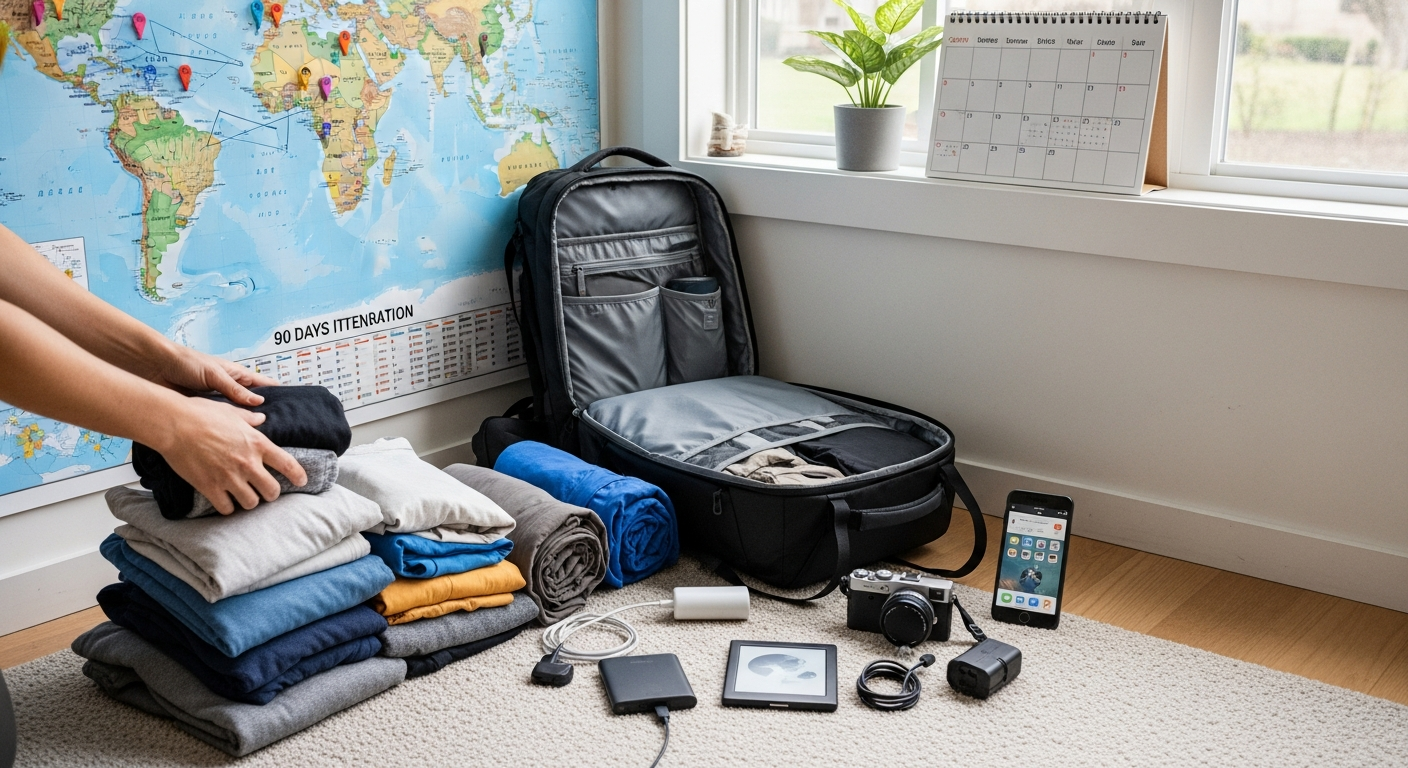
Packing for 90 days requires a different strategy than a week-long vacation. Every item must earn its place in your luggage. The goal is efficiency and versatility.
The Art of Minimalist Packing
Embrace the minimalist mindset. Focus on layers, quick-drying fabrics, and items that can be mixed and matched. A good rule of thumb is to pack enough for about 7-10 days and plan to do laundry regularly. This significantly reduces the weight and bulk of your luggage.
Essential Gear for Every Climate
Consider the climates you’ll encounter. A lightweight, waterproof jacket is often indispensable. Universal travel adapters, a portable power bank, and a small first-aid kit are also crucial. Remember to pack comfortable walking shoes, as you’ll likely be on your feet a lot. Thinking about the functionality of each item will prevent overpacking.
Navigating the Challenges of Long-Term Travel
Extended travel isn’t always glamorous. There will be moments of discomfort, frustration, and homesickness. Preparing for these challenges helps you overcome them.
Overcoming Travel Fatigue and Homesickness
Travel fatigue is real. Pacing yourself, taking rest days, and not over-scheduling are vital. Homesickness can strike unexpectedly; connect with loved ones back home, find familiar comforts, or seek out expat communities. Remember your
original motivations for embarking on this journey. Reconnecting with those goals can provide renewed energy and perspective. Building a routine, even a flexible one, can also help ground you in new environments. Don’t be afraid to take a day off from sightseeing to simply relax or do something familiar.
Embracing Local Culture and Connections

One of the greatest rewards of long-term travel is the opportunity to truly immerse yourself in local cultures. Make an effort to learn basic phrases in the local language, try regional cuisines, and participate in community events. Engaging with locals, whether through volunteer work, language exchanges, or simply striking up conversations, enriches your experience and can lead to lasting friendships. These connections transform a trip into a genuine cultural exchange.
Staying Safe and Healthy Abroad
Prioritize your safety by researching local customs, avoiding risky areas, and keeping loved ones informed of your itinerary. Always have a secure way to carry your valuables and be aware of common scams. When it comes to health, maintain good hygiene, drink bottled water (where tap water is unsafe), and be mindful of what you eat. Know the emergency numbers for each country and the location of the nearest embassy or consulate.
Conclusion: The Transformative Power of Travel 90
“Travel 90” is more than just a duration; it’s a philosophy of intentional, immersive exploration. It offers a unique opportunity for profound personal growth, cultural understanding, and a significant break from the ordinary. While it demands meticulous planning and resilience to navigate its challenges, the rewards – from deep connections with places and people to a broadened worldview – are immeasurable. Embracing the spirit of long-term travel allows you to move beyond being a mere tourist and truly live like a local, fostering memories and experiences that last a lifetime. So, if the call of extended adventure beckons, a 90-day journey might just be the transformative experience you’ve been waiting for.
FAQ: Your “Travel 90” Questions Answered
Q1: What exactly is the 90/180-day rule?
A1: Many regions, most notably the Schengen Area in Europe, allow non-visa nationals to stay for up to 90 days within any 180-day period. This means that once you’ve spent 90 days, you must leave the area and cannot re-enter until 180 days have passed since your first entry into the period, or until you have spent less than 90 days in the current 180-day window. Always check specific country regulations as rules can vary.
Q2: Is 90 days enough time to really get to know a place?
A2: While you can’t experience everything, 90 days is considered an excellent duration for deeper immersion. It allows you to move beyond major tourist sites, explore local neighborhoods, establish routines, and connect more authentically with the culture and people, far more than shorter trips.
Q3: How much money do I really need for a 90-day trip?
A3: As detailed in the budgeting section, costs vary significantly based on destination and travel style. A conservative estimate for budget travel might be $1,000-$2,000 per month, while mid-range travel could be $2,500-$5,000+ per month. Always factor in an emergency fund.
Q4: What if I want to stay longer than 90 days in a country?
A4: If you wish to stay longer than the standard tourist visa period (often 90 days), you typically need to apply for a long-stay visa or residency permit before you travel. Overstaying your visa can lead to fines, deportation, and bans from re-entering the country or region in the future.
Q5: How can I manage my finances while traveling for 90 days?
A5: Before you go, set up a detailed budget. While traveling, use a combination of local currency, credit cards (with no foreign transaction fees), and debit cards for ATM withdrawals. Track your spending diligently, consider travel-friendly banking options, and always have a backup payment method.