Travel Medical Assistant: Your Guide to a Rewarding Healthcare Career on the Move
Imagine a career where you make a real difference in people’s lives while exploring new cities and experiencing diverse cultures. This isn’t just a dream; it’s the reality for a travel medical assistant. This unique role combines your passion for healthcare with a love for adventure, offering a dynamic path for skilled professionals.
Being a travel medical assistant means bringing your valuable medical skills to various clinics, hospitals, and healthcare facilities across the country. These assignments, often lasting several weeks or months, help healthcare providers fill staffing gaps. It’s a role that demands adaptability, a strong work ethic, and a desire to continuously learn and grow. If you’re looking to expand your horizons both professionally and personally, becoming a travel medical assistant might be your next great step.
Key Takeaways for Aspiring Travel Medical Assistants
- Dynamic Career Path: Travel medical assisting offers variety in work settings and patient populations, preventing burnout and keeping skills sharp.
- Higher Earning Potential: Many travel positions come with attractive pay rates, housing stipends, and other benefits that often surpass those of permanent roles.
- Skill Enhancement: Exposure to diverse healthcare systems and medical practices fosters rapid professional development and broadens your clinical expertise.
- Personal Growth: Living and working in new locations builds independence, adaptability, and cultural awareness, enriching your life beyond your career.
- Essential Qualifications: Certification as a Medical Assistant (CMA, RMA) and relevant clinical experience are crucial for entering this specialized field.
What Exactly Does a Travel Medical Assistant Do?
A travel medical assistant (TMA) performs many of the same duties as a permanent medical assistant. The key difference lies in the temporary nature of their assignments and the need to quickly integrate into new teams and environments. TMAs are vital members of the healthcare team, supporting doctors, nurses, and other medical professionals.
The Core Responsibilities
The responsibilities of a TMA are broad, covering both clinical and administrative tasks. On the clinical side, you might take patient vital signs, prepare patients for examinations, assist with minor procedures, and administer medications under a doctor’s supervision. You’ll also be responsible for collecting lab samples and performing basic tests.

Administratively, TMAs handle scheduling appointments, updating patient records, managing billing information, and ensuring proper documentation. Patient interaction is a huge part of the job. You’ll often be the first point of contact, helping patients feel comfortable and answering their questions. This blend of duties makes the role engaging and impactful every day.
Adapting to New Environments
One of the most exciting, yet challenging, aspects of being a travel medical assistant is the constant change. You’ll work in various settings, from busy urban hospitals to smaller rural clinics. Each new assignment means learning new procedures, electronic health record (EHR) systems, and team dynamics. Your ability to be flexible, a quick learner, and a team player is incredibly important.
This constant adaptation helps you build a diverse skill set. You become highly proficient at understanding different workflows and communicating with various healthcare professionals. It’s an opportunity to see how healthcare operates in different parts of the country, making you a more well-rounded and valuable professional.
The Allure of Travel: Why Choose This Path?
The decision to become a travel medical assistant often comes from a desire for more than just a job. It’s about a lifestyle that offers unique advantages and personal fulfillment.
Explore New Places and Cultures
For many, the biggest draw is the chance to travel. Imagine spending a few months working near the beaches of Florida, then moving to a historic city in the Northeast, or exploring the mountains out West. Each assignment is an opportunity to immerse yourself in a new community, try new foods, and discover local attractions. This constant change provides personal growth that few other careers can match.
It’s a chance to see the country without committing to a permanent relocation. You gain a broader perspective on life and healthcare, enriching your personal experiences and professional insights. This exposure to different cultures and ways of life can be incredibly rewarding.
Enhanced Earning Potential
Travel medical assistants often earn significantly more than their permanently employed counterparts. This higher pay helps compensate for the flexibility and temporary nature of the work. Many agencies offer attractive benefits packages that can include health insurance, retirement plans, and even continuing education reimbursement.
Additionally, travel contracts frequently include housing stipends or company-provided housing, and sometimes even travel expense reimbursements. This means you can save more money and achieve your financial goals faster. The combination of competitive wages and comprehensive benefits makes travel medical assisting a financially smart career choice.
Skill Development and Professional Growth
Working in different facilities exposes you to a wide range of medical conditions, patient demographics, and technological systems. This hands-on experience quickly expands your clinical skills and knowledge base. You’ll learn to adapt to various medical equipment and software, making you incredibly versatile.
This continuous learning environment keeps your skills sharp and prevents professional stagnation. It also looks excellent on a resume, showing future employers your ability to handle diverse challenges and contribute effectively in any setting. The rapid skill acquisition is a huge advantage for career advancement.
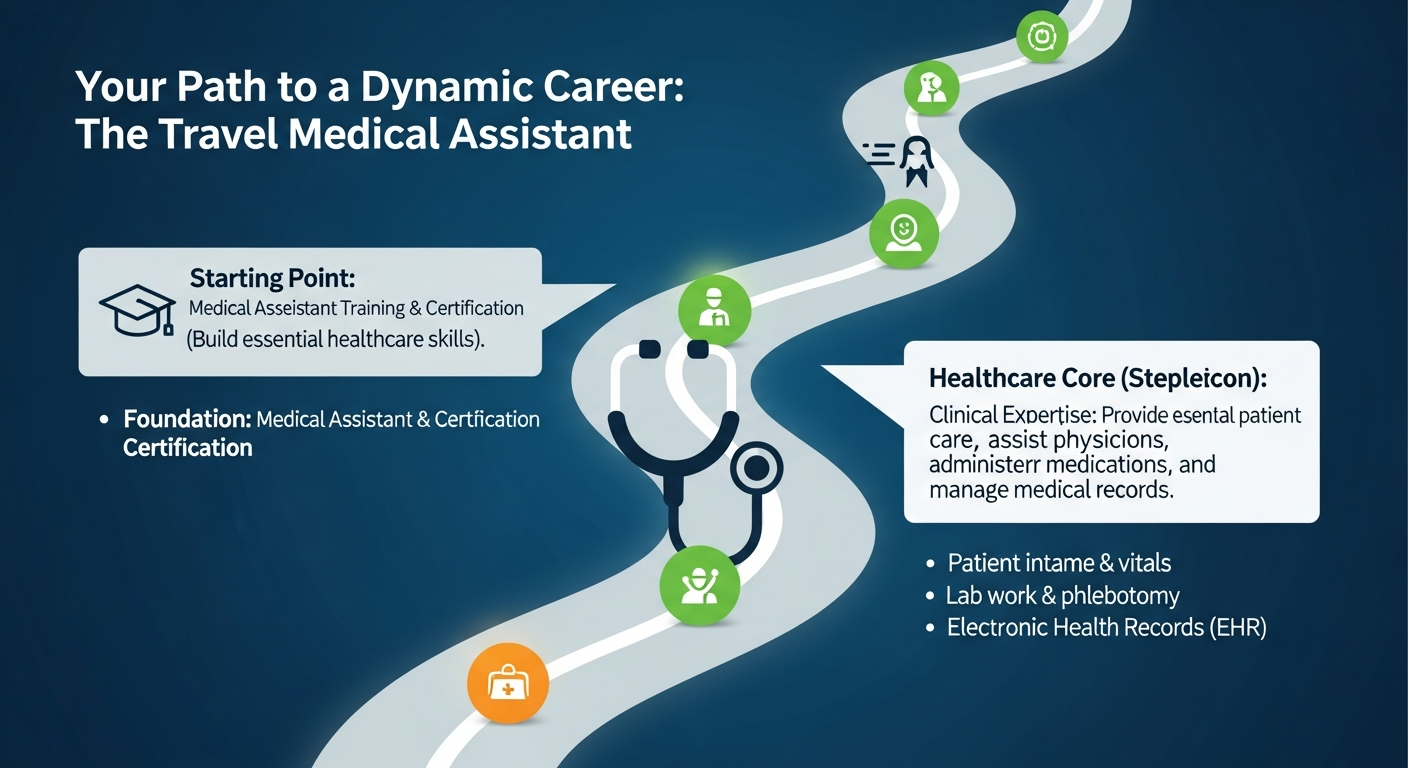
Becoming a Travel Medical Assistant: Your Roadmap
Embarking on a career as a travel medical assistant requires careful planning and meeting specific qualifications. It’s a journey that starts with solid education and experience.
Essential Qualifications and Training
First and foremost, you must be a certified medical assistant. This typically means completing an accredited medical assistant program and passing a certification exam, such as the Certified Medical Assistant (CMA) or Registered Medical Assistant (RMA) exam. These certifications prove your foundational knowledge and skills in the field.
Most agencies and facilities also require at least one to two years of recent clinical experience. This ensures you are comfortable with common medical procedures and patient interactions. Current Basic Life Support (BLS) or Cardiopulmonary Resuscitation (CPR) certification is also a standard requirement. These qualifications are your entry ticket to the world of travel healthcare.
Licensing and State Requirements
While medical assistant certification is national, some states have specific licensing or registration requirements for MAs. Before accepting an assignment, it’s crucial to research the specific regulations of the state where you plan to work. Your travel agency will often assist with this process, but understanding these requirements yourself is always a good idea.
Staying informed about state-specific guidelines ensures you are always compliant and ready to work. This might involve additional paperwork or a temporary license in some cases. Being prepared for these variations will make your transition to new assignments much smoother.
Building Your Travel Portfolio
Once you have your certifications and experience, you’ll need a strong resume that highlights your diverse skills and adaptability. Emphasize your ability to quickly learn new systems and work effectively in various teams. Networking with reputable travel healthcare agencies is also key. These agencies act as your bridge to available assignments across the country.
They help match your skills and preferences with the needs of healthcare facilities. Building a good relationship with a few agencies can provide a steady stream of opportunities. Be clear about your travel preferences, desired locations, and any specific requirements you have.
Navigating the Travel MA Job Market
The travel medical assistant job market is dynamic, offering many opportunities. Knowing how to navigate it effectively can make a big difference in your career satisfaction.
Finding the Right Agency
Choosing the right travel agency is perhaps one of the most important decisions you’ll make. Look for agencies with a strong reputation, excellent reviews from other travel MAs, and a transparent approach to contracts and benefits. A good agency will provide strong support, from helping with licensing to offering 24/7 assistance during your assignments.
Ask about their benefits package, housing options, and how they handle any potential issues that might arise during a contract. A supportive agency can make your travel experiences much more enjoyable and less stressful. Don’s hesitate to interview several agencies before committing.
Contract Lengths and Flexibility
Travel medical assistant assignments typically range from 8 to 26 weeks, with 13-week contracts being very common. This variety allows you to choose contracts that fit your personal and professional goals. You might prefer shorter contracts to explore more locations or longer ones for more stability in a particular area.
This flexibility is a major perk. You can take time off between assignments to relax or visit family. It empowers you to control your work-life balance in a way that permanent positions often do not. Discuss your preferred contract lengths with your agency to find the best fit.
| Feature | Permanent Medical Assistant | Travel Medical Assistant |
| **Work Location** | Fixed, single facility | Multiple facilities, various cities/states |
| **Pay Rate** | Often standard hourly wage | Typically higher hourly wage + stipends |
| **Benefits** | Standard employer benefits | Comprehensive, often including housing/travel |
| **Job Stability** | Long-term, consistent employment | Contract-based, temporary assignments |
| **Skill Growth** | Gradual, within one system | Rapid, diverse exposure to multiple systems |
| **Work-Life** | Predictable schedule | Flexible, allows for breaks between contracts |
| **Adaptability** | Less emphasis on rapid adaptation | High demand for quick learning and flexibility |
Challenges and How to Overcome Them
While rewarding, the life of a travel medical assistant isn’t without its challenges. Being prepared for these can help you navigate them successfully.
Adjusting to New Teams and Systems
Each new assignment brings a new team, new doctors, and often new electronic health record systems. It can feel a bit like being the
new kid in school every few months. This requires a high degree of adaptability and a willingness to learn quickly. To overcome this, embrace a positive attitude and be proactive in asking questions. Introduce yourself to colleagues, observe workflows, and don’t be afraid to seek clarification on unfamiliar procedures or software. Most facilities are accustomed to onboarding temporary staff and will appreciate your initiative. Remember, every new system you learn adds another valuable skill to your resume.
Managing Loneliness and Maintaining Connections
Moving frequently can sometimes lead to feelings of isolation. Leaving behind friends and family for months at a time requires intentional effort to maintain those relationships. Technology is your best friend here – regular video calls, texts, and social media can keep you connected.
Additionally, make an effort to connect with your new colleagues. Many travel healthcare professionals form strong bonds with each other. Explore your new surroundings, join local groups or clubs, or use apps designed for connecting with people in new cities. Building a routine outside of work, whether it’s hitting the gym, exploring local cafes, or finding a new hobby, can also help create a sense of normalcy and belonging.
Financial Management and Budgeting
While travel MAs often earn higher pay, managing your finances effectively is crucial. The higher pay often includes stipends for housing and meals, which are untaxed, but you’ll need to budget carefully. Understand your contract’s pay structure, including your hourly rate, stipends, and any bonuses.
Factor in potential periods between assignments when you might not be earning. Create a budget that accounts for your living expenses, travel costs, and savings. Having an emergency fund is particularly important for travel healthcare professionals. A financial advisor specializing in travel healthcare can offer valuable guidance.
Conclusion
Becoming a travel medical assistant offers a unique and enriching career path for those seeking adventure, professional growth, and a dynamic work environment. While it comes with its share of challenges, such as constant adaptation and managing personal connections, the rewards – including higher pay, diverse experiences, and unparalleled flexibility – often far outweigh them. By being prepared, adaptable, and proactive, aspiring travel MAs can successfully navigate this exciting field, making a significant impact on healthcare across the nation while building a truly remarkable career. It’s a journey that promises not just professional development, but also personal discovery and a broadened perspective on life and work.
FAQ
Q: How much experience do I need to become a travel medical assistant?
A: Most agencies and facilities prefer candidates with at least one to two years of recent clinical experience as a certified medical assistant. This ensures you have a solid foundation of skills and are comfortable in a clinical setting.
Q: What certifications are required for travel MAs?
A: You’ll typically need to be a Certified Medical Assistant (CMA) or Registered Medical Assistant (RMA). Current Basic Life Support (BLS) or Cardiopulmonary Resuscitation (CPR) certification is also standard.
Q: Do I need a different license for each state?
A: While medical assistant certification is national, some states have specific licensing or registration requirements. Your travel agency will often assist with understanding and obtaining any necessary state-specific paperwork or temporary licenses.
Q: How long do travel MA assignments usually last?
A: Assignment lengths vary, but commonly range from 8 to 26 weeks, with 13-week contracts being very popular. This flexibility allows you to choose assignments that best fit your personal and professional goals.
Q: What are the biggest challenges of being a travel MA?
A: Common challenges include constantly adjusting to new teams, doctors, and electronic health record systems, managing feelings of loneliness or isolation, and effectively budgeting for periods between assignments. However, with preparation and a positive attitude, these can be successfully overcome.