Travel X Ray Demystified: Your Essential Guide to Airport Security and Beyond
Traveling can be exciting, but passing through airport security often brings a mix of questions and worries. One of the most common processes we encounter is the travel x-ray. This technology plays a huge role in keeping air travel safe for everyone.
Understanding how travel x-rays work can help make your journey much smoother. This guide will break down everything you need to know about these essential security checks. We will cover their purpose, safety, and how to prepare for them.
From packing your bags to understanding new scanner technologies, we will help you feel more confident at the security checkpoint. Let’s explore the world of travel x-rays together and make your next trip less stressful.
Key Takeaways
- Purpose of X-Rays: Travel x-rays primarily detect prohibited items and threats in luggage and on passengers, ensuring airline safety.
- How They Work: X-rays pass through objects, creating images based on density and composition, allowing screeners to identify contents without opening bags.
- Safety Assured: The radiation exposure from airport x-rays is very low, comparable to background radiation, and considered safe for most travelers, including pregnant individuals and those with medical implants.
- Smart Packing: Organizing your carry-on helps speed up the screening process. Keep electronics, liquids, and certain items easily accessible for separate screening.
- New Technologies: Advanced imaging systems like CT scanners offer 3D views, enhancing detection capabilities and potentially allowing liquids and laptops to stay in bags.
Understanding the Basics: What is a Travel X Ray?
A travel x-ray refers to the imaging technology used at security checkpoints, primarily airports. Its main job is to look inside your bags and sometimes at your body without physically opening them. This helps security staff quickly find anything that is not allowed or could be dangerous.
These systems are a cornerstone of modern travel security. They help protect passengers and crew by preventing illegal items from getting onto planes. Knowing what they are and how they operate is the first step to a stress-free security check.
How Airport X-Rays Work
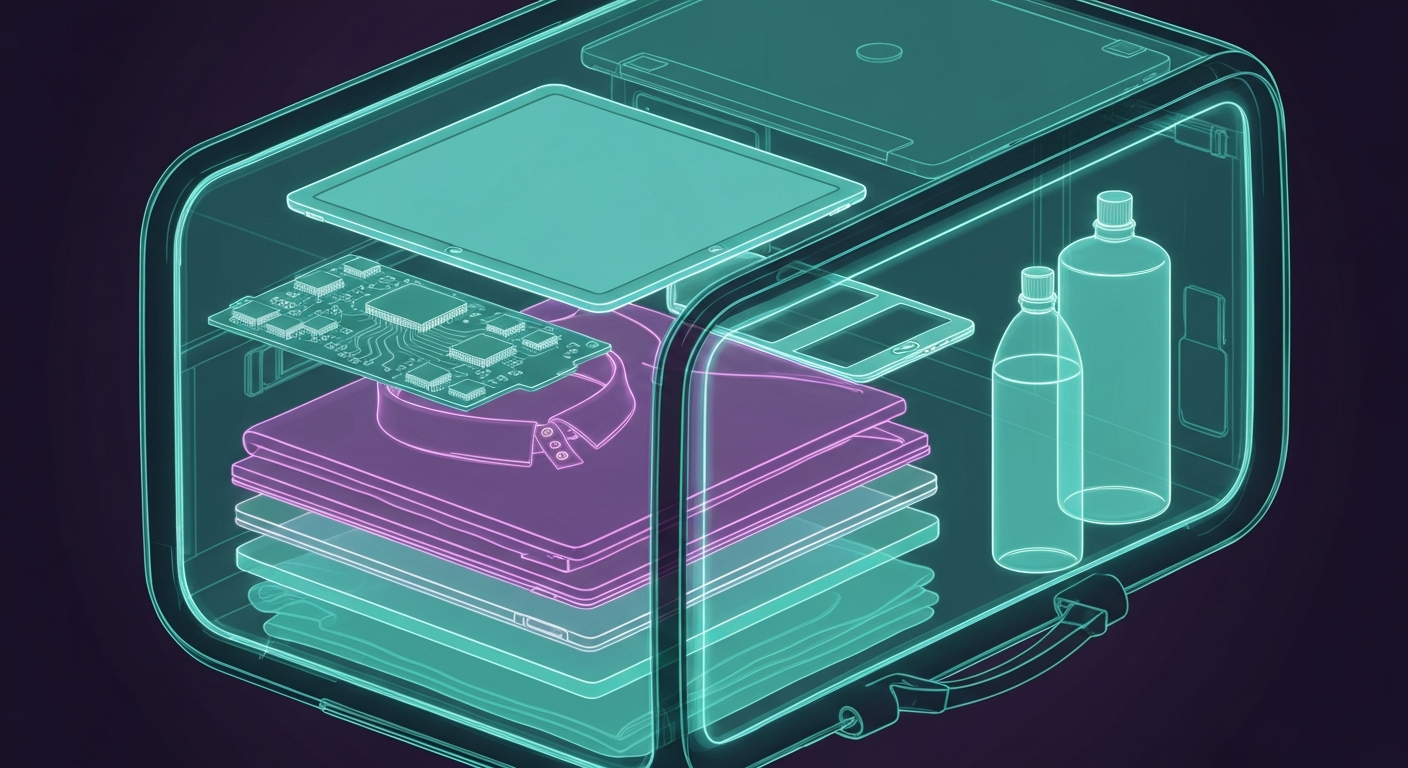
Airport x-ray machines work by sending a beam of x-rays through your luggage. As the x-rays pass through different materials, they lose energy at different rates. Denser items absorb more x-rays, while less dense items let more x-rays pass through.
A detector on the other side of the machine measures the x-rays that make it through. This information is then turned into an image displayed on a screen for security officers to review. Different colors and brightness levels on the screen show the density and type of materials inside your bags.
For example, organic materials like food or explosives might appear orange, while metals like guns or knives might show up as blue or green. This color coding helps screeners quickly spot items of interest.
Different Types of Scanners
There are generally two main types of x-ray scanners you will encounter at airports:
- Conventional X-Ray Machines: These are the most common scanners for carry-on and checked luggage. They provide a 2D image of your bag’s contents. You place your bags on a conveyor belt, and they pass through the tunnel.
- Advanced Imaging Technology (AIT) Scanners: These are the machines you walk or stand in for body scans. They use millimeter wave or backscatter x-ray technology to create an outline of your body. This helps detect objects hidden under clothing without physical contact. The goal is to find non-metallic items that a metal detector might miss.
More recently, Computed Tomography (CT) scanners are becoming more common for carry-on bags. These machines create a 3D image, allowing screeners to rotate and view your bag’s contents from any angle. This offers a much clearer view and can often detect threats more effectively.
The Science Behind the Scan: Are Travel X Rays Safe?
Many travelers wonder about the safety of x-ray scanners, especially regarding radiation exposure. It is a valid concern, and understanding the science can put your mind at ease. The levels of radiation used in airport security are very low.
Security agencies and health organizations worldwide, like the Transportation Security Administration (TSA) and the World Health Organization (WHO), confirm their safety. These machines are designed to be safe for repeated use by the traveling public.
Radiation Exposure Explained
The radiation from airport x-ray machines is a type of ionizing radiation, similar to what is used in medical x-rays, but at much lower doses. For a single body scan, the effective dose is extremely small, often less than the radiation exposure you get from flying for a few minutes at cruising altitude.
Consider this comparison:
- One AIT body scan: About 0.00001 mSv (millisieverts).
- One hour of flight at cruising altitude: About 0.005 mSv (due to cosmic radiation).
- Daily background radiation (from natural sources): About 0.008 mSv.
As you can see, the dose from a single scan is tiny. Even frequent travelers receive a minimal cumulative dose over a year. The risk associated with these low levels of radiation is considered negligible by health experts.
Special Considerations (Pregnant Travelers, Medical Devices)
For most people, airport x-rays are safe. However, some groups often have specific questions:
- Pregnant Travelers: The radiation dose from AIT body scanners is so low that it is considered safe for pregnant individuals. If you are concerned, you can always request a pat-down instead of going through the body scanner. Luggage x-ray machines do not affect people standing nearby.
- Medical Devices: People with pacemakers, insulin pumps, or other medical implants can safely go through both metal detectors and AIT scanners. The x-rays used are not strong enough to damage electronics or affect the function of these devices. Always inform the security officer about your device if you wish.
- Children and Infants: X-ray screening is also safe for children and infants. Their smaller bodies mean they receive an even lower dose of radiation than adults.
Navigating Security: What to Expect at the Checkpoint
Knowing what to expect at the security checkpoint can greatly reduce stress. The process is designed for efficiency and safety. Being prepared helps you move through quickly and avoids unnecessary delays.
Each airport might have slight variations, but the core steps remain similar. The key is to follow the instructions of the security officers and have your documents ready.
Packing Smart for X-Ray Screening
Smart packing is crucial for a smooth x-ray experience. Here are some tips:
- Liquids: Remember the 3-1-1 rule for carry-ons: liquids, gels, and aerosols must be in containers 3.4 ounces (100 milliliters) or smaller. They must fit in one quart-sized bag, one bag per passenger. Place this bag in a separate bin for screening.
- Electronics: Larger electronics like laptops, tablets, and cameras often need to be removed from your bag and placed in a separate bin. Some newer CT scanners may not require this, so listen to the instructions.
- Shoes, Belts, and Outerwear: Most airports require you to remove your shoes, belts, and any heavy coats or jackets. Place them in a bin. This helps the x-ray machines get a clear view of your body and belongings.
- Metal Items: Remove any metal items from your pockets, such as keys, coins, or phones, and place them in your carry-on or a bin.
Common Items and Their Screening Process
Different items go through different screening processes. Understanding these can help you pack better and avoid surprises.
- Medications: Prescription and over-the-counter medications are generally allowed in both carry-on and checked bags. Liquid medications exceeding the 3-1-1 rule are often allowed but must be declared to the security officer.
- Food: Solid foods are usually allowed. Liquid or gel-like foods, like yogurt or sauces, must follow the 3-1-1 rule. Always check specific regulations for international travel.
- Sports Equipment: Items like golf clubs, baseball bats, or skateboards are often not allowed in carry-on bags and must be checked. Consult airline guidelines beforehand.
- Tools: Most tools are not allowed in carry-on bags. Small tools (less than 7 inches) might be allowed in checked luggage. Larger tools must be checked.
Table: Common Items and X-Ray Screening Tips
| Item Category | Carry-On Rule | Checked Bag Rule | X-Ray Tip |
| Liquids/Gels | 3-1-1 Rule | Allowed | Separate in quart-sized bag |
| Laptops/Tablets | Remove from bag | Allowed | Place in separate bin |
| Medications | Allowed | Allowed | Declare large liquids to officer |
| Sharp Objects | Not allowed | Allowed (sheathed) | Pack securely to prevent injury |
| Batteries | Most allowed | Restrictions apply | Loose lithium batteries in carry-on |
| Food (Solid) | Allowed | Allowed | No special steps, but declare if needed |
Beyond Airports: Other Travel X Ray Applications
While airports are the most common place to encounter travel x-rays, this technology is used in other travel-related situations too. Its ability to quickly and non-invasively inspect items makes it valuable in various security and health contexts.
Medical Travel X Rays
Sometimes, travel involves medical needs, and x-rays play a vital role. For instance, if you are traveling for a medical consultation or treatment, you might need to carry existing x-ray images or have new ones taken.
- Carrying Medical Images: If you have physical x-ray films, pack them carefully to prevent damage. Digital images on a CD or USB drive are easier to transport. Always have a medical report to explain their purpose.
- Emergency Situations: In the event of an injury while traveling, you might need an x-ray at a local medical facility. This helps doctors diagnose fractures or other internal issues quickly, ensuring you get the right care.
Customs and Border Patrol
Customs and Border Patrol (CBP) agencies also use x-ray technology, often on a larger scale. They use it to scan vehicles, shipping containers, and large cargo for illegal goods or hidden people.
- Vehicle Scanners: Large x-ray scanners can scan entire cars, trucks, and even trains passing through borders. This helps detect contraband like drugs, weapons, or undeclared goods without needing to unload the vehicle.
- Package and Mail Screening: International mail and packages also go through x-ray screening. This prevents illegal items from entering the country through postal services. These screenings are a critical part of national security efforts.
Innovations in Travel X Ray Technology
The field of travel x-ray technology is always evolving. New advancements aim to make security checks faster, more accurate, and more convenient for travelers. These innovations are driven by the need to counter new threats and improve the overall travel experience.
Advanced Imaging Systems
One of the most significant advancements is the move towards Computed Tomography (CT) scanners for carry-on luggage. Unlike older 2D x-rays, CT scanners create detailed 3D images. This allows screeners to view objects from all angles and use advanced software to detect explosives and other threats more reliably.
- Benefits of CT Scanners: They often allow passengers to leave liquids and laptops inside their carry-on bags, speeding up the line. The improved detection capability means fewer false alarms and less need for manual bag searches.
- Automated Threat Detection: Many new systems use artificial intelligence (AI) and machine learning to help identify suspicious items. These systems can learn from vast amounts of data to improve their accuracy over time, assisting human screeners.
Future of Security Screening
The future of travel x-ray technology looks even more promising. Imagine a world where you rarely need to stop or unpack your bags.
- Seamless Checkpoints: Future checkpoints might integrate multiple technologies, allowing passengers to walk through without stopping, while sensors scan them and their belongings in real-time. This could involve combining x-ray with other technologies like trace detection.
- Biometric Integration: Combining x-ray screening with biometric identification could create a highly personalized and secure travel experience. Your identity could be confirmed automatically as your bags are scanned.
- Enhanced Data Analysis: Better data analysis and sharing between security agencies could lead to more intelligent, risk-based screening. This means resources could be focused on higher-risk individuals or items, making the process more efficient for everyone else.
Expert Tips for a Smooth X-Ray Experience
Making your way through airport security does not have to be a chore. With a little preparation and awareness, you can ensure a quick and easy experience every time. Here are some expert tips to help you sail through the travel x-ray process:
- Check Airline and Airport Rules: Before you even leave for the airport, look up the latest security rules for your specific airline and departure airport. Rules can change, and some airports have unique requirements.
- Organize Your Carry-On: Pack items that need to be removed (like liquids and large electronics) on top or in easily accessible pockets. This saves you time and effort at the checkpoint.
- Dress Smart: Wear slip-on shoes, and avoid excessive jewelry, belts with large buckles, or clothing with a lot of metal. This minimizes the items you need to remove.
- Have Documents Ready: Keep your boarding pass and ID easily reachable. You will need them multiple times during the security process.
- Listen to Officers: Security officers are there to help. Pay attention to their instructions, as they might have specific guidance for that day or checkpoint.
- Do Not Joke About Security: Never make jokes or light remarks about bombs, weapons, or other threats. Security staff take these comments very seriously, and it can lead to severe delays or legal trouble.
- Be Patient and Polite: Security lines can be long, and processes can be slow. A positive attitude goes a long way. Being patient and polite makes the experience better for everyone involved.
“The evolution of travel x-ray technology has been a game-changer for aviation security. From basic 2D imaging to advanced 3D CT scans, these innovations continually enhance our ability to detect threats while striving for a more seamless passenger experience. The focus remains on balancing robust security with traveler convenience.”
*Security Technology Expert*
Conclusion

Travel x-rays are an indispensable part of modern security, ensuring the safety of millions of travelers every day. From the familiar scanners at airport checkpoints to the advanced systems used in customs, this technology is constantly evolving to meet new challenges.
Understanding how these systems work, their safety, and how to prepare for them can significantly improve your travel experience. By packing smart, knowing what to expect, and staying informed about new technologies, you can navigate security with confidence and ease.
So, the next time you approach an x-ray machine, remember that it is a critical tool for your safety. With this knowledge, you are well-equipped for a smoother, more secure journey wherever your travels may take you.
FAQ
Q1: Is the radiation from airport x-ray machines harmful?
A1: No, the radiation dose from airport x-ray machines and body scanners is very low and considered safe for the general public, including pregnant women and children. It is comparable to the natural background radiation you receive daily.
Q2: Do I need to remove my laptop from my bag for the x-ray?
A2: It depends on the type of scanner. For older, conventional x-ray machines, you usually need to remove laptops and other large electronics. However, newer CT (Computed Tomography) scanners often allow you to keep them in your bag. Always listen to the security officer’s instructions.
Q3: Can airport x-rays damage my electronic devices or film?
A3: Modern electronic devices are generally not affected by airport x-rays. For photographic film, especially high-speed film (ISO 800 or higher), repeated exposure to x-rays in carry-on luggage could cause fogging. It is best to hand-carry film or place it in checked luggage, though checked luggage scanners use higher doses.
Q4: What should I do if I have a medical implant like a pacemaker?
A4: Airport security scanners are safe for most medical implants. You can inform the security officer about your implant, and they may offer alternative screening methods, such as a pat-down, if you prefer. However, going through the metal detector or body scanner is usually fine.
Q5: Are food items allowed through airport x-rays?
A5: Solid food items are generally allowed in both carry-on and checked bags. Liquid or gel-like food items (like yogurt, sauces, or spreads) must comply with the 3-1-1 rule for carry-ons (containers 3.4 ounces or 100 milliliters or less, in a quart-sized bag). Declare any larger quantities of liquid medications or baby formula.