Unlock Year-Round Adventures: Your Guide to 4 Season Travel Trailers
Imagine hitting the open road, not just for a few months, but all year long. Picture cozy winter escapes to snow-capped mountains or comfortable summer journeys through scorching deserts. For many RV enthusiasts, the dream of true year-round travel is often limited by the capabilities of their recreational vehicle.
Standard travel trailers are typically built for fair weather. They struggle with extreme heat or cold, leading to discomfort, potential damage, and frustrating trips. This is where the 4 season travel trailer steps in, offering a robust solution designed to keep you comfortable and protected, no matter the climate.
These specialized trailers are engineered with enhanced insulation, protected systems, and durable construction. They open up a world of possibilities for adventurers who refuse to let the weather dictate their travel plans. If you’re looking to extend your adventures beyond typical camping seasons, understanding these resilient RVs is your first step.
This comprehensive guide will dive into what makes a travel trailer truly 4 season ready. We will explore key features, benefits, top brands, and essential maintenance tips. Prepare to discover how a 4 season travel trailer can transform your camping experience into an unstoppable journey.
Key Takeaways: Expert Insights for Year-Round RVing
- Superior Insulation is Paramount: Look for high R-values in walls, floor, and roof, plus dual-pane windows, to ensure comfort in extreme temperatures.
- Protected Systems are Crucial: Heated and enclosed underbellies, along with PEX plumbing, prevent freezing and damage to vital components.
- Investment Pays Off: While often more expensive upfront, 4 season trailers offer extended usability, greater comfort, and can retain higher resale value.
- Maintenance is Key: Regular checks and proper winterization/summer preparation are essential for the longevity and performance of your trailer.
- Freedom to Explore: Owning a 4 season model truly unlocks the ability to travel comfortably in any climate, from frosty mountains to hot deserts.
What Makes a Travel Trailer “4 Season Ready”?
A 4 season travel trailer is much more than just a regular RV with a few extra features. It is a carefully engineered mobile home built to withstand various environmental challenges. The core difference lies in its ability to maintain a stable interior climate and protect its vital systems from extreme temperatures.
This involves a combination of advanced construction techniques and specialized components. Each element works together to create a resilient and comfortable living space, regardless of the conditions outside.
Superior Insulation for Extreme Temperatures

Insulation is the backbone of any 4 season trailer. It acts as a barrier against the elements, keeping the interior warm in winter and cool in summer. Standard RVs often have minimal insulation, which is insufficient for harsh conditions.
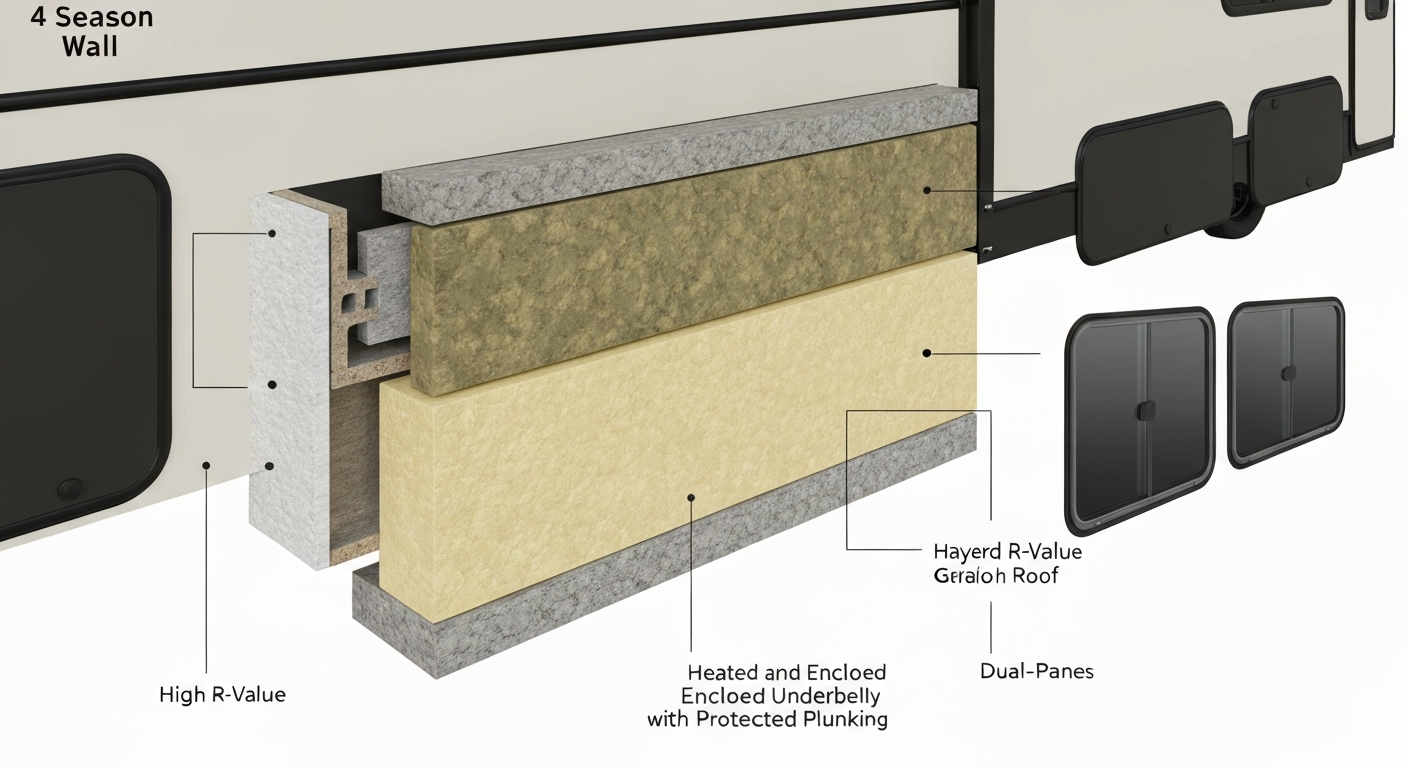
- High R-Values: A true 4 season trailer features significantly higher R-values in its walls, roof, and floor. R-value measures a material’s resistance to heat flow. Higher numbers mean better insulation.
- Thicker Walls and Roofs: Many models incorporate thicker walls or multi-layered construction to accommodate more insulation material.
- Thermal Breaks: These are design elements that prevent heat or cold from transferring through the trailer’s frame. They help maintain a consistent interior temperature.
- Dual-Pane Windows: These windows create an insulating air pocket between two panes of glass, greatly reducing heat loss or gain compared to single-pane windows.
Protecting Your Plumbing and Tanks
One of the biggest concerns for cold weather RVing is frozen pipes and tanks. A 4 season trailer addresses this with several protective measures.
- Heated and Enclosed Underbelly: The underside of the trailer, where water tanks and plumbing lines are located, is fully enclosed and often heated. This prevents freezing.
- Tank Heaters: Many models include 12-volt heating pads on holding tanks (fresh, grey, and black) to keep their contents from freezing.
- PEX Plumbing: PEX is a flexible plastic tubing that is more resistant to freezing and cracking than traditional PVC pipes.
- Interior Water Lines: Whenever possible, water lines are routed inside the heated living space to minimize exposure to cold.
Advanced Heating and Cooling Systems
To complement the superior insulation, 4 season trailers are equipped with more robust climate control systems.
- Powerful Furnaces: Larger BTU (British Thermal Unit) furnaces are standard, capable of quickly and efficiently heating the entire living space, even in sub-zero temperatures.
- Efficient Air Conditioning: Higher BTU air conditioners ensure comfort during hot summer months. Many also feature ducted AC for even cooling.
- Optional Heat Pumps or Fireplaces: Some high-end models may include additional heating options for enhanced comfort and efficiency.
Durable Construction and Components
Beyond insulation and systems, the overall build quality of a 4 season trailer is enhanced for durability.
- Stronger Chassis and Frame: Built to handle heavier loads and more rigorous travel conditions.
- Reinforced Roofs: Designed to withstand heavy snow loads and resist damage from harsh weather.
- Heavy-Duty Tires: Often come with tires rated for higher weight capacities and better performance in varying road conditions.
- Weather-Resistant Materials: Exterior sealants and materials are chosen for their ability to endure extreme heat, cold, and moisture without degrading.
Key Benefits of Owning a 4 Season Travel Trailer
Investing in a 4 season travel trailer offers a wealth of advantages that extend far beyond simply having a warmer or cooler interior. These benefits translate into more freedom, comfort, and value for your RV lifestyle.
- Extended Travel Season: The most obvious benefit is the ability to travel and camp comfortably during any time of the year. This means more trips, more memories, and no limitations based on the calendar.
- Enhanced Comfort and Livability: Regardless of external conditions, you can enjoy a stable and pleasant interior environment. This means less worry about sweltering heat or shivering cold, making your adventures truly relaxing.
- Protection for Your Investment: The robust construction and protected systems help safeguard your trailer from weather-related damage. This can reduce repair costs and extend the lifespan of your RV.
- Greater Versatility: A 4 season trailer can handle a wider range of destinations. From desert camping in winter to mountain retreats in summer, your options are virtually limitless.
- Potentially Higher Resale Value: Due to their specialized features and durability, 4 season models often hold their value better than standard trailers, making them a smart long-term investment.
Essential Features to Look for in a 4 Season Model
When you are shopping for a 4 season travel trailer, knowing what features are truly essential will help you make an informed decision. Not all trailers advertised as
“4 season” truly live up to the name. Here’s a checklist of non-negotiable features:
- Genuine High R-Value Insulation: Don’t just take a manufacturer’s word for it. Look for specific R-values listed for the roof, floor, and walls. Ideally, you want R-10 or higher in walls, R-15 or higher in the floor, and R-20 or higher in the roof.
- Heated and Enclosed Underbelly with Forced Air: The underbelly should not just be enclosed; it needs to be actively heated, usually by diverting warm air from the furnace. This is critical for preventing pipes and tanks from freezing.
- Dual-Pane (Thermopane) Windows: Single-pane windows are a major thermal weak point. Dual-pane windows significantly reduce heat transfer.
- Tank Heating Pads: These 12-volt pads directly warm your fresh, grey, and black water tanks, preventing their contents from freezing solid.
- PEX Plumbing Throughout: This flexible, durable plumbing material is much more resilient to freezing temperatures than rigid PVC.
- Robust Furnace and AC Sizing: Ensure the furnace BTU rating is adequate for the trailer’s size and intended use in cold climates. Similarly, the AC should be powerful enough for summer heat.
- Thermal Breaks in Construction: Ask about how the manufacturer prevents thermal bridging through the frame, which can otherwise bypass insulation.
- Roof Designed for Snow Load: If you plan on winter camping, confirm the roof can safely handle accumulated snow.
Making the Most of Your 4 Season Trailer
Owning a 4 season trailer is just the first step; proper usage and maintenance are key to maximizing its potential.
- Winterizing Best Practices: Even with advanced features, always follow recommended winterizing procedures for periods of non-use or extreme cold to prevent damage.
- Ventilation: In cold weather, proper ventilation is still important to manage condensation, even with superior insulation.
- Monitoring Systems: Regularly check your tank heaters, furnace, and insulation for any signs of wear or malfunction.
- Appropriate Tires: Ensure your tires are in good condition and suitable for the varied road conditions you might encounter throughout the year.
Conclusion
A 4 season travel trailer is much more than just a recreational vehicle; it’s a gateway to year-round adventure and unparalleled comfort, regardless of the weather. By investing in a model with superior insulation, protected plumbing, robust climate control, and durable construction, you unlock the freedom to explore any destination, any time. These specialized trailers offer enhanced protection for your investment, greater versatility in your travel plans, and a consistently comfortable living space that standard RVs simply cannot match. For those who refuse to let the seasons dictate their wanderlust, a true 4 season travel trailer is an indispensable companion, promising endless memories and worry-free journeys.
FAQ
Q: Can a standard RV be converted into a 4 season trailer?
A: While some upgrades like adding tank heaters or improving window sealing are possible, a full conversion is typically not feasible or cost-effective. The core structural differences, such as wall thickness, underbelly design, and insulation R-values, are built into the trailer during manufacturing.
Q: Do 4 season trailers use more propane or electricity?
A: In cold weather, yes. The furnace will run more frequently to maintain interior temperatures, consuming more propane. Tank heaters and electric fireplaces will increase electricity usage. However, the superior insulation helps to reduce the overall energy needed compared to a poorly insulated standard RV in the same conditions.
Q: Are 4 season trailers heavier than standard trailers?
A: Generally, yes. The added insulation, thicker walls, dual-pane windows, reinforced chassis, and additional systems (like heated underbellies) contribute to a higher dry weight. Always check the Gross Vehicle Weight Rating (GVWR) and ensure your tow vehicle is adequately sized.
Q: What is the ideal R-value for a 4 season trailer?
A: There isn’t a single