Unlock London: Your Ultimate Guide to 3 Days of Seamless Travel
London, a city brimming with history, culture, and endless attractions, calls to millions of travelers each year. From the majestic Tower of London to the vibrant West End, there’s always something new to discover. However, navigating this sprawling metropolis, especially over a short three-day visit, can feel daunting without the right travel strategy. Efficient transport isn’t just a convenience; it’s essential for maximizing your sightseeing and truly experiencing the city.
Many visitors wonder about the best way to pay for public transport, often searching for a “3-day travel card London.” While a specific physical 3-day travel card might not be what you expect, understanding London’s fare system allows you to travel smart and save money. This comprehensive guide, updated for March 2026, will demystify your options, helping you choose the most economical and convenient way to get around for your three-day adventure. Get ready to explore London like a local.
Key Takeaways for Your 3-Day London Travel
- A dedicated physical “3-day travel card” doesn’t exist; daily capping on Oyster or Contactless is your effective solution.
- Oyster cards and contactless payment methods offer flexibility and often better value than traditional paper Travelcards for short stays.
- Understanding London’s fare zones, especially Zones 1-2, is crucial for planning your travel and managing costs.
- Daily caps mean you’ll never pay more than a set amount for a day’s travel, regardless of how many journeys you make.
- Always compare the daily capping costs with a 7-day Travelcard if your stay extends slightly, but for 3 days, capping is usually superior.
Navigating London’s Transport Landscape
London’s public transport network, managed by Transport for London (TfL), is one of the most extensive and efficient in the world. It includes the iconic Underground (Tube), Overground, Docklands Light Railway (DLR), buses, trams, and some National Rail services. For a three-day visit, you’ll primarily use the Tube and buses to reach most tourist hotspots. Understanding how this system works is your first step to effortless travel.
Understanding London’s Fare Zones
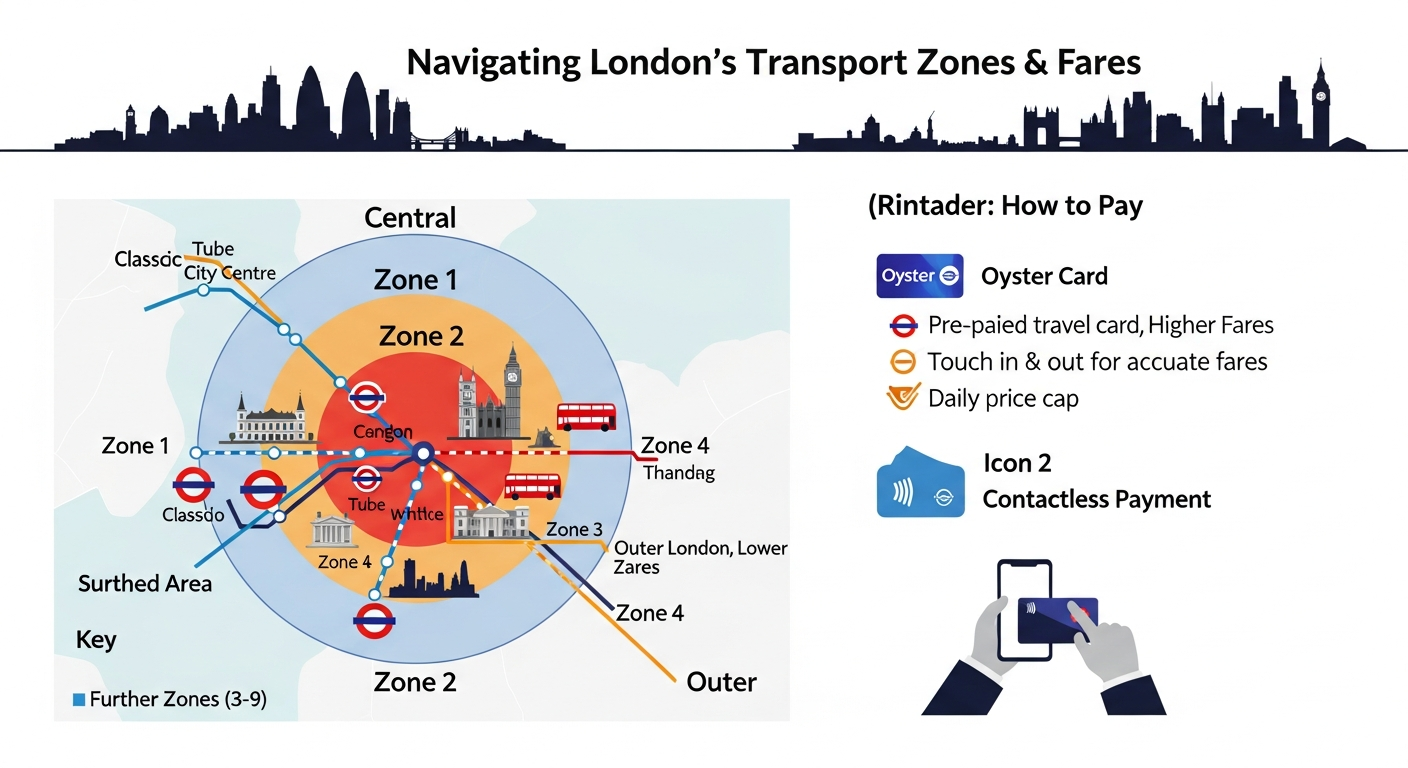
London is divided into nine fare zones, radiating outwards from the city center. Most major tourist attractions, including Buckingham Palace, the British Museum, and the West End theatres, are located within Zone 1 and Zone 2. Your fare depends on how many zones you travel through, and whether you travel during peak or off-peak times. Most visitors will find themselves primarily traveling within Zones 1-2, which simplifies cost calculations considerably.
The Core Travel Options: Oyster, Contactless, and Travelcards
When planning your London transport, you’ll encounter three main ways to pay: the Oyster card, contactless bank cards, and paper Travelcards. Each has its own benefits and drawbacks, especially for a short three-day trip. We will dive into which option truly serves as your best “3 day travel card London” solution.
- Oyster Card: A smartcard you load with money (pay as you go) or Travelcards. It automatically calculates the cheapest fare for each journey and applies a daily cap, ensuring you don’t overspend.
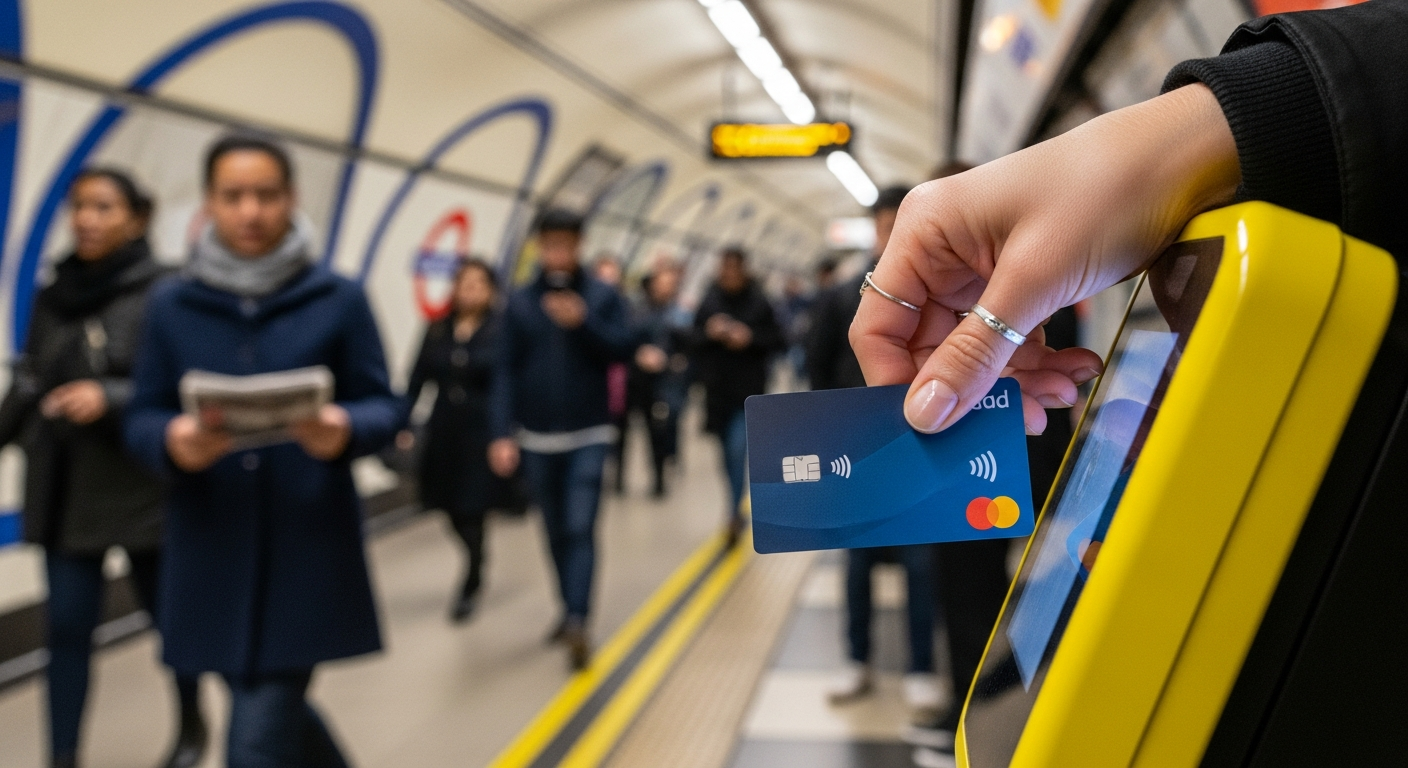
- Contactless Payment: Using your debit or credit card (or a device like a smartphone or smartwatch) directly on the reader. It works exactly like an Oyster card for pay-as-you-go travel, applying the same daily caps and fares.
- Paper Travelcard: A physical ticket valid for unlimited travel within specific zones for a set period. The shortest available is usually a 7-day Travelcard, which might not be cost-effective for only three days.
The “3-Day Travel Card” Unpacked: What You Really Need to Know
Many travelers search for a specific “3 day travel card London” believing it’s a standalone product like a weekly or monthly pass. The reality is a little different. While you can buy paper Travelcards, they are typically sold for 7 days or longer, or as specific one-day passes that often aren’t the best value for multiple journeys across three days.
For a three-day visit, your effective “3-day travel card” comes in the form of daily capping through either an Oyster card or contactless payment. This system is designed to give you the benefits of unlimited travel without the need for a specific multi-day paper ticket. It’s smart, flexible, and often the most economical choice for short stays.
Each day, as you travel using your Oyster or contactless card, the system tracks your journeys. Once your total fares for that day reach a certain amount (the daily cap), you won’t be charged for any further journeys within the same zones for the rest of that day. This cap acts like a one-day travel card, and you simply repeat this for each of your three days. This method ensures you pay for exactly what you use, up to a maximum daily limit.
Oyster Card vs. Contactless: Your Best Bet for a Short Stay
Deciding between an Oyster card and using your contactless bank card is a key choice for your three-day trip. Both offer the same fares and daily capping benefits, but there are subtle differences to consider. Your personal banking setup and travel habits will influence which is truly best for you.
- Oyster Card Advantages:
- You can load a 7-day Travelcard onto it if you decide to extend your stay or have very intensive travel plans that make a weekly pass cheaper.
- It can be useful if your bank charges high foreign transaction fees for contactless payments.
- Children aged 11-15 can get a Young Visitor Discount loaded onto an Oyster card, offering half-price travel.
- You can easily check your balance and journey history online or at Tube stations.
- Contactless Payment Advantages:
- Incredibly convenient – no need to buy a separate card or top up. Just tap and go.
- Ideal if you already have a suitable bank card (Visa, Mastercard, American Express) that doesn’t incur high foreign transaction fees.
- Automatically applies daily and even weekly caps, ensuring you always pay the cheapest fare.
- No Oyster card deposit (£7 as of early 2026) to worry about, nor any remaining balance to refund.
Choosing between the two largely depends on your existing bank card’s international fees and whether you’re traveling with children who might benefit from an Oyster discount. For most solo adult travelers, a contactless card is the epitome of ease.
| Feature | Oyster Card | Contactless Payment (Bank Card/Device) |
| **Convenience** | Requires purchase and top-up | Tap and go, no pre-purchase needed |
| **Daily Capping** | Yes, automatically applied | Yes, automatically applied |
| **Weekly Capping** | Yes, if using pay as you go | Yes, automatically applied |
| **Card Deposit** | £7 (refundable as credit after 1 year) | None |
| **Foreign Fees** | Avoids if loaded with cash; check bank fees | Depends on your bank’s international fees |
| **Children’s Fares** | Young Visitor Discount available | Standard adult fares apply |
| **Balance Check** | At stations, online, or via TfL app | Via your bank statement or app |
“For a short visit like three days, contactless payment is often the most straightforward option. It removes the hassle of buying and topping up a separate card, allowing visitors to focus more on enjoying London and less on logistics.” – *TfL Travel Expert*
Maximizing Value: Daily Caps and Travel Zones
Understanding how daily caps work is crucial for managing your budget during your three-day trip. The cap is the maximum you’ll pay for travel within a specific set of zones during a single day. Once you hit the cap, all further journeys on Tube, DLR, Overground, and most National Rail services within those zones are free until 4:30 AM the next day. Bus and tram journeys have a separate, lower daily cap.
For example, if you’re traveling mainly in Zones 1-2, there’s a specific daily cap for that area. If you make several Tube journeys throughout the day, once your total fares reach the Zone 1-2 cap, you won’t be charged again. This is your ultimate “3 day travel card London” strategy, repeated for each day of your stay.
Peak vs. Off-Peak: Timing Your Journeys
London’s public transport system also differentiates between peak and off-peak travel times, affecting the cost of individual journeys. However, the daily cap itself does not change based on peak or off-peak travel. Instead, individual journeys contribute to the cap at their respective peak or off-peak rates.
- Peak Times: Monday to Friday (excluding public holidays) from 06:30 to 09:30 and from 16:00 to 19:00. Fares are generally higher during these hours.
- Off-Peak Times: All other times, including weekends and public holidays. Fares are lower, making travel more economical.
While you might pay more for individual peak journeys, the daily cap ensures your total cost for the day doesn’t exceed the set limit. If you have flexibility, traveling off-peak can help keep individual journey costs down, contributing to a lower overall spend before hitting the cap.
Practical Strategies for Your 3-Day London Adventure
Planning your travel effectively can save both time and money. With your chosen payment method in hand, here are some practical tips to make your three days of travel smooth and enjoyable.
Planning Your Itinerary with Transport in Mind
Before you even arrive, sketch out your daily itinerary. Group attractions that are close to each other geographically. Use the TfL Journey Planner (available online and as an app) to map out your routes. This tool provides real-time updates, estimated journey times, and highlights the best modes of transport. Consider walking for shorter distances between attractions; not only is it free, but it also offers a fantastic way to see more of London’s vibrant streets and hidden gems. Many central London sights are surprisingly close on foot, reducing your reliance on the Tube and potentially lowering your daily spend.
Acquiring and Using Your Chosen Travel Method
If you opt for an Oyster card, you can purchase one at any Tube station, most Overground and DLR stations, and at designated Oyster Ticket Stops (often newsagents). There’s a refundable deposit, and you can load it with pay-as-you-go credit. To use it, simply touch your card flat on the yellow card reader at the start and end of your Tube, DLR, Overground, and National Rail journeys. For buses and trams, you only need to touch in at the start of your journey.
For contactless payment, ensure your bank card is enabled for international use and that you’re aware of any foreign transaction fees. Use the same card or device for all journeys within a day to ensure daily capping applies correctly. Just like Oyster, tap your card or device on the yellow reader at the beginning and end of Tube, DLR, Overground, and National Rail journeys. For buses and trams, only tap in.
Beyond the Basics: Other Considerations
While Oyster and contactless are your primary tools for a 3-day trip, it’s worth knowing about a few other aspects of London transport.
National Rail 2-for-1 Offers: If you were considering a paper Travelcard, these offers provide 2-for-1 entry to many top London attractions. However, they typically require a weekly paper Travelcard bought from a National Rail station, which is unlikely to be cost-effective for only three days of travel. Using Oyster or contactless will not qualify you for these specific 2-for-1 deals, so weigh the savings on transport against potential attraction discounts if this is a major factor for you.
Accessibility: London’s transport network is constantly improving its accessibility. Many Tube stations now have step-free access, and all buses are wheelchair accessible. Plan your routes using the TfL Go app or website, which highlights accessible routes and stations.
Conclusion
While the specific “3 day travel card London” you might imagine doesn’t exist, the city’s modern fare system provides an even better, more flexible solution. By leveraging the daily capping features of an Oyster card or, more conveniently, your contactless bank card, you can enjoy unlimited travel within your chosen zones for three days without overspending. Focus on understanding the zone system, planning your routes, and taking advantage of off-peak travel where possible. London is a city best explored with ease and efficiency, and with these tips, your three-day adventure will be nothing short of seamless. Enjoy every moment of your journey through this incredible capital!
Frequently Asked Questions
Q: Can I buy a 3-day paper Travelcard in London?
A: No, a specific 3-day paper Travelcard is not available. The shortest paper Travelcard you can purchase is usually for 7 days. For three days of travel, using an Oyster card or contactless payment with daily capping is the most effective solution.
Q: Is an Oyster card or contactless payment better for a 3-day trip?
A: For most adult travelers, contactless payment is often more convenient as it requires no purchase or top-up. However, if you have a bank card with high foreign transaction fees, an Oyster card (loaded with cash) might be more cost-effective. Travelers with children aged 11-15 can get a Young Visitor Discount on an Oyster card.
Q: How much does 3 days of travel typically cost in London (Zones 1-2)?
A: The cost depends on whether you travel during peak or off-peak times, but for Zones 1-2, you will hit a daily cap. For March 2026, assuming mostly Zone 1-2 travel, expect to pay around the daily cap amount for each of your three days. This is generally more economical than a 7-day Travelcard for short visits.
Q: Do I need a separate ticket for the Tube and buses?
A: No, your Oyster card or contactless payment method works across the entire TfL network, including the Tube, buses, DLR, Overground, and most National Rail services within London. You simply tap in and out (or just in for buses/trams) with the same card or device for all journeys.
Q: What are peak and off-peak times for London transport?
A: Peak times are Monday to Friday (excluding public holidays) from 06:30 to 09:30 and from 16:00 to 19:00. Off-peak times are all other periods, including weekends and public holidays. Individual journey fares are higher during peak times, but the daily cap still applies.