
Here’s the plot twist of mid-2020s travel: Japan — the destination everyone assumes is ruinously expensive — has quietly become one of the developed world’s best-value trips. A historically weak yen has left dollar and euro travelers with purchasing power their parents never had in Tokyo, and Japan’s own price culture (a superb ¥1,000 bowl of ramen has no interest in becoming a ¥3,000 one) does the rest. The money goes to two things — beds and bullet trains — and both have well-known workarounds. Here’s the honest 2026 budget: per-day bands, where the yen stretches absurdly, and the three line items that still bite.
All figures are good-faith planning ranges as of August 2026. We quote no exchange rate on purpose — check the day’s rate; the weak-yen window won’t last forever. Not financial advice.
Part of our complete Japan travel hub — entry rules, seasons, the Golden Route, rail passes, and budgets.
Per-Day Bands (On the Ground)
| Style | Per person / day | What it looks like |
|---|---|---|
| Backpacker | ~$60–90 | Hostels/capsules (¥3,000–5,000), ramen-and-konbini mastery, IC-card local trains, free temples and neighborhoods |
| Mid-range | ~$120–200 | Business hotels (¥9,000–16,000/room), one ryokan-onsen night, restaurant meals, Shinkansen legs, all entries |
| Comfort | $300+ | 4–5-star or fine ryokan, Green car trains, kaiseki and omakase dinners |
Where the Yen Stretches Absurdly
- Food is the miracle line. World-class ramen for ¥1,000, a sushi set lunch for ¥1,500, konbini meals that shame most countries’ cafés for ¥600 — you can eat brilliantly in Japan on a shoestring, and the ceiling (a proper splurge omakase) still undercuts New York or London equivalents.
- Attractions barely charge. Temples and shrines run ¥300–600; many gardens similar; whole neighborhoods, markets, and mountain trails are free. A day of world-class sightseeing costs less than a Starbucks round.
- City transit is cheap and perfect. IC-card taps of ¥150–300 cover most hops; day passes exist everywhere.
- Souvenir-grade shopping — from knives to stationery to vintage denim — is where the weak yen turns tourists into smugglers of their own luggage. Note: Japan’s tax-free shopping system is being reformed (a refund-style model is planned); check the current procedure when you travel.
The Three Line Items That Bite
- Beds in the wrong week. Tokyo and Kyoto hotel prices float on demand — the same business-hotel room that costs ¥9,000 in February asks ¥25,000+ at sakura peak. Book Kyoto especially far ahead, or commute from Osaka where rates run kinder.
- Bullet trains. Tokyo→Kyoto runs roughly ¥14,000 each way — the single biggest ticket most trips buy. Don’t reflexively solve it with a ¥50,000 rail pass: our JR Pass math shows point-to-point or regional passes beat it for most first-timer routes.
- The ryokan night. A proper inn with kaiseki dinner and onsen runs ¥25,000–50,000+ per person — and is worth every yen once. Budget it as an experience, not accommodation.
Worked Examples: Ten Days, Three Budgets
| Scenario (10 days, on-the-ground only) | Planning total |
|---|---|
| Solo backpacker — hostels, konbini breakfasts, one Shinkansen leg, temples | ~$650–950 |
| Couple, mid-range — business hotels + one ryokan night, Golden Route trains, restaurants | ~$2,600–4,000 (for two) |
| Comfort couple — top hotels, Green car, omakase evenings | $6,000+ (for two) |
The Money Mechanics
- Cards and phone payments now work almost everywhere touristed — but carry ¥10,000–20,000 in cash for shrines, small eateries, and rural stretches. 7-Eleven ATMs take foreign cards reliably.
- IC card (Suica/Pasmo) in your phone wallet is half your daily payments solved — trains, konbini, vending machines.
- No tipping, ever. Japan’s service culture is priced in; attempts to tip cause polite chaos.
- Luggage forwarding (takkyubin) costs a modest fee per bag and buys you train days unencumbered — the best small spend in Japanese travel (details in the itinerary).
Frequently Asked Questions
How much does a trip to Japan cost?
On the ground: roughly $60–90/day backpacking, $120–200/day mid-range, $300+ comfort. A mid-range 10-day trip for a couple runs very roughly $2,600–4,000 plus flights.
Is Japan expensive to visit right now?
Less than its reputation — the weak yen has made Japan genuinely good value for dollar and euro travelers, with food and sightseeing the standout bargains. Beds in peak weeks and bullet trains are the real costs.
How much money should I bring to Japan per day?
Cards and phone payments cover most spending; keep ¥10,000–20,000 cash on hand for shrines and small restaurants, topping up at 7-Eleven ATMs.
Is food expensive in Japan?
No — it’s the miracle line: excellent ramen ~¥1,000, sushi set lunches ~¥1,500, konbini meals ~¥600. Eating well is cheap at every level below fine dining.
What’s the most expensive part of a Japan trip?
Accommodation in peak weeks (sakura, Golden Week, New Year) and Shinkansen legs — book Kyoto early, time the trip off-peak, and do the rail-pass math before buying one.
Do I tip in Japan?
No — never. Service is priced in, and tipping genuinely confuses. The money you’d tip, spend on one more bowl of ramen.
Sources
- Rail fares and pass prices: official JR sources (see our JR Pass guide, verified August 2026); accommodation ranges sampled August 2026 — treat as planning figures
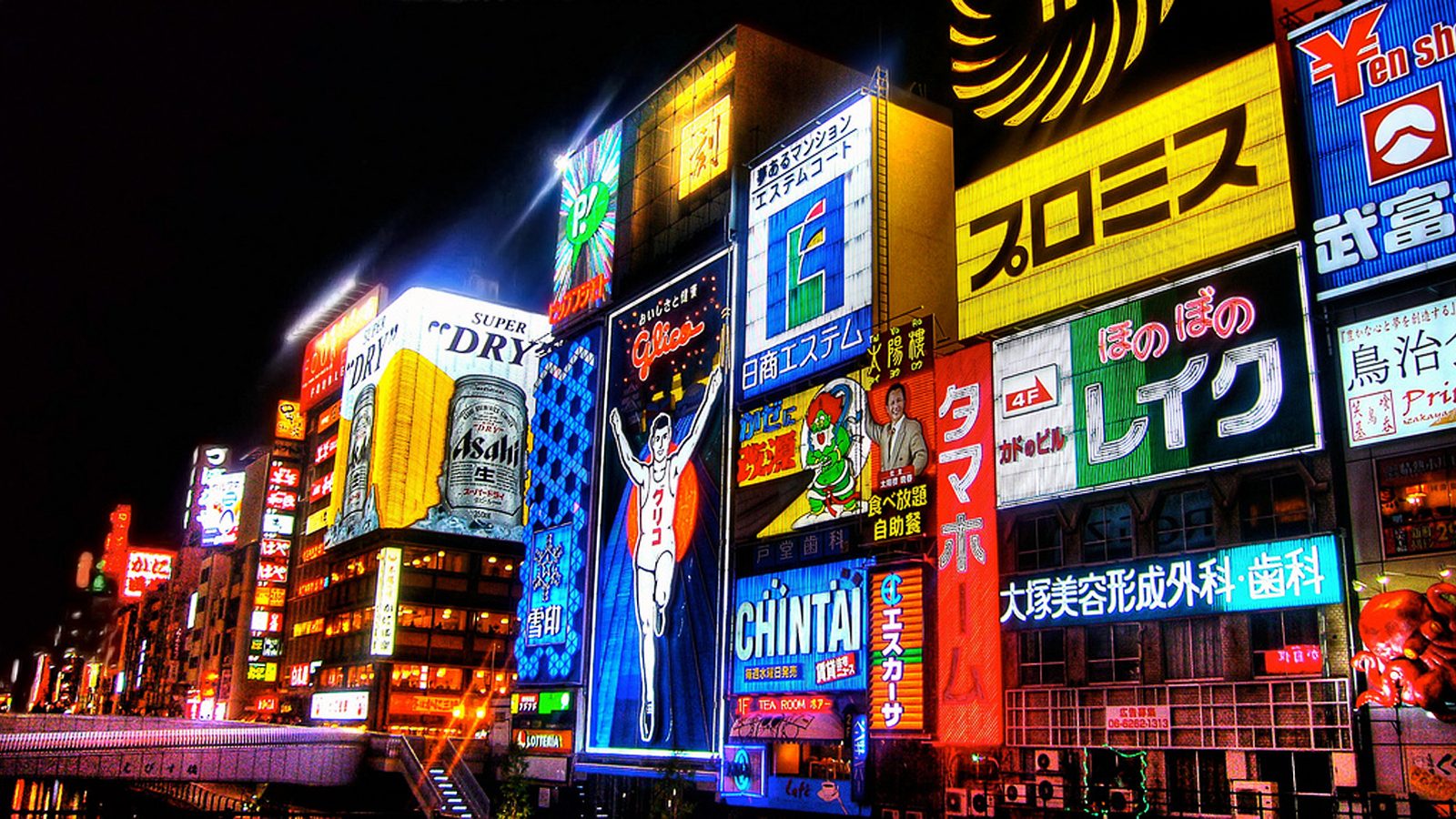
- Photo: Dotonbori canal at night, Osaka — Joop Dorresteijn, Wikimedia Commons, CC BY 2.0
Disclaimer: Budget ranges are good-faith estimates as of August 3, 2026 and move with season and exchange rates — confirm prices when booking. Not financial advice.
Get visa, passport, and travel-planning guides like this one sent straight to your inbox — plus first access to new country guides and scholarship roundups.