
Arizona at a Glance
| Region | The essentials | Best months |
|---|---|---|
| Grand Canyon country | South Rim, North Rim (seasonal), Havasu Falls | Mar–May, Sep–Nov; North Rim ~mid-May–mid-Oct |
| Page & the Navajo Nation | Antelope Canyon, Horseshoe Bend, Monument Valley | Oct–Apr (light beams peak in summer at midday) |
| Sedona & the high country | Red rocks, Oak Creek, Flagstaff, Route 66 | Mar–May, Sep–Nov |
| The south | Saguaro, Tucson, Tombstone & Bisbee | Oct–Apr (summer is dangerous heat) |
Grand Canyon Country
1. Grand Canyon — South Rim
Open year-round, and the version 90% of visitors see for good reason: the Rim Trail’s endless viewpoints, Desert View’s watchtower, and dawn at Hopi Point. Do one thing beyond the rail: even a mile down Bright Angel Trail changes the canyon from a picture into a place. Down-and-up day hikes to the river are a rescue statistic, not a plan.2. Grand Canyon — North Rim
A thousand feet higher, forested, and seasonal (roughly mid-May to mid-October) — with a fraction of the visitors. The drive between rims takes 4+ hours, so pick one per trip; choose North for solitude and aspens, South for infrastructure and winter access.3. Havasu Falls
The turquoise waterfalls on the Havasupai Reservation are real — and so is the barrier: permits sell through the tribe’s official reservation system, typically in a frenzied early-year release, and require a multi-night stay plus a 10-mile hike in. No permit, no entry, no exceptions — and any site “selling” access outside the official system is a scam. Plan a year ahead or enjoy it on someone else’s feed.Page & the Navajo Nation
4. Antelope Canyon
The most photographed slot canyon on Earth sits on Navajo land and is visitable only with an authorized Navajo guide — book directly with the licensed tour operators. Upper gets the famous midday light beams (summer); Lower is the better scramble with smaller groups. Book weeks ahead in season.5. Horseshoe Bend
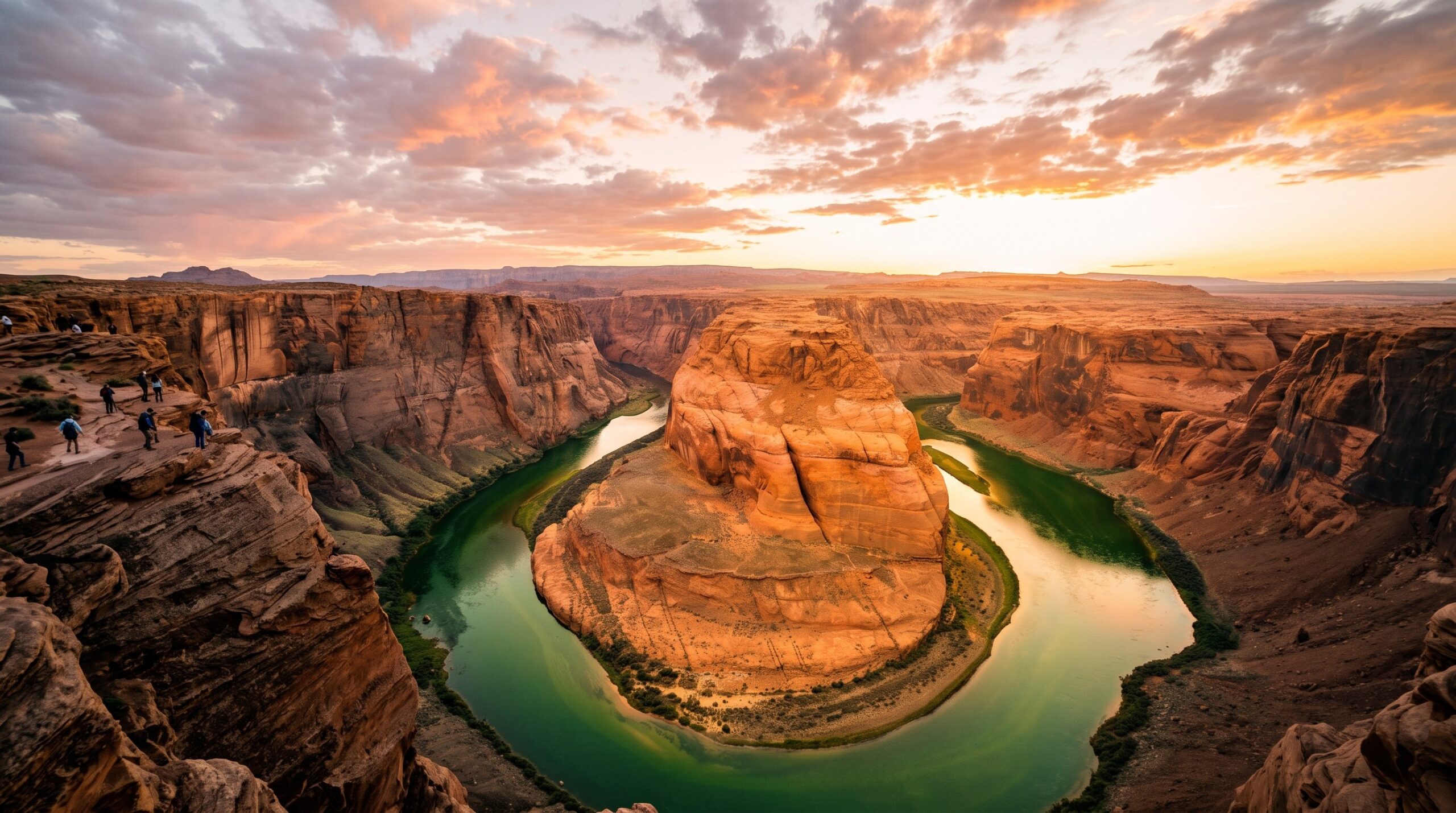
The Colorado’s thousand-foot emerald curve, ten minutes from Page and a short sandy walk from the parking area (city-managed, small fee). Golden hour is the shot; hold the phone tight and the kids tighter — much of the rim is unrailed.6. Monument Valley
The buttes that taught the world what the American West looks like, inside the Navajo Nation’s tribal park: drive the scenic loop yourself or go deeper with a Navajo guide (the only way into Mystery Valley and the arches). Sunrise from The View is exactly as good as promised.Sedona & the High Country
7. Sedona’s red rocks
Cathedral Rock at sunset, Devil’s Bridge for the photo (go at dawn — the queue is real), and Oak Creek swimming holes in summer. Trailhead parking passes and shuttle rules change seasonally — check the Coconino National Forest’s current system before driving to popular trailheads.8. Oak Creek Canyon & Slide Rock
The winding drive from Sedona up to Flagstaff is among America’s prettiest short road trips, with Slide Rock State Park’s natural sandstone waterslide as the family stop — arrive early on summer weekends; the park caps entry when lots fill.9. Flagstaff & Route 66
A 7,000-foot mountain town with craft beer, Lowell Observatory (where Pluto was discovered), and wintertime skiing at Snowbowl — plus the nostalgic neon of Route 66 running through downtown toward Williams, the Grand Canyon’s gateway.10. Petrified Forest & the Painted Desert
Crystallized 200-million-year-old logs scattered across banded badlands, all threaded by an easy scenic drive on old Route 66 alignment — the most underrated national park in the state.The South
11. Saguaro National Park & Tucson
Forests of the giant cactus that means “desert” to the whole world, split east and west of Tucson — a city worth staying for: a UNESCO City of Gastronomy with the best Mexican food north of the border and the Arizona-Sonora Desert Museum (a zoo-garden hybrid that’s the state’s best single ticket).12. Tombstone & Bisbee
The Wild West double bill: Tombstone plays its O.K. Corral history straight-faced and touristy; Bisbee, twenty minutes on, is the real thing gone bohemian — a copper-mining town rebuilt by artists, with the Queen Mine tour underground.13. Chiricahua National Monument
A “wonderland of rocks” — hoodoo forests left by a volcanic eruption — in the state’s remote southeast corner. The payoff for driving past the obvious: Echo Canyon’s loop is a top-five Arizona hike with nobody on it.The Wild Cards
14. The Wave & Vermilion Cliffs
The swirling sandstone bowl on the Utah border is gated by one of America’s hardest lotteries — a daily-capped permit drawn months ahead and a same-day geofenced mobile lottery, both run on official recreation systems. Enter honestly or hike White Pocket (guided, no lottery) for the same geology with easier access.15. Lake Powell & Glen Canyon
Houseboats, kayak-able side canyons, and desert-meets-water scenery around Page. Water levels shift year to year — check current launch-ramp and canyon-access conditions before building plans around specific arms of the lake.Planning the Trip
- The season rule: October–April for the deserts and the south; May and September for the full state; summer only for the high country (Flagstaff, North Rim) and dawn starts elsewhere. Heat here is a safety issue, not a comfort issue — carry more water than feels reasonable.
- The classic loop: Phoenix → Sedona (2 nights) → Grand Canyon South Rim (1–2) → Page (Antelope + Horseshoe, 1–2) → Monument Valley (1) → back via Petrified Forest — a near-perfect 7–9 days.
- Permits gate the famous shots: Havasu Falls (tribal system, months ahead), The Wave (lottery), Antelope Canyon (Navajo guides only). Book these first or route around them.
- Respect the Nations: much of canyon country is sovereign Navajo, Hopi, and Havasupai land — guides, fees, and photography rules are theirs to set, and the guided versions are consistently better anyway.
- International visitors: the usual ESTA/B-2 rules apply — see our US entry restrictions explainer — and note that Border Patrol checkpoints operate on southern-Arizona highways: carry your documents in the Tucson–Bisbee region.
Frequently Asked Questions
What is the best time to visit Arizona?
October through April for the deserts, Phoenix, and Tucson; March–May and September–November for the whole state including canyon country. Summer works only with altitude (Flagstaff, the North Rim) or dawn discipline.Which rim of the Grand Canyon is better?
South Rim for first-timers: open year-round, full services, the iconic viewpoints. North Rim for return visits: higher, forested, seasonal (roughly mid-May–mid-October), and far quieter. They’re 4+ hours apart by road — pick one per trip.Do you need a permit for Antelope Canyon?
You need an authorized Navajo guide — independent entry isn’t permitted. Book directly with licensed operators in Page; Upper for summer light beams, Lower for the more adventurous scramble.How hard is it to get Havasu Falls permits?
Very — demand massively exceeds supply, reservations run through the Havasupai tribe’s official system with a multi-night requirement, and releases sell out almost immediately. Anyone offering permits outside the official system is scamming you.What are the best places in Arizona with kids?
The Grand Canyon’s Rim Trail (flat, railed sections), Slide Rock’s natural waterslide, the Arizona-Sonora Desert Museum, Lowell Observatory’s telescopes, and Tombstone’s theatrical Old West.How many days do you need in Arizona?
Seven to nine days covers the classic loop — Sedona, both Page headliners, the South Rim, and Monument Valley — without the drive-through feeling. A long weekend handles Sedona plus the South Rim. Permit systems, shuttle rules, and access details change season to season — verify on official pages (NPS, the Havasupai tribe’s reservation site, Navajo Parks & Recreation, recreation.gov) before booking. Guide date-stamped August 2026.Official sources to check before you apply or travel
- GOV.UK foreign travel advice (entry requirements by country)
- Government of Canada travel advice and advisories
Visa rules, fees, processing times and entry requirements change often. Always confirm the current requirements on the official government website, or with the embassy or consulate, before you apply, pay or travel. One Visa Center is an independent information site, not a law firm or government agency, and this article is not legal advice. Read how we research, fact-check and use AI tools in our Editorial Policy.
Get visa, passport, and travel-planning guides like this one sent straight to your inbox — plus first access to new country guides and scholarship roundups.