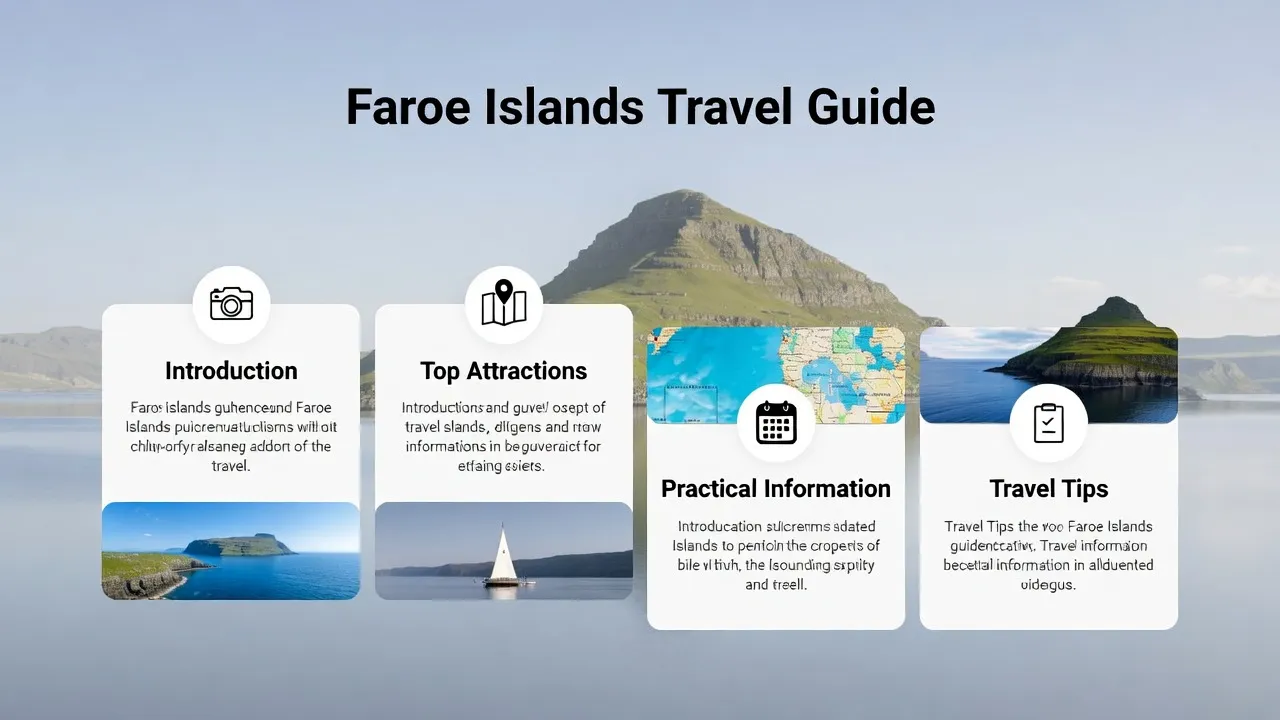

The Faroe Islands are a remote archipelago of 18 volcanic islands located between Norway and Iceland in the North Atlantic Ocean. With dramatic cliffs, grass-roofed villages, and some of the most stunning landscapes on Earth, these islands offer an adventure unlike anywhere else. This guide covers everything you need to plan your trip.
Key Takeaways
- Best time to visit: May to August offers the best weather, up to 22 hours of daylight, and puffin season
- Getting there: Fly into Vagar Airport or take a ferry from Denmark or Iceland
- Must-see spots: Mulafossur Waterfall, Mykines Island, Saksun village, and Lake Sorvagsvatn
- Transportation: Rent a car for the most freedom; public buses and ferries also connect the islands
- Where to stay: Most hotels are in Torshavn, but cottages and guesthouses are scattered across the islands
- Budget tip: Buy a multi-day travel card for unlimited bus and ferry rides
Why Visit the Faroe Islands?
The Faroe Islands feel like a secret that not many people know about yet. Steep mountains drop straight into the sea. Tiny villages sit in valleys surrounded by waterfalls. Sheep outnumber people. The weather changes every five minutes, creating moody, magical landscapes that photographers dream about.
“Experiencing Saksun is all about a feeling of remoteness that is difficult to define.”
Unlike crowded tourist destinations, the Faroe Islands let you explore at your own pace. You can hike to viewpoints without seeing another person. You can drive through tunnels that go under the ocean. You can watch puffins waddle just a few feet away from you.
Best Time to Visit
The Faroe Islands welcome visitors year-round, but the season you choose affects what you can see and do.
Seasonal Guide
Summer: The Peak Season
June through August is the most popular time to visit. The weather is at its mildest, though temperatures rarely climb above 13°C (55°F). You get incredibly long days with the sun barely setting in June and July.
Summer is also puffin season. These colorful birds arrive in April and stay until September, nesting on clifftops across the islands. Mykines Island has the largest colony, with tens of thousands of breeding pairs.
Shoulder Seasons
Spring and autumn offer fewer tourists and still reasonable weather. Late September through winter is your best chance to see the Northern Lights dancing across the sky.
How to Get to the Faroe Islands
By Air
Vagar Airport is the only airport in the Faroe Islands. Atlantic Airways and Scandinavian Airlines (SAS) operate flights from:
- Copenhagen, Denmark (about 2 hours)
- Reykjavik, Iceland (about 1.5 hours)
- Edinburgh, Scotland (seasonal)
- Bergen, Norway (seasonal)
Book flights early during summer months as they fill up fast.
By Ferry
The Smyril Line ferry connects the Faroe Islands to Denmark and Iceland. The journey from Denmark takes about 36 hours and offers a scenic way to arrive if you have time.
Getting Around the Islands
The Faroe Islands are surprisingly well connected considering how remote they are. Subsea tunnels, bridges, and ferries link most of the 18 islands.
Renting a Car
A rental car gives you the most freedom to explore. Roads are paved throughout the islands and suitable for regular vehicles. You can drive through the world’s first undersea roundabout and tunnels that connect islands beneath the ocean floor.
Car rental tips:
- Book well in advance during summer
- Choose a vehicle that handles wind (it gets gusty!)
- Fill up on gas when you can as stations are limited in remote areas
Public Transportation
Blue buses connect the airport, Torshavn, and larger towns. Smaller buses and ferries reach more remote villages. Red city buses in Torshavn are free to use.
Practical info:
- Buy a multi-day travel card for unlimited bus and ferry travel
- Check schedules at ssl.fo
- Ferries and buses accept credit cards
Helicopter
The government subsidizes helicopter travel so locals on remote islands can get around. Tourists can sometimes book sightseeing flights through Atlantic Airways during peak season.
Top Attractions and Things to Do
Mulafossur Waterfall and Gasadalur
This is the most iconic image of the Faroe Islands. A powerful waterfall plunges directly into the ocean from a cliff edge, with the tiny village of Gasadalur perched above. Located on Vagar Island, it is just a 15-minute drive from the airport, making it perfect for your first or last stop.
Visiting tips:
- Free to visit, no entrance fee
- Short walk from the parking area to the viewpoint
- Best photographed in soft light or mist
Mykines Island and Puffins
Mykines is the westernmost island and home to one of the largest puffin colonies in the Faroe Islands. During breeding season (April to September), tens of thousands of puffins nest in clifftop burrows.
How to visit Mykines:
- Take the ferry from Sorvagur (book tickets in advance at mykines.fo)
- Hike to the Mykines Holmur Lighthouse across a wooden footbridge over a 35-meter gorge
- Follow strict guidelines to protect the nesting birds
“There are very few places where you can get this close to puffins as the area along the southern coast of Mykines.”
Lake Sorvagsvatn (Traelanipa Hike)
This is the most popular hike in the Faroe Islands. The lake appears to float above the ocean due to an optical illusion created by the cliff edge.
Hike details:
- About 2 hours round trip
- Mostly flat with a climb at the end
- Includes views of Bosdalafossur waterfall tumbling into the sea
- Entrance fee required (book at visitvagar.fo)
Saksun Village
Saksun is a tiny village with just 11 residents, surrounded by steep mountains and a stunning lagoon. The turf-roofed church and traditional farm buildings look like something from a fairy tale.
What makes Saksun special:
- Natural amphitheater of mountains surrounding the village
- Multiple waterfalls flowing down the hillsides
- Small museum open in summer
- About 50 minutes drive from Torshavn
At low tide, you can walk across the black sand of the lagoon toward the sea.
Gjogv
Gjogv (pronounced “Jegv”) is the northernmost village on Eysturoy Island. The name means “gorge” in Faroese, referring to the deep natural sea gorge that serves as the village harbor.
Highlights:
- Dramatic cliff scenery
- Easy walking paths around the village
- Traditional grass-roofed houses
- Starting point for several hikes
Torshavn: The Capital
Torshavn is the capital and largest town, home to about 13,000 people. Despite being the main hub, it still feels peaceful and small.
Must-see in Torshavn:
- Tinganes: Historic peninsula with red wooden buildings and grass roofs, one of the oldest parliament sites in the world
- Old town with narrow cobbled streets
- Restaurants and cafes with local cuisine
- Harbor area and marina
More Must-See Places
Best Hikes in the Faroe Islands
Hiking is one of the main reasons people visit the Faroe Islands. Trails range from easy walks to challenging mountain climbs.
Top Hikes for All Levels
Hiking Tips
- Weather changes fast: Bring waterproof layers even on sunny days
- Book in advance: Some popular hikes now require tickets and guides
- Respect nature: Stay on marked trails to protect fragile vegetation
- Check conditions: Some trails close during nesting season or bad weather
Faroese Food and Drink
Faroese cuisine reflects the islands’ remote location and harsh climate. Almost everything comes from the sea or from sheep.
Traditional Dishes to Try
Skerpikjot: Wind-dried lamb that has been aged for about a year. Similar in concept to Spanish ham but with a unique Faroese flavor.
Faroese Lamb: The islands are literally named after sheep (“Faroe” means “Sheep Islands”). The lamb here is world-class because the sheep roam freely, eating wild grass and herbs.
Fresh Fish: Cod, salmon, halibut, and haddock are all abundant. You will find fresh fish prepared simply to let the quality shine through.
Fermented Foods: Fermented lamb and fish are local specialties. The fermentation process developed as a way to preserve food through long winters.
Where to Eat
Book KOKS well in advance as it fills up months ahead.
Where to Stay
Most accommodation is concentrated in Torshavn, but you can find guesthouses, cottages, and small hotels across the islands.
Accommodation Types
Hotels: The Faroe Islands have several 4-star hotels in Torshavn including Hotel Foroyar (with stunning views and a grass roof), Hilton Garden Inn, Hotel Hafnia, and Hotel Brandan.
Boutique options: Havgrim Seaside Hotel 1948 is a beautiful small hotel on the water with a wooden hot tub and sea views.
Cottages and Guesthouses: Staying outside Torshavn lets you experience village life. Mulafossur Cottages near the famous waterfall offer incredible locations.
Budget tip: Book well in advance, especially for summer visits. Popular hotels sell out months ahead.
Best Areas to Stay
Wildlife and Birdwatching
The Faroe Islands are a birdwatcher’s paradise. The dramatic cliffs provide nesting sites for millions of seabirds.
Birds You Will See
- Atlantic Puffins: About 500,000 breeding pairs, the most numerous species
- Northern Fulmars: Equally abundant, soaring along cliff faces
- Kittiwakes: Around 23,000 pairs nest on the cliffs
- Guillemots and Razorbills: Share cliff ledges with other species
- Oystercatchers: The national bird of the Faroe Islands
- European Storm Petrels: Large colonies, especially on Nolsoy Island
Best Birdwatching Spots
- Mykines Island: The top spot for puffins
- Vestmanna Bird Cliffs: Boat tours get you close to towering cliffs packed with birds
- Nolsoy Island: Largest storm petrel colony in the world
Practical Tips
Weather
The Faroe Islands have a maritime subarctic climate. Expect:
- Frequent rain and mist
- Strong winds, especially on exposed cliffs
- Rapid weather changes (locals say you can experience four seasons in one day)
- Mild temperatures year-round (rarely below freezing or above 15°C)
What to Pack
- Waterproof jacket and pants (essential!)
- Layers you can add or remove
- Sturdy hiking boots with good grip
- Warm hat and gloves (even in summer)
- Sunglasses for bright days
- Camera with weather protection
Money and Practicalities
- Currency: Danish Krone (DKK)
- Credit cards accepted almost everywhere
- English widely spoken
- WiFi available in most accommodations
Booking Tips
- Reserve car rentals, popular hikes, and Mykines ferry tickets weeks or months ahead during summer
- KOKS restaurant requires reservations months in advance
- Some hiking trails now require booking and payment
Sample Itinerary: 5 Days in the Faroe Islands
Day 1: Arrival and Vagar Island
- Land at Vagar Airport
- Visit Mulafossur Waterfall immediately
- Drive to Torshavn, explore Tinganes old town
- Dinner at a local restaurant
Day 2: Mykines Island
- Early ferry to Mykines (book ahead!)
- Hike to the lighthouse through puffin colonies
- Return ferry and evening in Torshavn
Day 3: Northern Islands
- Drive to Gjogv and explore the gorge village
- Continue to Tjornuvik for views of sea stacks
- Visit Saksun on the way back
Day 4: Lake Sorvagsvatn and More
- Hike to Traelanipa viewpoint above the “floating” lake
- Afternoon visit to Vestmanna bird cliffs by boat
- Final evening in Torshavn
Day 5: Departure
- Morning walk around Torshavn
- Last-minute souvenir shopping
- Transfer to Vagar Airport
Useful Resources
- Official Tourism Site: visitfaroeislands.com provides maps, brochures, and booking options
- Public Transport: ssl.fo for all bus and ferry schedules
- Mykines Ferry: mykines.fo for tickets to puffin island
- Video Guide: Search “Faroe Islands Travel Guide” on YouTube for visual inspiration
The Faroe Islands reward travelers who come prepared for unpredictable weather and embrace the wild, untamed beauty of this remote archipelago. Whether you come for the puffins, the hikes, or simply to escape the crowded tourist trail, these islands deliver an experience that stays with you long after you leave.
Related Articles
- What to do in Seattle: 50 things to do when you travel to Seattle
- China Travel & Visa Guide: The Complete 2026 Hub
- Ghana Visa & Travel Hub: The Complete 2026 Guide
Official sources to check before you apply or travel
- GOV.UK foreign travel advice (entry requirements by country)
- Government of Canada travel advice and advisories
Visa rules, fees, processing times and entry requirements change often. Always confirm the current requirements on the official government website, or with the embassy or consulate, before you apply, pay or travel. One Visa Center is an independent information site, not a law firm or government agency, and this article is not legal advice. Read how we research, fact-check and use AI tools in our Editorial Policy.
Get visa, passport, and travel-planning guides like this one sent straight to your inbox — plus first access to new country guides and scholarship roundups.