
Ghana rewards a simple shape: base in Accra, go west to the castles, then pick one adventure — the Volta’s waterfalls or a northern safari. That’s the route this itinerary follows, because it matches how the country actually lays out: the coast carries the history, Accra carries the energy, and everything beyond is a choose-your-own extension. Seven days covers the essential Ghana without rushing the parts that deserve stillness — Cape Coast Castle is not a stop you clip to forty-five minutes. Here’s the day-by-day, with the transport, budget, and food intel that first-timers usually learn the expensive way.
Prices and journey times are approximate as of August 2026 and shift with fuel costs and season — treat ranges as planning figures, not quotes. Not affiliated with any operator.
Part of our complete Ghana visa & travel hub — visas, passports, itineraries, and every route in and out of Ghana.
Before Anything: The Ten-Minute Admin Check
- Visa: most Western passport holders need one before flying — here’s the full process for US citizens (UK/EU applicants follow the same shape via their local Ghana mission). African passport holders may qualify for Ghana’s free e-visa.
- Yellow fever certificate — an entry requirement; pack the card with your passport. Start malaria tablets per your travel clinic.
- Season check: November–March is the classic window; August is the coast’s secret dry spell — the full calendar is in our best time to visit guide, and the safety picture in Is Ghana Safe to Visit.
- Money: cedis in cash plus a Visa/Mastercard for hotels. ATMs are everywhere in cities; mobile money (MoMo) runs the street economy. Buy a local SIM at the airport (MTN or Telecel — bring your passport) and install Bolt/Uber/Yango before you land.
Days 1–2: Accra — Arrival and the Capital
Day 1: Land at Kotoka, ride-hail to your base (Osu for nightlife and walkability, East Legon or Airport City for quieter comfort), then keep it gentle: an evening on Oxford Street in Osu, dinner of jollof or banku & grilled tilapia, early night.
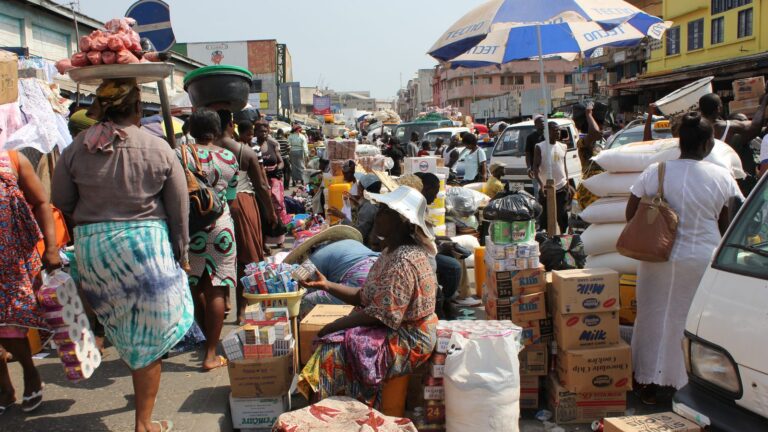
Day 2: The capital circuit — Kwame Nkrumah Memorial Park (independence history, recently renovated and genuinely moving), Black Star Square, then old Accra: a guided walking tour of Jamestown, the fishing-harbour district beneath the colonial lighthouse (go with a local guide — better stories, better welcome). Afternoon at Makola Market if you enjoy beautiful chaos, or the Arts Centre for crafts — haggling expected, start around half. Evening: live highlife or Afrobeats; kelewele (spiced fried plantain) from a street stall on the way home.
Days 3–4: Cape Coast & Elmina — The Heavy Heart of the Trip
Day 3: Head west along the coast (~145 km; 3–4 hours by road — take an STC/VIP morning coach or a hired car with driver). Afternoon at Cape Coast Castle: the dungeons, the Door of No Return, the museum. Take the guided tour, and give it the time and emotional room it demands — for many visitors, especially from the diaspora, this is the reason for the whole journey. Sleep in Cape Coast or at a beach lodge nearby.
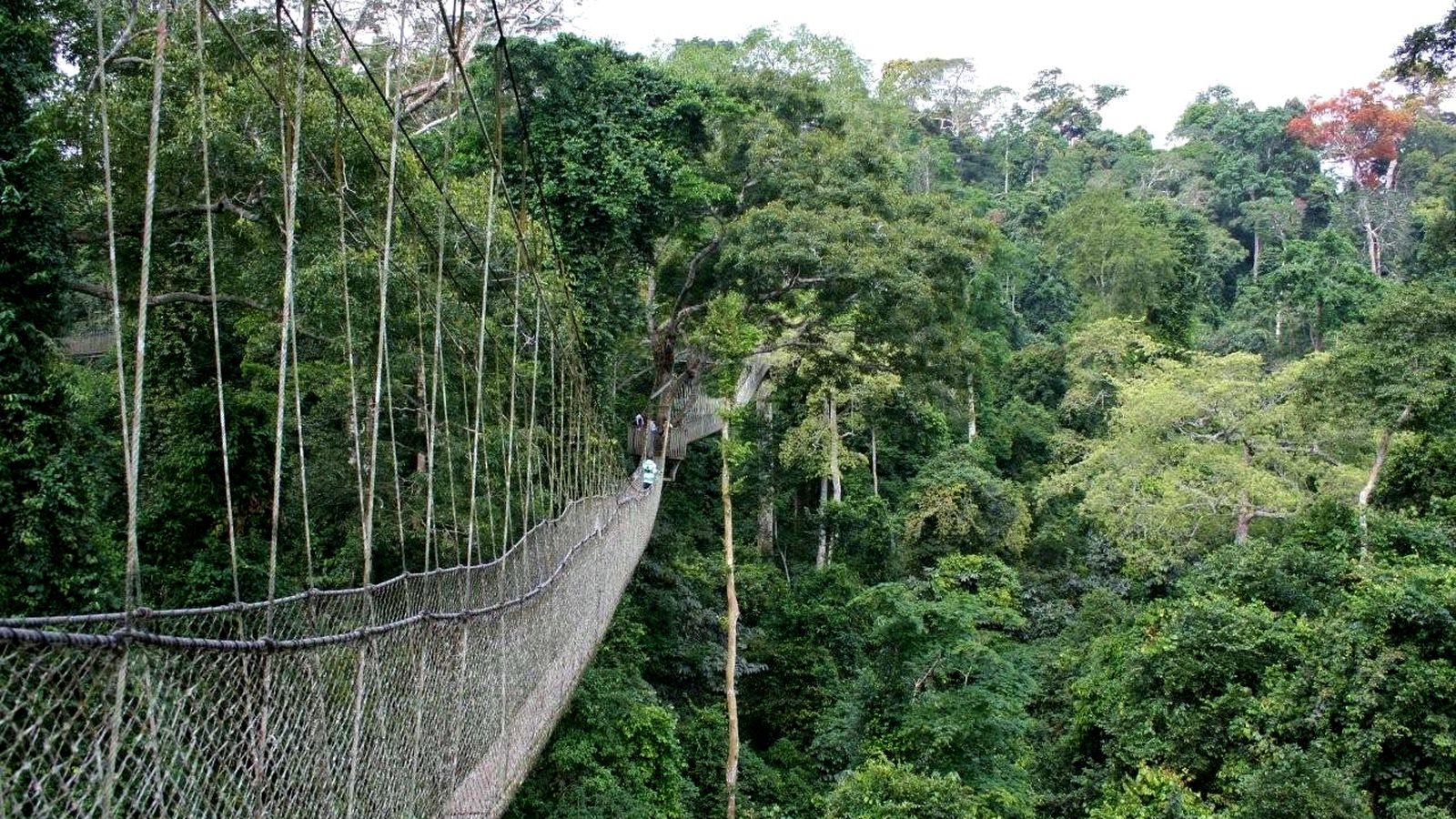
Day 4: Early start to Kakum National Park (~45 minutes north) for the famous canopy walkway — seven rope bridges strung 30–40 metres up in the rainforest; arrive at opening time to beat tour buses. Afternoon at Elmina: St George’s Castle (the oldest European building in sub-Saharan Africa, 1482) and the wildly photogenic fishing harbour below it, pirogues stacked with flags and nets. Overnight again on the coast — or roll back toward Accra with a stop at a beach town like Anomabo.
Day 5: Beach Day, Earned
After the castles, you’ll want the ocean. Options by taste: Anomabo or a Cape Coast–area lodge (quiet, on your route back), Kokrobite near Accra (backpacker-reggae energy), or Accra’s own Labadi Beach (busy, horses, live music on weekends). Respect the Atlantic: currents are strong and lifeguards scarce — swim shallow and never alone.
Days 6–7: Pick Your Ghana
Option A — Volta day-trip or overnight: east to the Shai Hills reserve (baboons, savannah walks, ~1 hour out) and the Akosombo dam area on Lake Volta, or push further for Wli Falls — West Africa’s tallest waterfall, an easy 45-minute forest walk to the lower falls (~4 hours’ drive, better as an overnight). Option B — Aburi & crafts: the cool botanical gardens in the Akuapem hills plus wood-carving villages, an easy unwind day. Day 7: last market run (Arts Centre for gifts: kente, beads, shea butter), a proper waakye lunch, and out — Kotoka likes you there 3 hours before intercontinental departures.
Have 10 Days? Add the North (Mole Safari)
| Day | Plan |
|---|---|
| Day 7 | Fly Accra → Tamale (about an hour; domestic carriers fly daily), transfer ~2.5–3 hrs by road to Mole National Park |
| Day 8 | Morning walking safari — elephants at the waterholes (best January–March), antelope, warthogs, 300+ bird species; afternoon pool overlooking the escarpment |
| Day 9 | Second game drive + the ancient mud-and-stick Larabanga Mosque nearby; overnight Mole or Tamale |
| Day 10 | Fly back to Accra, souvenir sweep, depart |
Prefer green to savannah? Swap the north for a full Volta circuit: Wli Falls, the sacred monkeys of Tafi Atome, and a sunrise hike up Mount Afadja (Afadjato), Ghana’s highest peak.
Budget: What a Week Actually Costs
| Style | Per day (per person) | What that looks like |
|---|---|---|
| Backpacker | ~$40–60 | Guesthouses/hostels, trotros and STC buses, street food (a full chop-bar meal can run a few dollars) |
| Mid-range | ~$90–150 | 3-star hotels/beach lodges, ride-hailing + intercity coaches or occasional driver, restaurant dinners, all entry fees |
| Comfort | $200+ | 4–5-star (Accra has genuinely good ones), private car and driver throughout, domestic flights |
Eat These Before You Leave
Jollof (order it everywhere, join the Ghana-vs-Nigeria debate on Ghana’s side while in country), waakye (rice-and-beans breakfast of champions, wrapped in leaves), banku & grilled tilapia with hot pepper sauce, red-red (bean stew with fried plantain), kelewele (ginger-chilli fried plantain, the king of street snacks), and chichinga (suya-spiced kebabs). Drink: fresh coconuts, Club or Star beer, sobolo (hibiscus). Water: bottled or sachet from reputable brands.
Frequently Asked Questions
Is 7 days enough for Ghana?
Yes — a week covers Accra, the Cape Coast–Elmina castles, Kakum, and a beach or Volta day without rushing. Ten days adds a Mole safari or the full Volta circuit comfortably.
How do I get from Accra to Cape Coast?
It’s ~145 km west: 3–4 hours by road. STC and VIP run comfortable coaches; a hired car with driver gives flexibility for the Kakum–Elmina triangle. Leave in the morning — never ride intercity after dark.
Is Mole National Park worth it?
If you have 10 days, absolutely — walking-level elephant encounters at a fraction of East African safari prices. Fly to Tamale (about an hour) rather than driving; January–March is prime viewing.
Do I need to rent a car in Ghana?
Self-driving isn’t recommended for first-timers — traffic is assertive and signage thin. Use Bolt/Uber/Yango in cities, coaches or a car-with-driver between them.
How much does a 10-day Ghana trip cost?
Very roughly $900–1,500 per person mid-range on the ground (lodging, transport, food, entries) excluding international flights — less for backpackers, much more in December.
Do I need a guide for Cape Coast Castle?
Guided tours are included with entry and genuinely essential — the history is the point. In Jamestown (Accra), a local guide is also the difference between a walk and an experience.
Sources
- Ghana Tourism Authority — attraction and festival information (visitghana.com)
- Operator schedules and park fees — confirm current rates directly before travel
- Photo: Kakum National Park canopy walkway — Chiappinik, Wikimedia Commons, CC BY 2.5 IT
Disclaimer: Journey times, fees, and prices are good-faith planning estimates as of August 3, 2026 and change with season and fuel costs — confirm locally. Not legal or travel-agency advice.
Official sources to check before you apply or travel
- GOV.UK foreign travel advice (entry requirements by country)
- Government of Canada travel advice and advisories
Visa rules, fees, processing times and entry requirements change often. Always confirm the current requirements on the official government website, or with the embassy or consulate, before you apply, pay or travel. One Visa Center is an independent information site, not a law firm or government agency, and this article is not legal advice. Read how we research, fact-check and use AI tools in our Editorial Policy.
Get visa, passport, and travel-planning guides like this one sent straight to your inbox — plus first access to new country guides and scholarship roundups.