
The Philippines 13(a) Non-Quota Immigrant Visa is the main visa for foreign nationals married to Filipino citizens. This visa allows you to live, work, and stay in the Philippines permanently with your spouse.
Key Takeaways
- 13(a) visa is for foreign nationals married to Filipino citizens under Philippine law
- Two stage process includes probationary (1 year) then permanent residency (5 year renewable)
- Required documents include passport, PSA marriage certificate, birth certificates, clearances, and proof of financial capacity
- Application fee is approximately PHP 12,500 to 14,065 at BI Main Office
- Consulate visa fee is $150 USD when applying from abroad
- Interview required to verify marriage is genuine
- Benefits include indefinite residency, legal work rights, and business ownership
- Apply for permanent conversion 3 to 4 months before probationary visa expires
- ACR I-Card mandatory for all 13(a) visa holders
What is the 13(a) Spouse Visa?
The 13(a) visa, also called the Marriage Visa, is issued to foreign nationals who have a valid marriage with a Filipino citizen recognized under Philippine law. This visa provides a pathway to permanent residency in the Philippines.
The 13(a) visa follows a two stage process:
- Stage 1: Conversion to 13(a) Probationary Residency (valid for 1 year)
- Stage 2: Amendment to 13(a) Permanent Residency (renewable every 5 years)
Important: The 13(a) visa offers benefits that other visa types do not provide, including the right to work legally, establish your own business, and live in the Philippines indefinitely.
Who Can Apply for the 13(a) Visa?
To qualify for the spouse visa, you must meet specific eligibility requirements set by the Bureau of Immigration.
Basic Eligibility Requirements
Reciprocity Requirement
Your country of origin must have a reciprocal agreement with the Philippines that grants Filipino citizens the right to apply for permanent residency. Most Western countries meet this requirement, but check with the Bureau of Immigration if you are unsure.
Documentary Requirements
The 13(a) visa application requires documents from both the foreign applicant and the Filipino spouse.
Documents for the Foreign Applicant
Documents for the Filipino Spouse
- Original Birth Certificate issued by the Philippine Statistics Authority (PSA)
- Valid Philippine passport or government issued ID
- Proof of Philippine citizenship
Joint Documentary Requirements
- PSA Marriage Certificate or Report of Marriage if married abroad
- Joint letter request signed by both spouses addressed to the BI Commissioner
- Proof of financial capacity such as bank statements, property ownership, or investment certificates
Tip: If you married outside the Philippines, you need a Report of Marriage (ROM) issued by the Philippine Embassy or Consulate. Your foreign marriage certificate must be apostilled or authenticated.
Application Process Step by Step
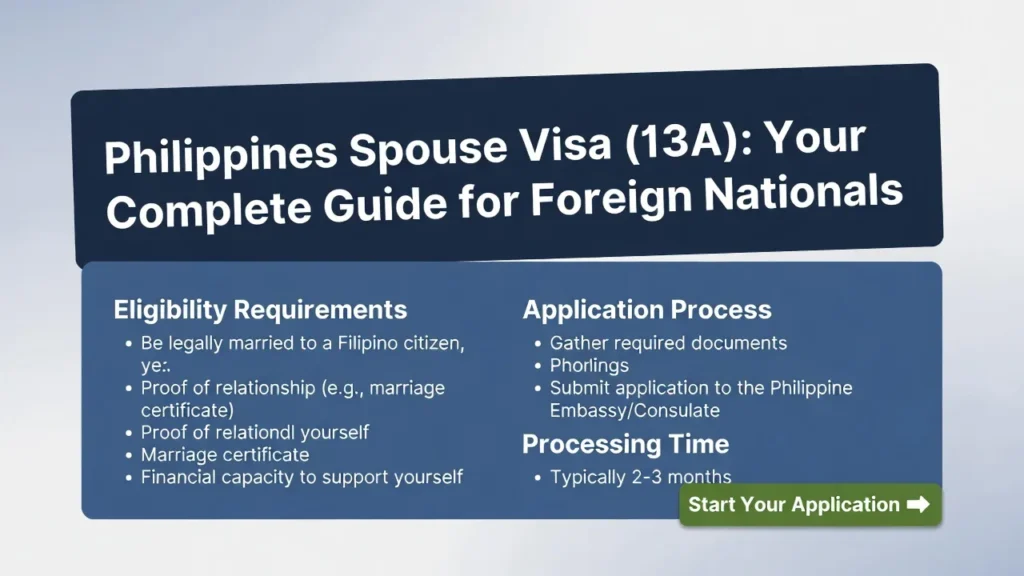
The 13(a) visa application can be filed at the Bureau of Immigration Main Office in Manila or at Philippine Embassies and Consulates abroad.
If Applying from Outside the Philippines
- Schedule an appointment at the Philippine Embassy or Consulate
- Complete the visa application forms (FA Form No. 3)
- Gather all required documents with proper apostille certification
- Appear in person for your interview with a consular officer
- Pay the immigrant visa fee of $150 USD
- Wait for visa processing (5 to 10 working days typically)
- Travel to the Philippines with your approved visa
If Already in the Philippines
- Secure the CGAF and document checklist from the BI Main Office or website
- Gather all required documents
- Submit your application to the Central Receiving Unit (CRU) at BI Main Office
- Pay the application fees at the Cashier
- Attend your interview or hearing
- Wait for visa approval and receive your ACR I-Card
Visa Fees and Costs
The total cost for a 13(a) visa depends on several factors including where you apply and which documents you need to obtain.
Estimated Fees
Note: These fees do not include costs for document authentication, apostille, courier services, or agency assistance.
The Interview Process
Both spouses must attend an interview with an immigration officer or consular official.
What to Expect at the Interview
The interview is designed to verify that your marriage is genuine and not fraudulent. Immigration officers will ask basic questions such as:
- How did you meet your spouse?
- When and where did you get married?
- What are your plans for living in the Philippines?
- Basic personal information about each other
Interview Tips
- Answer all questions honestly and confidently
- Bring extra documents even if not required (photos together, communication records)
- Arrive on time with your spouse
- Dress appropriately and be respectful
Most interviews are straightforward and last less than 15 minutes if your relationship is genuine.
Probationary to Permanent Residency
The 13(a) visa follows a two stage process from probationary to permanent status.
Stage 1: Probationary Residency
| Detail | Information |
|---|---|
| Duration | 1 year |
| ACR I-Card validity | 1 year |
| Work rights | Allowed with proper permits |
| Status | Probationary with conditions |
Stage 2: Permanent Residency
| Detail | Information |
|---|---|
| When to apply | 3 to 4 months before probationary visa expires |
| ACR I-Card validity | 5 years, renewable |
| Status | Permanent resident |
| Benefits | Full residency rights, indefinite stay |
Important: If BI processing takes longer than expected, you can apply for a Probationary Extension to maintain legal status while waiting for permanent residency approval.
Benefits of the 13(a) Visa
The spouse visa offers significant advantages for foreign nationals living in the Philippines.
Key Benefits
- Indefinite residency in the Philippines
- Legal work authorization
- Business ownership rights to establish your own company
- ACR I-Card for identification and transactions
- No visa runs required to maintain status
- Pathway to permanent residency after the probationary period
ACR I-Card Requirement
An Alien Certificate of Registration Identity Card (ACR I-Card) is mandatory for 13(a) visa holders. This card serves as:
- Proof of legal residence
- Official identification document
- Required for banking, employment, and other transactions
Maintaining Your 13(a) Visa Status
To keep your spouse visa valid, you must follow certain rules and requirements.
Maintenance Requirements
- Continue living in the Philippines
- Report any changes in address or civil status to the Bureau of Immigration
- Renew your ACR I-Card before it expires
- Maintain your marriage with your Filipino spouse
What Can Cancel Your Visa
Dependent Children
Unmarried children under 21 years of age can also apply for 13(a) status along with the principal applicant.
Requirements for Dependents
- Valid passport
- Birth certificate showing relationship to the principal applicant
- NBI Clearance for children 15 years and older (if in Philippines 6+ months)
- Completed application forms
Frequently Asked Questions
How long does it take to process a 13(a) visa?
Processing times vary. At Philippine consulates abroad, it typically takes 5 to 10 working days. At the BI Main Office in Manila, the process can take several weeks to months depending on workload and document completeness.
Can I work in the Philippines with a 13(a) visa?
Yes, the 13(a) visa allows you to work legally in the Philippines. However, some employers may still require a Special Work Permit (SWP) depending on the nature of the work.
Do I need to hire an agent or fixer?
No, you can complete the entire process yourself with assistance from your Filipino spouse. The BI website provides all necessary forms and checklists. However, some applicants choose to hire agencies for convenience.
What if my probationary visa expires before permanent status is approved?
You can apply for a Probationary Extension that grants another 1 year stay while your permanent residency conversion is pending.
Can I travel outside the Philippines on a 13(a) visa?
Yes, but you must ensure your ACR I-Card is valid and you have proper re-entry documentation. Extended absences may raise questions about your intent to reside in the Philippines.
What documents need to be apostilled?
Foreign documents such as your birth certificate, police clearance, and marriage certificate (if married abroad) must be apostilled by the competent authority in the issuing country.
Related Articles
- Joining a Foreign Army from Africa: The 2026 Truth
- Credential Recognition & Foreign Degrees in Canada: How It Works
- Japan Travel Guide 2026: Visa, Seasons, Route & Costs
Official sources to check before you apply or travel
- GOV.UK foreign travel advice (entry requirements by country)
- Government of Canada travel advice and advisories
Visa rules, fees, processing times and entry requirements change often. Always confirm the current requirements on the official government website, or with the embassy or consulate, before you apply, pay or travel. One Visa Center is an independent information site, not a law firm or government agency, and this article is not legal advice. Read how we research, fact-check and use AI tools in our Editorial Policy.
Get visa, passport, and travel-planning guides like this one sent straight to your inbox — plus first access to new country guides and scholarship roundups.