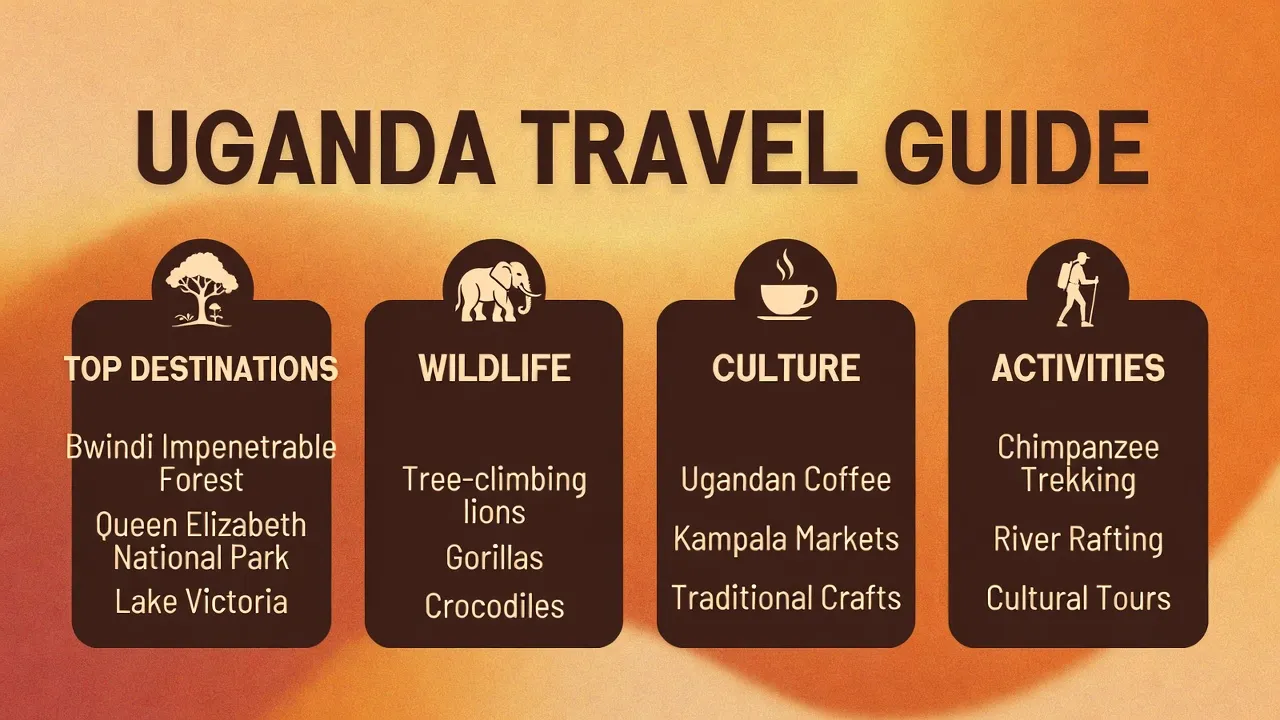

Uganda sits in the heart of East Africa, earning its nickname “The Pearl of Africa” from Winston Churchill over a century ago. This landlocked country offers something truly special: mountain gorillas in misty forests, lions climbing trees, the source of the Nile River, and some of the friendliest people you’ll ever meet. If you’re looking for an authentic African adventure without massive crowds, this Uganda travel guide will help you plan an unforgettable journey.
Quick Facts About Uganda
| Category | Details |
|---|---|
| Capital | Kampala |
| Population | 47 million people |
| Size | 241,038 square kilometers |
| Languages | English (official), Swahili, Luganda, plus 40+ local languages |
| Currency | Ugandan Shilling (UGX), 1 USD = 3,700 UGX |
| Time Zone | East Africa Time (UTC +3) |
| Electricity | 240V, British-style three-pin plugs |
| Driving | Left side of the road |
| Religion | Christianity 85%, Islam 14% |
| Best Time | June to August, December to February |
When Should You Visit Uganda?
Uganda’s location on the equator means temperatures stay fairly consistent year-round, but rainfall patterns affect what you can do and see.
Dry Seasons (Best for Visiting)
June to August
- Little rainfall across most of the country
- Easier gorilla trekking (trails less muddy)
- Better roads for safari drives
- Clear skies for photography
- Peak season, so higher prices
December to February
- Another dry period, slightly shorter
- Christmas and New Year holidays bring crowds
- Good wildlife viewing
- Warmer temperatures than June-August
- Popular time for European visitors
Wet Seasons
March to May
- Long rains, heaviest in April
- Muddy trails make gorilla trekking harder
- Some roads become difficult to pass
- Lower prices for accommodation
- Lush, green landscapes
- Fewer tourists
September to November
- Short rains, less intense than March-May
- Still possible to travel
- Good deals on safaris
- Bird watching excellent (migratory birds)
Key Takeaway: Visit during June to August for the best weather and easiest gorilla trekking, or travel in wet season for lower prices and fewer crowds if you don’t mind rain.
Entry Requirements and Visas
Tourist Visa Options
Single Entry Tourist Visa
- Cost: $50 USD
- Valid for 90 days
- Apply online at visas.immigration.go.ug
- Processing takes 2-3 business days
- Approved before arrival
East Africa Tourist Visa
- Cost: $100 USD
- Valid for 90 days
- Covers Uganda, Kenya, and Rwanda
- Good value if visiting multiple countries
- Apply through any of the three countries
Visa on Arrival
- Available at Entebbe Airport
- Costs same as online ($50)
- Longer wait times at immigration
- Online application recommended
Passport Requirements
Your passport must be valid for at least 6 months from your entry date. Make sure you have at least two blank pages for stamps.
Yellow Fever Certificate
This is mandatory. You must show proof of yellow fever vaccination when entering Uganda. Get vaccinated at least 10 days before travel. Immigration officials will ask to see your yellow fever card.
Health Preparations
Recommended Vaccinations:
- Yellow fever (required)
- Hepatitis A and B
- Typhoid
- Tetanus
- Meningitis
- Rabies (if planning rural areas)
Malaria Prevention:
- Take antimalarial medication
- Use insect repellent with DEET
- Sleep under mosquito nets
- Wear long sleeves at dawn and dusk
Getting to Uganda
By Air
Entebbe International Airport (EBB) is Uganda’s main gateway, located 40 kilometers from Kampala on the shores of Lake Victoria.
International Airlines:
- Ethiopian Airlines (via Addis Ababa)
- Kenya Airways (via Nairobi)
- KLM (via Amsterdam)
- Turkish Airlines (via Istanbul)
- Qatar Airways (via Doha)
- Brussels Airlines (direct from Brussels)
- RwandAir (via Kigali)
Flight Costs:
- From Europe: $600-1,200 USD
- From USA: $900-1,800 USD
- From Asia: $700-1,400 USD
- Book 2-3 months ahead for better prices
By Land
You can enter Uganda by road from neighboring countries.
From Kenya:
- Busia or Malaba border crossings
- 8-10 hours Nairobi to Kampala by bus
- Several daily bus services
From Rwanda:
- Katuna or Cyanika borders
- 4-5 hours Kigali to Kampala
- Good road conditions
From Tanzania:
- Mutukula border
- 15-16 hours Dar es Salaam to Kampala
- Long journey but doable
Getting Around Uganda
Domestic Flights
Aerolink Uganda and Fly Uganda operate domestic flights connecting major parks and cities.
Popular Routes:
- Entebbe to Bwindi (gorilla trekking)
- Entebbe to Kidepo Valley
- Entebbe to Murchison Falls
- Costs: $200-400 USD one way
- Saves time on long road journeys
Rental Cars
Renting a car with a driver is the most popular way to explore Uganda.
Car Rental Options:
- 4×4 with driver: $80-150 USD per day
- Self-drive 4×4: $50-100 USD per day
- Fuel: approximately $1.40 per liter
Why Hire a Driver:
- Roads can be challenging
- Drivers know the routes
- No stress navigating
- Helpful with language barriers
- Similar cost to self-drive when you factor everything in
Recommended Companies:
- Road Trip Uganda
- 4×4 Uganda
- Self Drive Uganda
Public Transportation
Matatus (Minibuses):
- Cheap transport between towns
- Cramped and not always safe
- Leave when full, no set schedule
- Good for short distances
Buses:
- Connect major cities
- Companies like Gateway, Link, and YaHa Express
- More comfortable than matatus
- Book in advance for long routes
Boda Bodas (Motorcycle Taxis):
- Available everywhere
- Very cheap
- Can be dangerous
- Only use for short trips
- Always negotiate price before riding
Top Places to Visit in Uganda
Bwindi Impenetrable National Park
Bwindi is home to half the world’s remaining mountain gorillas. Trekking to see these gentle giants in their natural habitat is Uganda’s most famous experience.
Gorilla Trekking Details:
- Permit cost: $700 USD per person
- Duration: 2-8 hours (depending on gorilla location)
- One hour with the gorillas
- Maximum 8 people per gorilla family
- Book 3-6 months in advance
What to Expect:
- Early morning start (7-8 AM)
- Hike through dense forest
- Can be muddy and steep
- Physical fitness required
- Unforgettable experience
Best Time:
- June to August (dry season)
- December to February
- Trails easier during dry months
Murchison Falls National Park
Uganda’s largest national park offers classic African safari experiences plus the dramatic Murchison Falls.
Wildlife You’ll See:
- Elephants
- Lions
- Giraffes
- Buffaloes
- Hippos
- Crocodiles
- Leopards (if lucky)
Activities:
- Game drives (morning and afternoon)
- Boat cruise to the falls
- Hiking to top of falls
- Sport fishing
- Bird watching (450+ species)
Getting There:
- 5-6 hours drive from Kampala
- Domestic flights available
- Multiple entry gates
Queen Elizabeth National Park
This diverse park sits along the Kazinga Channel, where you’ll see incredible wildlife concentrations.
Highlights:
Tree-Climbing Lions:
- Found in Ishasha sector
- Unique behavior (rare in Africa)
- Best spotted in late morning
Kazinga Channel Boat Cruise:
- 2-3 hour boat trip
- Huge hippo populations
- Elephants and buffaloes on shore
- Bird paradise
Chimp Tracking:
- Kyambura Gorge
- 90 minute trek
- 50-70% success rate
Lake Bunyonyi
Africa’s second deepest lake offers peaceful relaxation after gorilla trekking.
What to Do:
- Canoe between islands
- Swimming (bilharzia-free)
- Hiking around the lake
- Visit local communities
- Bird watching
- Simply relax
Accommodation:
- Budget to luxury options
- Many lodges with lake views
- Island camping available
Jinja and the Source of the Nile
Jinja sits where the Nile River begins its 6,650 kilometer journey to the Mediterranean Sea.
Adventure Activities:
- White water rafting (world-class rapids)
- Bungee jumping over the Nile
- Kayaking
- Stand-up paddleboarding
- Quad biking
- Horseback riding
Costs:
- Full-day rafting: $125-150 USD
- Bungee jumping: $115 USD
- Half-day kayaking: $85 USD
Kampala City
Uganda’s capital is chaotic but vibrant, worth a day or two exploring.
What to See:
- Kasubi Tombs (UNESCO site)
- Uganda Museum
- Ndere Cultural Centre (traditional performances)
- Local markets (Owino Market)
- Nightlife in Kabalagala
Getting Around Kampala:
- Use SafeBoda or Uber (safer than random bodas)
- Traffic is terrible (plan extra time)
- Stay in Kololo or Nakasero areas
Kidepo Valley National Park
Uganda’s most remote park offers rugged wilderness and few tourists.
Why Visit:
- Untouched landscapes
- Animals rare elsewhere (cheetah, greater kudu)
- Cultural encounters with Karamojong people
- True wilderness feel
Challenge:
- 10-12 hours drive from Kampala
- Domestic flight recommended ($400 return)
- Limited accommodation options
Gorilla Trekking: What You Need to Know
Booking Your Permit
Gorilla permits are limited and sell out fast.
How to Book:
- Through tour operator (easiest)
- Direct from Uganda Wildlife Authority
- Book 3-6 months ahead (longer for peak season)
- Non-refundable once purchased
Physical Requirements
Gorilla trekking requires moderate fitness.
Preparation:
- Practice hiking with elevation gain
- Build stamina (treks can be 6+ hours)
- Minimum age is 15 years
- Not recommended if you have mobility issues
What to Bring
Essential Items:
- Hiking boots (waterproof)
- Long pants and long sleeves
- Rain jacket
- Gardening gloves (protection from nettles)
- Walking stick (provided at park)
- Insect repellent
- 2+ liters of water
- Snacks
Trekking Day
Schedule:
- 7:00 AM briefing at park headquarters
- Assignment to gorilla family
- 8:00 AM trek begins
- Duration varies (30 minutes to 6 hours)
- 1 hour with gorillas
- Trek back to starting point
Rules:
- Keep 7 meters distance from gorillas
- No flash photography
- Don’t point or make sudden movements
- Stay in tight group
- If you need to cough, turn away
- Don’t trek if you’re sick
Safari Planning Tips
Choosing Safari Length
3-4 Days:
- One major park (Murchison or Queen Elizabeth)
- Good introduction
- Budget-friendly
5-7 Days:
- Two parks
- Gorilla trekking plus safari
- Most popular choice
10+ Days:
- Multiple parks
- Chimpanzees and gorillas
- More relaxed pace
- See diverse ecosystems
Safari Costs
| Safari Type | Daily Cost (Per Person) |
|---|---|
| Budget camping | $150-250 USD |
| Mid-range lodges | $300-500 USD |
| Luxury lodges | $600-1,500 USD |
What’s Usually Included:
- Accommodation
- Meals
- Game drives
- Park entrance fees
- Guide and vehicle
Extra Costs:
- Gorilla permits ($700)
- Chimp permits ($200)
- Drinks
- Tips for guides
- Personal purchases
Best Safari Companies
Research companies thoroughly before booking.
Recommended Operators:
- Gorilla Link Tours
- Kiboko Safaris
- Wild Frontiers Uganda
- Primate Safari Experiences
Booking Tips:
- Read recent reviews
- Compare itineraries carefully
- Ask what’s included/excluded
- Book directly with reputable companies
- Avoid street touts
Where to Stay
Budget Accommodation ($10-40 USD)
Hostels and Guesthouses:
- Red Chilli Hideaway (Kampala)
- Bushpig Backpackers (Kabale, near Bwindi)
- Nile River Explorers (Jinja)
- Basic but clean
- Great for meeting travelers
Camping:
- Available in most national parks
- Basic facilities
- $10-20 USD per person
Mid-Range Lodges ($60-150 USD)
Park Lodges:
- Pakuba Safari Lodge (Murchison Falls)
- Bush Lodge (Queen Elizabeth)
- Lake Mulehe Safari Lodge (Bwindi area)
- Comfortable rooms
- Good food
- Swimming pools common
Luxury Camps ($200-800 USD)
High-End Options:
- Bwindi Lodge (gorilla trekking)
- Chobe Safari Lodge (Murchison Falls)
- Katara Lodge (Lake Bunyonyi)
- Sanctuary Gorilla Forest Camp
- Exceptional service
- Gourmet meals
- Prime locations
Ugandan Food and Drink
Traditional Dishes to Try
Matoke:
- Steamed green bananas
- Served with groundnut sauce
- National dish
- Eaten with most meals
Posho:
- Maize flour porridge
- Similar to polenta
- Staple carbohydrate
- Filling and cheap
Rolex:
- Not a watch!
- Rolled chapati with eggs and vegetables
- Popular street food
- Costs 2,000-4,000 UGX ($0.50-1 USD)
Luwombo:
- Meat or fish steamed in banana leaves
- Traditional Buganda dish
- Special occasion food
- Very flavorful
Muchomo:
- Grilled meat on skewers
- Goat most common
- Sold by roadside vendors
- Great with cold beer
Where to Eat
Budget ($2-5 USD):
- Local restaurants
- Street food stalls
- Market food courts
Mid-Range ($8-20 USD):
- Cafe Javas (Kampala)
- Khana Khazana (Indian food)
- The Lawns (Kampala)
Fine Dining ($25-50 USD):
- Fang Fang (Kampala)
- Mythos (Greek, Kampala)
- Eureka Place (Kisementi)
Drinks
Nile Special:
- Uganda’s most popular beer
- Light lager
- Available everywhere
- 5,000-8,000 UGX per bottle
Waragi:
- Ugandan gin
- Made from cassava or millet
- Quite strong
- Mix with tonic
Fresh Juice:
- Passion fruit juice is amazing
- Mango, pineapple, watermelon
- Always ask if it’s fresh or concentrate
Safety in Uganda
Uganda is generally safe for tourists, but use common sense.
Staying Safe
General Safety:
- Don’t walk alone at night
- Keep valuables hidden
- Use registered taxis or Uber
- Avoid displaying expensive items
- Keep copies of passport and documents
Health Safety:
- Drink only bottled water
- Avoid ice in drinks
- Eat at busy restaurants (food is fresh)
- Wash hands frequently
- Use hand sanitizer
Wildlife Safety:
- Follow guide instructions always
- Never approach wild animals
- Stay in vehicle during game drives
- Don’t feed any animals
Common Scams to Avoid
Airport Taxi Scams:
- Book taxi through hotel in advance
- Use official taxi stand at airport
- Negotiate price before getting in
Fake Tour Operators:
- Book with established companies
- Verify company exists online
- Don’t book through street touts
- Get everything in writing
Money Matters
Currency and Cash
The Ugandan Shilling (UGX) is the local currency.
ATMs:
- Available in cities and towns
- Accept Visa and Mastercard mostly
- Withdrawal limits: 1,000,000 UGX (about $270 USD)
- Keep some cash for rural areas
Money Exchange:
- Forex bureaus offer better rates than banks
- US dollars widely accepted (especially for permits)
- Bring newer US bills ($100 from 2013 onwards)
- Old or torn bills often rejected
Card Payments
Credit Cards:
- Accepted at hotels and upscale restaurants
- Not common in local places
- Visa more widely accepted than Mastercard
- Always carry cash backup
Tipping Guide
| Service | Suggested Tip |
|---|---|
| Safari guide | $10-15 USD per day |
| Gorilla trekking porter | $10-15 USD |
| Restaurant | 5-10% if service good |
| Hotel staff | $1-2 USD per service |
| Driver | $5-10 USD per day |
What to Pack for Uganda
Clothing
Safari Clothes:
- Neutral colors (khaki, green, brown)
- Long pants and long sleeves
- Light, breathable fabrics
- Layers for early mornings
- Comfortable closed shoes
Gorilla Trekking:
- Sturdy waterproof hiking boots
- Long pants (protect from nettles)
- Long-sleeved shirt
- Rain jacket
- Gardening gloves
General:
- Comfortable walking shoes
- Flip flops for lodge
- Modest clothing (shoulders and knees covered)
- Swimsuit
- Light sweater for evenings
Essential Items
- Sunscreen (SPF 50+)
- Insect repellent with DEET
- Anti-malarial medication
- Basic first aid kit
- Headlamp or flashlight
- Reusable water bottle
- Daypack for treks
- Binoculars for wildlife
- Camera with extra batteries
- Phone and chargers
- Power adapter (UK style)
- Toiletries
- Hand sanitizer
- Wet wipes
Sample 7-Day Itinerary
Day 1: Arrival in Entebbe
- Arrive at Entebbe Airport
- Transfer to hotel
- Rest and recover from flight
- Evening walk along Lake Victoria
Day 2: Transfer to Murchison Falls
- Early morning departure
- Stop at Ziwa Rhino Sanctuary (rhino tracking)
- Continue to Murchison Falls
- Evening relaxation at lodge
Day 3: Murchison Falls Safari
- Morning game drive (6:00 AM start)
- Return to lodge for lunch
- Afternoon boat cruise to bottom of falls
- Hike to top of falls
Day 4: Travel to Kibale
- Morning drive to Kibale Forest
- 6-7 hour journey
- Check into lodge near park
- Relax after long drive
Day 5: Chimpanzee Tracking
- Morning chimp tracking in Kibale
- Afternoon visit to Bigodi Wetland
- Bird watching
- Community visit
Day 6: Transfer to Bwindi
- Drive to Bwindi Impenetrable Forest
- Stop at tea plantations
- Arrive late afternoon
- Prepare for gorilla trek
Day 7: Gorilla Trekking and Departure
- Early morning gorilla trek
- Return to lodge for lunch
- Drive back to Entebbe (or overnight nearby)
- Evening flight home (book late departure)
Key Takeaway: This itinerary covers Uganda’s highlights but requires long drives. Add extra days for more relaxed pace or consider domestic flights.
Final Tips for Your Uganda Adventure
Book Gorilla Permits Early: These sell out 3-6 months in advance during peak season. This is your most important booking.
Get Proper Insurance: Make sure your travel insurance covers gorilla trekking and emergency evacuation. Many standard policies don’t.
Bring US Dollars: For gorilla permits, park fees, and many lodges. Make sure bills are new and clean.
Be Patient: Things move slower in Uganda. Delays happen. Keep a flexible mindset and enjoy the journey.
Respect Local Culture: Uganda is conservative. Dress modestly, especially outside tourist areas. Ask before photographing people.
Support Local: Buy crafts directly from artisans, eat at local restaurants when possible, and hire local guides.
Stay Flexible: Weather can change plans. Build buffer days into your itinerary for unexpected delays or opportunities.
Uganda offers adventures you won’t find anywhere else on Earth. From coming face to face with mountain gorillas to watching lions lounge in trees, this small East African nation punches well above its weight. The warmth of Ugandan people, combined with incredible wildlife and beautiful landscapes, creates an experience that stays with you long after you return home. Pack your sense of adventure and get ready to discover why Uganda truly deserves its title as the Pearl of Africa.
Related Articles
- East Africa Travel Visa: Your Complete Guide to Exploring the Region
- Uganda East Africa Tourist Visa: Your Complete Guide to Hassle-Free Travel
- Best places to travel in the US: 30 best places to travel in the US
Official sources to check before you apply or travel
- GOV.UK foreign travel advice (entry requirements by country)
- Government of Canada travel advice and advisories
Visa rules, fees, processing times and entry requirements change often. Always confirm the current requirements on the official government website, or with the embassy or consulate, before you apply, pay or travel. One Visa Center is an independent information site, not a law firm or government agency, and this article is not legal advice. Read how we research, fact-check and use AI tools in our Editorial Policy.
Get visa, passport, and travel-planning guides like this one sent straight to your inbox — plus first access to new country guides and scholarship roundups.