
Accra doesn’t do monuments-behind-ropes tourism — it pulls you into the middle of things. West Africa’s most visitor-ready capital runs on live music and grilled tilapia smoke, sells everything on earth at Makola, keeps Kwame Nkrumah and W.E.B. Du Bois within twenty minutes of each other, and ends its days on a beach with horses cantering past the speakers. Most itineraries give Accra two days on the way to the castles; these twelve experiences are how to spend them properly — grouped so they chain into natural half-days, with the local logistics that make each one easy.
Attractions listed are long-established; opening hours and small entry fees change — carry cedis in cash and confirm locally. Written August 2026.
Part of our complete Ghana visa & travel hub — visas, passports, itineraries, and every route in and out of Ghana.
The History Morning
1. Kwame Nkrumah Memorial Park & Mausoleum
The resting place of Ghana’s first president — and independent Africa’s founding voice — freshly renovated into the capital’s flagship monument. The mausoleum rises from fountains where bronze flute players kneel; the museum beneath holds Nkrumah’s life in photographs, from Lincoln University to the 1957 midnight of independence. Go early, before the heat and the school groups.
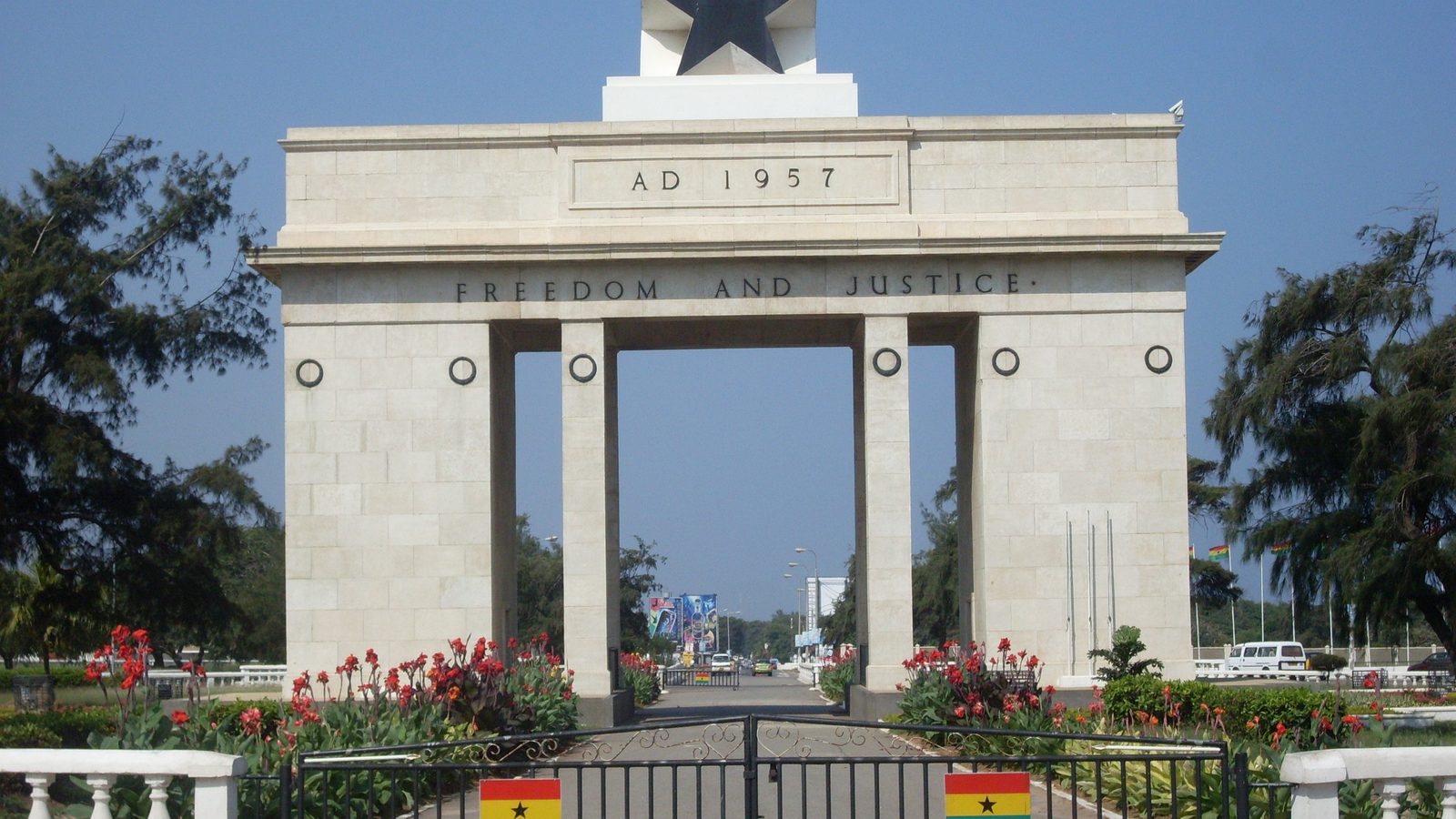
2. Black Star Square & Independence Arch
Ten minutes away, the parade ground where Ghana celebrates itself — a vast Soviet-scale square open to the sea, crowned by the Independence Arch and the Black Star Gate. It photographs best in the soft hours; if your trip touches March 6 (Independence Day), this is where the country converges.
3. W.E.B. Du Bois Memorial Centre
The great African-American scholar accepted Nkrumah’s invitation, moved to Accra, and died here in 1963 on the eve of the March on Washington. His home is now a quiet museum, his grave in the garden — for many diaspora travelers, an unexpectedly moving hour that reframes the whole trip.
The Old City Afternoon
4. Jamestown Walking Tour
Accra’s oldest quarter: the red-and-white lighthouse, colonial-era facades, boxing gyms that produce world champions, and the fishing harbour below where the day’s catch comes in past wooden pirogues. Go with a local guide (easily arranged, modest fee) — Jamestown is a living neighbourhood, not a museum, and the guide is the difference between walking through it and being welcomed into it. If your dates land in festival season, the Chale Wote street-art festival (usually August) turns these streets into West Africa’s biggest open-air gallery.
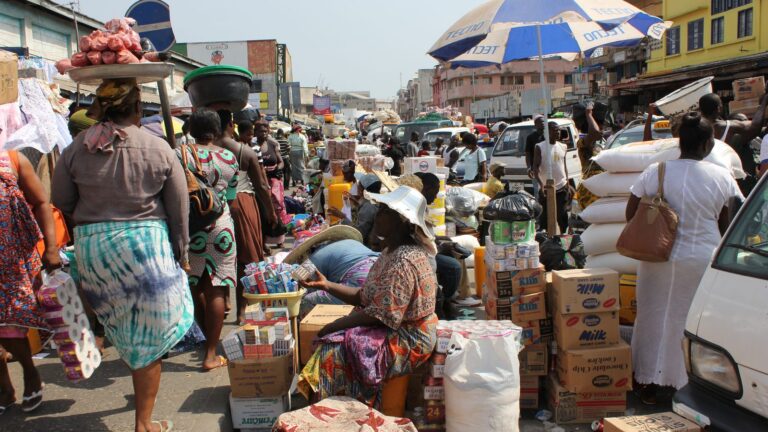
5. Makola Market
The city’s beating commercial heart — a self-organizing universe of fabric, beads, spices, smoked fish, and market queens who run it all. It’s intense, it’s loud, and it’s wonderful. Keep your phone zipped away, carry small notes, and buy the wax-print fabric — tailors all over Osu can turn it into a made-to-measure shirt in a day or two.
6. Arts Centre for National Culture
The one-stop crafts market: kente, carved masks, djembe drums, beads, baskets, shea butter. Haggling is the sport and the etiquette — open around half the first price, keep it warm and unhurried, and walk away smiling if the number won’t move (it usually moves).
The Coast & Culture Evening
7. Labadi Beach
Accra’s people-watching arena: weekend drum circles, horseback rides along the surf, plastic chairs and cold Club beer at the water’s edge. Small entry fee, big atmosphere — Saturdays and Sundays are the show. Swim shallow; the Atlantic here has real currents (our Ghana safety guide covers beach and city precautions honestly).
8. Osu & Oxford Street
The capital’s restaurant-and-nightlife spine — Ghanaian chop bars beside sushi counters, rooftop lounges, and street vendors flipping kelewele after dark. Base yourself here (or in East Legon/Airport City for quieter nights) and let dinner become the evening’s plan.
9. Live Music: Highlife, Afrobeats & Jazz
Accra is a music city before it is anything else. The reliable anchor is +233 Jazz Bar & Grill (live bands most nights); around it, a rotating constellation of rooftop and beach-bar venues carries the Afrobeats scene — ask your hotel or guide what’s on this week, because the hotspots genuinely rotate. In December, this city becomes the diaspora’s dance floor — book everything ahead.
The Deeper Cuts
10. Eat Accra Properly
Treat food as an attraction: waakye wrapped in leaves for breakfast, a chop-bar lunch of banku & grilled tilapia with pepper sauce, jollof anywhere it’s cooked over charcoal, kelewele from a night stall. A street-food meal costs pocket change; the city’s best tables still cost less than mid-range dinner in London or New York (full numbers in our Ghana trip cost guide).
11. Artists Alliance Gallery
Three floors of serious West African art on the La beachfront road — museum-quality paintings, sculpture, and textiles, most of it for sale. The quiet counterpoint to the markets, and the place to understand why Accra’s contemporary art scene is having a global moment.
12. Day-Trip the Green Escapes
When the city’s energy peaks, two classic exits: Aburi Botanical Gardens in the cool Akuapem hills (~an hour up the winding road, craft villages en route), or Shai Hills Resource Reserve (~an hour east) for baboons, antelope, and savannah rock outcrops — the softest “safari” starter before you commit to the full Mole expedition in our 7–10 day itinerary.
Making It Work
| Logistics | The short version |
|---|---|
| Getting around | Bolt/Uber/Yango everywhere, rides across town for a few dollars; agree prices first in regular taxis |
| Grouping | Day 1: Nkrumah → Black Star Square → Jamestown → Labadi sunset. Day 2: Du Bois Centre → Makola/Arts Centre → Osu evening |
| Money | Cedis in cash for markets and beaches; cards fine in restaurants and hotels |
| Timing | Museums and markets in the morning, beach and music after four — the heat writes the schedule |
| Visa first | Most Western passports need Ghana’s e-visa before flying — the US-citizen walkthrough; Africans may enter via the free e-visa |
Frequently Asked Questions
How many days do you need in Accra?
Two full days covers the essential twelve above; three lets you add a day trip to Aburi or Shai Hills without rushing. Most travelers pair Accra with Cape Coast for a week’s trip.
What is Accra best known for?
Independence history (Nkrumah’s mausoleum, Black Star Square), the Jamestown old town, Makola Market, Labadi Beach, and one of Africa’s great live-music and food scenes.
Is Accra walkable?
Within neighbourhoods, yes — Osu’s Oxford Street and Jamestown reward walking. Between districts, use Bolt/Uber/Yango; distances and heat make cross-town walks impractical.
Is Accra expensive to visit?
By Western standards, no — street meals cost pocket change, ride-hailing hops a few dollars, and good hotels undercut equivalent Western cities. December is the exception, when everything surges.
What should I buy in Accra?
Wax-print fabric from Makola (tailor it in Osu), kente cloth, glass beads, shea butter, and carved crafts from the Arts Centre — haggling expected everywhere except galleries.
Is Jamestown safe to visit?
With a local guide, yes — it’s a welcoming, lived-in neighbourhood and the tours directly support the community. Standard city rules apply: daylight visits, phone stowed, small cash.
Sources
- Ghana Tourism Authority — attraction listings (visitghana.com)
- Photo: Independence Arch, Accra — George Appiah, Wikimedia Commons, CC BY 2.0
Disclaimer: General travel information as of August 3, 2026 — venues, hours, and fees change; confirm locally. Not affiliated with any venue or operator.
Get visa, passport, and travel-planning guides like this one sent straight to your inbox — plus first access to new country guides and scholarship roundups.