
No one leaves Cape Coast Castle the way they walked in. The whitewashed fortresses along Ghana’s coast are the most consequential buildings in the Atlantic world — the dungeons and the Door of No Return through which uncounted men, women, and children left Africa forever. Today they are UNESCO World Heritage sites, guided by Ghanaians who tell the history without flinching, and — since the Year of Return — the destination of a growing pilgrimage of descendants walking back through that door. This guide covers both great castles, Cape Coast and Elmina: the history you should carry in, the practical logistics, and how to visit a place like this with the respect it commands.
Historical facts follow the castles’ own museum interpretation and UNESCO records; entry fees and hours change — carry cedis and confirm locally. Written August 2026.
Part of our complete Ghana visa & travel hub — visas, passports, itineraries, and every route in and out of Ghana.
Two Castles, One History
| Elmina (St George’s) Castle | Cape Coast Castle | |
|---|---|---|
| Built | 1482, by the Portuguese — the oldest European building south of the Sahara | 1650s origins (Swedish), rebuilt and expanded under the British from 1664 |
| Story | Began as a gold-trading post; the Dutch seized it in 1637 and ran it as a slave depot for two centuries | The headquarters of Britain’s Gold Coast slave trade, later its colonial capital until Accra took over in 1877 |
| Today | Looms over a working fishing harbour — pirogues, flags, and nets beneath the ramparts | Holds the fuller museum; the castle the Obama family visited in 2009 |
| Status | Both UNESCO World Heritage (listed 1979), guided tours included with entry | |
What the Tour Holds
The guided tour — included with entry, led by trained castle guides — moves through spaces whose meaning arrives physically:
- The dungeons. Stone chambers where hundreds were held at a time, in darkness, for weeks or months before the ships came. The guides do not soften what happened here; the scratch marks and the air do the rest.
- The Door of No Return. The low portal to the sea through which the enslaved left the continent. On its inland face now hangs a sign reading Door of Return — addressed to the descendants who come back.
- The condemned cell. Where those who resisted were shut without light or air — the tour’s hardest room.
- The geometry of it. Places of worship and governors’ quarters sat directly above the dungeons — comfort stacked on cruelty in a single building. No detail on the tour lands harder.
Allow 1.5–2 hours per castle, longer at Cape Coast if you give the museum its due. Many visitors — especially from the diaspora — describe needing quiet time afterward. Build that into the day rather than rushing to the next stop; the beach below the ramparts or a slow lunch in town serves the purpose.
Visiting Practically
| Logistics | The short version |
|---|---|
| Getting there | Cape Coast is ~145 km west of Accra: 3–4 hours by STC/VIP coach or hired car — morning departures only, never intercity at night |
| Between castles | ~13–15 km apart; taxis and local shuttles do the hop in about half an hour |
| Fees | Non-resident rates in cedis, paid at the gate — modest by international standards; carry cash |
| Tours | Guided, included with entry, running through the day — join the next departure rather than self-wandering; the guides are the experience |
| Pairing | Sleep in Cape Coast or a nearby beach lodge, do Kakum National Park’s canopy walk at opening time the next morning — the classic combination in our 7–10 day itinerary |
| When | Any season works (see best time to visit); July–August brings PANAFEST and Emancipation Day commemorations, December brings the Detty December crowds |
Visiting With Respect
These are memorial sites above all — treat them the way you would a war grave or a genocide memorial. Dress modestly; keep voices low in the dungeons; follow your guide’s cues on photography (posed shots at the Door of No Return sit badly with many visitors and guides — read the room). Emotional responses are normal and expected here: guides hold space for them daily, and nobody will hurry you out of a dark room you need a minute in. If you are traveling with children, the castles are visited by Ghanaian school groups constantly — the history is taught straight, and older children generally process it better than parents fear.
The Wider Pilgrimage
Two additions deepen the journey. Assin Manso Slave River — on the Accra–Cape Coast route — is where captives marched from the interior were bathed before sale; it is now a quiet memorial garden and the ceremonial gateway of the Year of Return pilgrimage. And in Accra, the W.E.B. Du Bois Centre and Kwame Nkrumah Mausoleum (both in our Accra guide) complete the arc — from the trade, to independence, to the diaspora’s return. For travelers considering the fuller homecoming, our moving-to-Ghana guide covers the Right of Abode and citizenship pathways that grew out of exactly this history.
Frequently Asked Questions
What is Cape Coast Castle known for?
It was the headquarters of Britain’s Gold Coast slave trade — its dungeons and Door of No Return are among the most significant sites of Atlantic slave-trade memory anywhere, now a UNESCO World Heritage site and museum.
Which is better to visit — Cape Coast or Elmina Castle?
Visit both if possible (~30 minutes apart). Cape Coast has the fuller museum and memorial atmosphere; Elmina — the oldest European building south of the Sahara, built 1482 — rises straight out of a working fishing harbour.
How much time do you need at Cape Coast Castle?
1.5–2 hours for the guided tour and museum, plus quiet time after — many visitors need it. Both castles in one day is possible but emotionally dense; splitting them over two days is kinder.
Can you take photos inside the castles?
Generally yes in the courtyards and ramparts; in the dungeons, follow your guide’s cues and keep it discreet — these are memorial spaces, and posed photography at the Door of No Return is widely considered poor form.
How do I get to Cape Coast from Accra?
~145 km west — 3–4 hours by STC/VIP coach or hired car with driver. Leave in the morning and stay overnight rather than day-tripping; Kakum National Park is 45 minutes further for the next morning.
What was the Door of No Return?
The final portal through which enslaved Africans were taken from the castles to the ships. Its inland face now bears a “Door of Return” sign — a deliberate answer, addressed to the descendants who come back through it.
Sources
- UNESCO World Heritage — Forts and Castles of Ghana (listed 1979)
- Ghana Museums & Monuments Board — castle museum interpretation
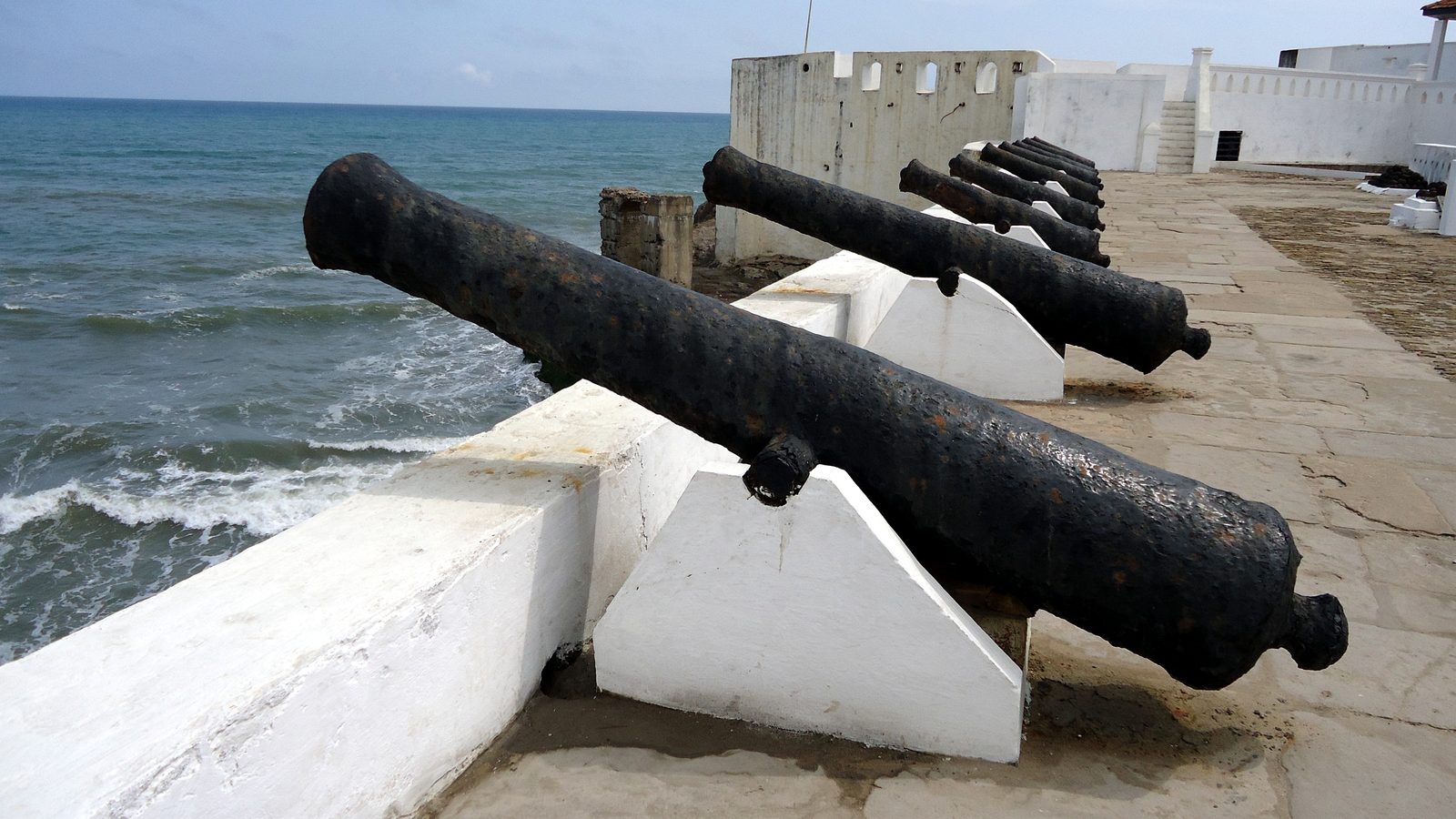
- Photo: Cannons at Cape Coast Castle — Jamiaghana, Wikimedia Commons, CC BY-SA 3.0
Disclaimer: Historical summary and travel information as of August 3, 2026 — hours and fees change; confirm locally. Written with respect for the sites and those they memorialize.
Get visa, passport, and travel-planning guides like this one sent straight to your inbox — plus first access to new country guides and scholarship roundups.