
Since the 2023 price rise, the honest answer to “should I buy a Japan Rail Pass?” is: probably not — and the travel industry has been slow to say so. The 7-day nationwide pass now costs ¥50,000 (verified on the official site), while the classic first-timer route — Tokyo down to Kyoto and Osaka — costs roughly a third of that in ordinary tickets. The pass still wins, decisively, on the right itinerary; it just stopped being the default. Here’s the current official price table, the arithmetic for the routes people actually take, and the regional passes that quietly became the better deal.
Pass prices verified on the official japanrailpass.net site as of August 3, 2026; point-to-point fares are approximate planning figures — check exact fares on official journey planners when booking. Not affiliated with JR.
Part of our complete Japan travel hub — entry rules, seasons, the Golden Route, rail passes, and budgets.
Current Official Prices
| Duration | Standard car | Green car (first class) |
|---|---|---|
| 7 days | ¥50,000 | ¥70,000 |
| 14 days | ¥80,000 | ¥110,000 |
| 21 days | ¥100,000 | ¥140,000 |
The Math on Real Itineraries
| Itinerary (7 days unless noted) | Point-to-point (approx.) | vs 7-day pass ¥50,000 |
|---|---|---|
| Tokyo → Kyoto → Osaka, fly out of Kansai (the classic) | ~¥16,000 | Pass loses by ~¥34,000 |
| Tokyo → Kyoto → Osaka → back to Tokyo | ~¥30,000 | Pass still loses |
| Tokyo → Hiroshima → Kyoto → Tokyo | ~¥48,000–52,000 | Break-even zone — pass wins once you add any side trips (Nara, Himeji, airport legs) |
| 14 days: Tokyo → Kanazawa → Kyoto → Hiroshima → Tokyo + day trips | ~¥55,000–65,000 | vs 14-day pass ¥80,000 — usually still loses; wins only with heavy daily rail use |
The Decision in Three Questions
- Are you returning to your starting city by rail? If you fly open-jaw (into Tokyo, out of Osaka — the smart play in our Golden Route itinerary), the pass almost certainly loses.
- Does your week include a leg past Okayama/Hiroshima or up to Kanazawa/Tohoku? Long legs are what the pass is for. Tokyo–Kyoto alone is not a long leg by pass math.
- Will you genuinely ride trains most days? The pass also covers local JR lines, the Narita Express, the Miyajima ferry, and Tokyo’s JR loop — worth a few thousand yen a day to a heavy user, nothing to a temple-lingerer.
If you answered no–no–no: buy tickets as you go (station machines and the official apps make it painless, and advance “early-bird” discounted fares exist on many routes). If you answered yes twice: price your exact route on an official journey planner before deciding — ten minutes that saves real money either way.
The Alternatives Nobody Markets as Hard
- Regional passes are the quiet winners — JR East, JR West, JR Kyushu and others sell area passes (Kansai, Tohoku, Hokuriku, Kyushu…) at a fraction of the national pass price, often with fewer restrictions. A Kansai-area pass plus a one-way Shinkansen ticket beats the national pass for most Golden Route variants.
- Buying: the official online channel lets you reserve seats before you even collect the pass — use it rather than third-party resellers, and note the pass is for temporary visitors only (your passport gets checked at exchange).
- No pass at all + an IC card is the correct answer for city-heavy trips — Suica/Pasmo covers metros and local trains everywhere it matters, and the occasional Shinkansen leg is just a ticket.
Frequently Asked Questions
How much is the Japan Rail Pass in 2026?
¥50,000 for 7 days, ¥80,000 for 14, ¥100,000 for 21 (standard car; Green car ¥70,000/¥110,000/¥140,000; children 6–11 half price) — per the official site as of August 2026.
Is the JR Pass worth it for Tokyo–Kyoto–Osaka?
No — that route costs roughly ¥16,000 one-way or ~¥30,000 as a loop in ordinary tickets, versus ¥50,000 for the 7-day pass. Buy point-to-point tickets or a regional pass instead.
When does the JR Pass actually pay off?
On loops with long legs — Tokyo–Hiroshima–Kyoto–Tokyo in 7 days reaches break-even, and anything beyond (side trips, airport transfers, daily local JR use) tips it to worth it.
Does the JR Pass cover the Nozomi bullet train?
Not outright — Nozomi and Mizuho require a paid supplement for pass holders. Hikari and Sakura services are fully covered and only ~20 minutes slower Tokyo–Kyoto.
Are regional JR passes better than the national pass?
For most first-timer routes, yes — area passes (Kansai, East, West, Kyushu) cost far less and cover the ground people actually travel. National pass math only works on long multi-region loops.
Can residents of Japan buy the JR Pass?
No — it’s restricted to foreign tourists on temporary-visitor status (the entry status covered in our Japan visa guide); passports are checked at exchange.
Sources
- JAPAN RAIL PASS — official site (prices verified August 3, 2026)
- Point-to-point fares: official JR journey planners — confirm exact fares when booking
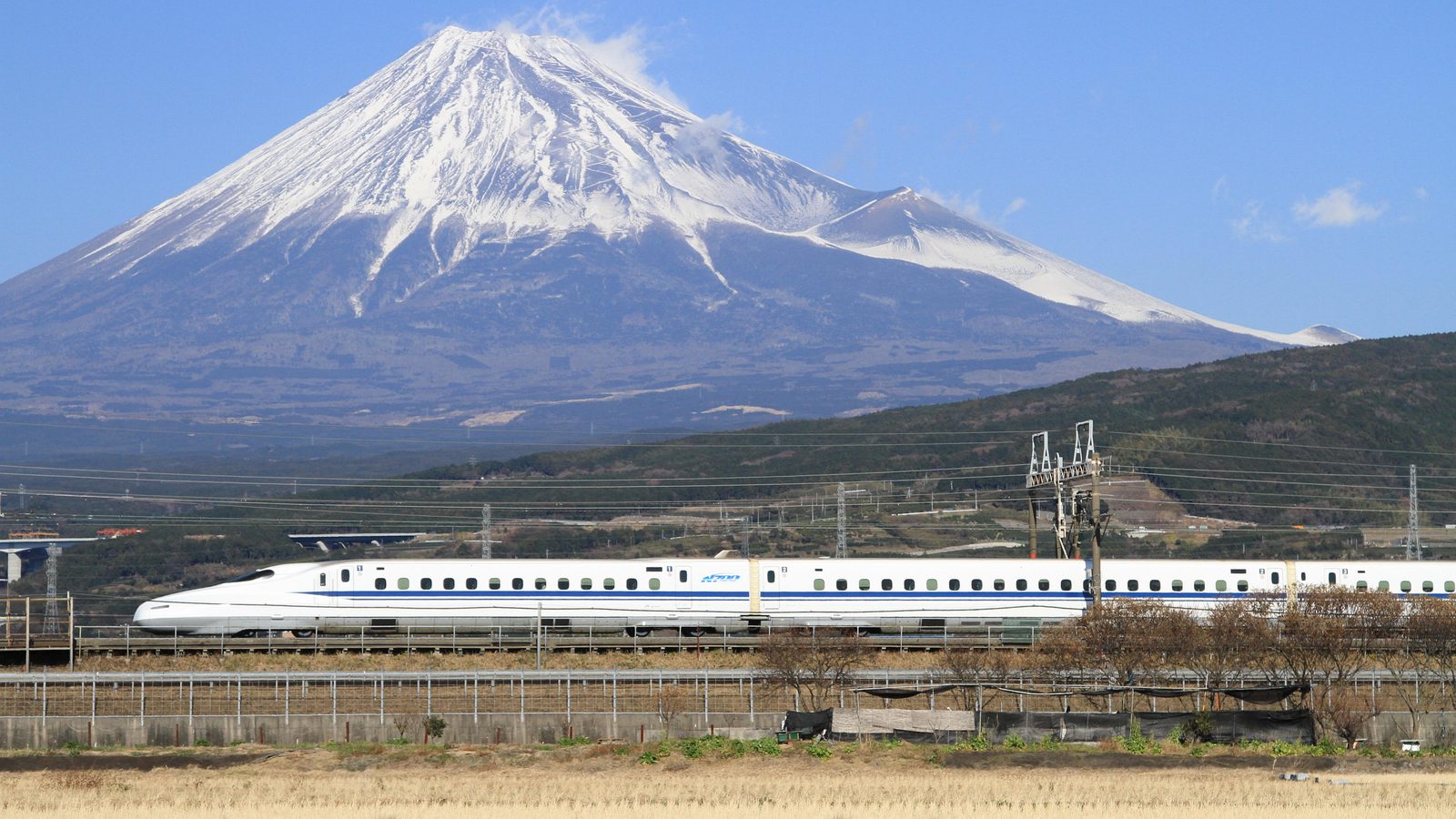
- Photo: N700 Shinkansen passing Mount Fuji — tansaisuketti, Wikimedia Commons, CC BY-SA 3.0
Disclaimer: Pass prices verified on the official site August 3, 2026; point-to-point fares are approximations for planning. Prices change — the official site is final. Not affiliated with JR Group.
Get visa, passport, and travel-planning guides like this one sent straight to your inbox — plus first access to new country guides and scholarship roundups.