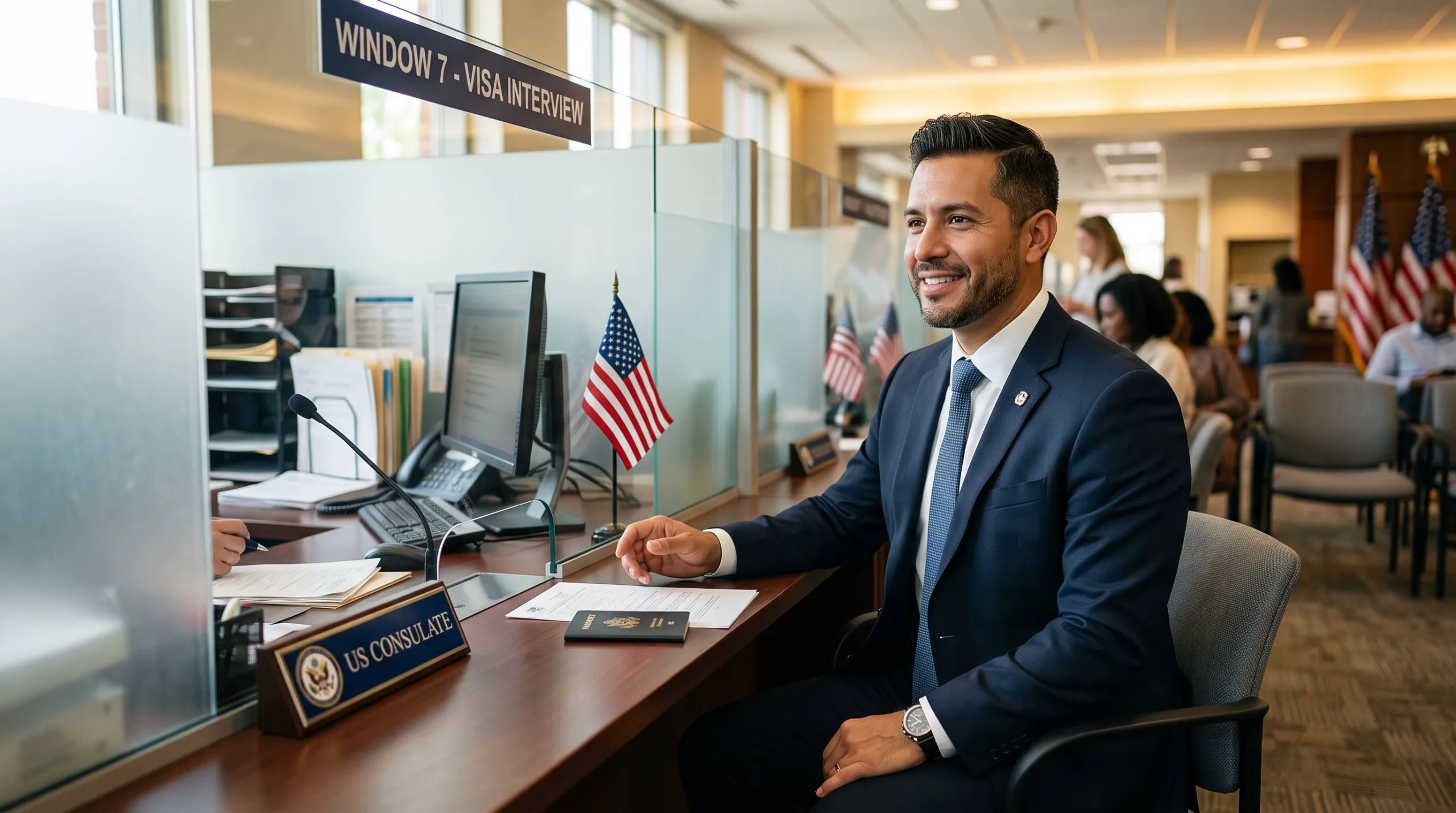

Quick answer: A US B1/B2 visa interview usually takes two to five minutes. The consular officer asks about three things: the purpose of your trip, how you’ll pay for it, and why you’ll return home afterwards. The most common questions are “What is the purpose of your trip?”, “How long will you stay?”, “Who is paying?”, “What do you do for work?” and “Have you traveled before?” Give short, specific, truthful answers that match your DS-160. Vague or inconsistent answers are the main cause of refusals under Section 214(b).
Below are the questions officers ask most often in 2026, grouped by topic, with what each one is really checking and how to answer. Last reviewed October 2026 against State Department guidance.
What the officer is really deciding
US law presumes every visitor intends to immigrate until they show otherwise. So every question tests one of three things:
- Purpose: is the trip a genuine, temporary visit for business or tourism?
- Funds: can you or your sponsor pay for it without working in the US?
- Ties: do your job, family, property or studies give you strong reasons to go home?
Questions about your trip
| Question | How to answer |
|---|---|
| What is the purpose of your visit? | One clear reason: tourism in named places, a named conference, visiting a named relative, a specific business meeting. |
| How long will you stay? | Give dates that match your DS-160 and plans. Short, defined trips are more convincing. |
| Where will you stay? | Name the hotel, city or the relative’s address. |
| Why are you traveling now? | Link it to an event, holiday period or approved leave. |
| Have you booked a ticket? | You don’t need a paid ticket. A plan and approximate dates are enough. |
| Who are you traveling with? | Name them and their relationship to you. |
Questions about money
| Question | How to answer |
|---|---|
| Who is paying for your trip? | Say exactly who. If it’s a sponsor, explain the relationship and their ability to pay. |
| How much do you earn? | State your monthly or annual income plainly. Don’t round up. |
| How much will the trip cost? | A realistic estimate shows you’ve actually planned it. |
Questions about your ties to home
| Question | How to answer |
|---|---|
| What do you do for work? | Employer, role and how long you’ve been there. Self-employed: describe the business. |
| Are you married? Do you have children? | Answer simply. Family staying at home can be a strong tie. |
| Do you own property? | Mention a home, land or business if you have one. |
| What will you do when you return? | Go back to your job, studies or business, with a date if possible. |
Questions about your history and US contacts
| Question | How to answer |
|---|---|
| Have you traveled abroad before? | List recent trips, especially to the US, UK, Canada or Schengen countries, and that you returned on time. |
| Have you been refused a visa before? | Always answer honestly. Lying is far worse than a past refusal. |
| Do you have relatives in the US? | Say who and their status. It’s not disqualifying, but hiding it is. |
| Have you ever overstayed? | Answer truthfully. Officers can see entry and exit records. |
Business visitors (B-1): extra questions
- Which company or event are you visiting, and who invited you?
- Will you be paid by a US company? (B-1 visitors can’t do productive work for a US employer.)
- What will you do there day to day: meetings, negotiations, training, a conference?
What changed for B1/B2 applicants in 2025–2026
- In-person interviews for almost everyone since September 2, 2025, including children under 14 and adults over 79. See the interview waiver guide for the few exceptions.
- Apply in your home country: since September 6, 2025, applicants generally must apply where they live or hold citizenship.
- The $185 application fee, plus a $250 visa integrity fee at issuance where your embassy collects it.
- Visa bonds: nationals of some countries may be asked to post a bond. See our US visa bond guide.
Documents to bring
- Passport, DS-160 confirmation page and appointment letter
- Fee receipt
- Employer letter with your role, salary and approved leave
- Recent bank statements or pay slips
- Proof of ties: property, business registration, school enrollment, marriage or birth certificates
- Invitation letter or conference registration for business trips
Officers often don’t ask to see documents, but having them lets you answer precisely.
Answers that lead to 214(b) refusals
- “Just to see America” with no plan
- Answers that contradict your DS-160 or your travel companion’s answers
- Not knowing who’s paying, or a sponsor you can’t explain
- Memorized speeches that don’t answer the actual question
- Mentioning plans to look for work or study on a visitor visa
If you’re refused, you can reapply, but only when something has meaningfully changed. Read our guide on reapplying after a 214(b) refusal.
FAQ
How long does a B1/B2 interview take?
Usually two to five minutes. A longer interview isn’t necessarily a bad sign.
Can I bring a translator?
Interviews are usually held in English or the local language of the embassy. Check your embassy’s policy before bringing anyone.
How long can I stay on a B-2 visa?
The officer at the port of entry usually admits B-2 visitors for up to six months. The visa’s validity is not the same as how long you can stay.
Do I get the answer at the window?
Usually yes: approved, refused, or “administrative processing” with Form 221(g), which can add weeks.
Official sources to check before you apply or travel
Visa rules, fees, processing times and entry requirements change often. Always confirm the current requirements on the official government website, or with the embassy or consulate, before you apply, pay or travel. One Visa Center is an independent information site, not a law firm or government agency, and this article is not legal advice. Read how we research, fact-check and use AI tools in our Editorial Policy.
Get visa, passport, and travel-planning guides like this one sent straight to your inbox — plus first access to new country guides and scholarship roundups.