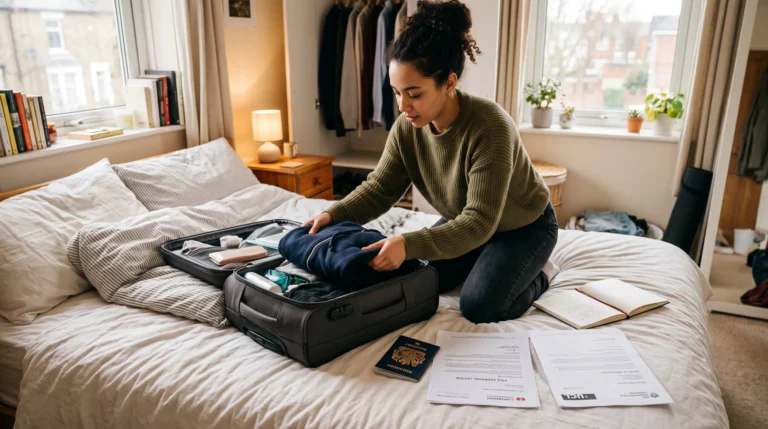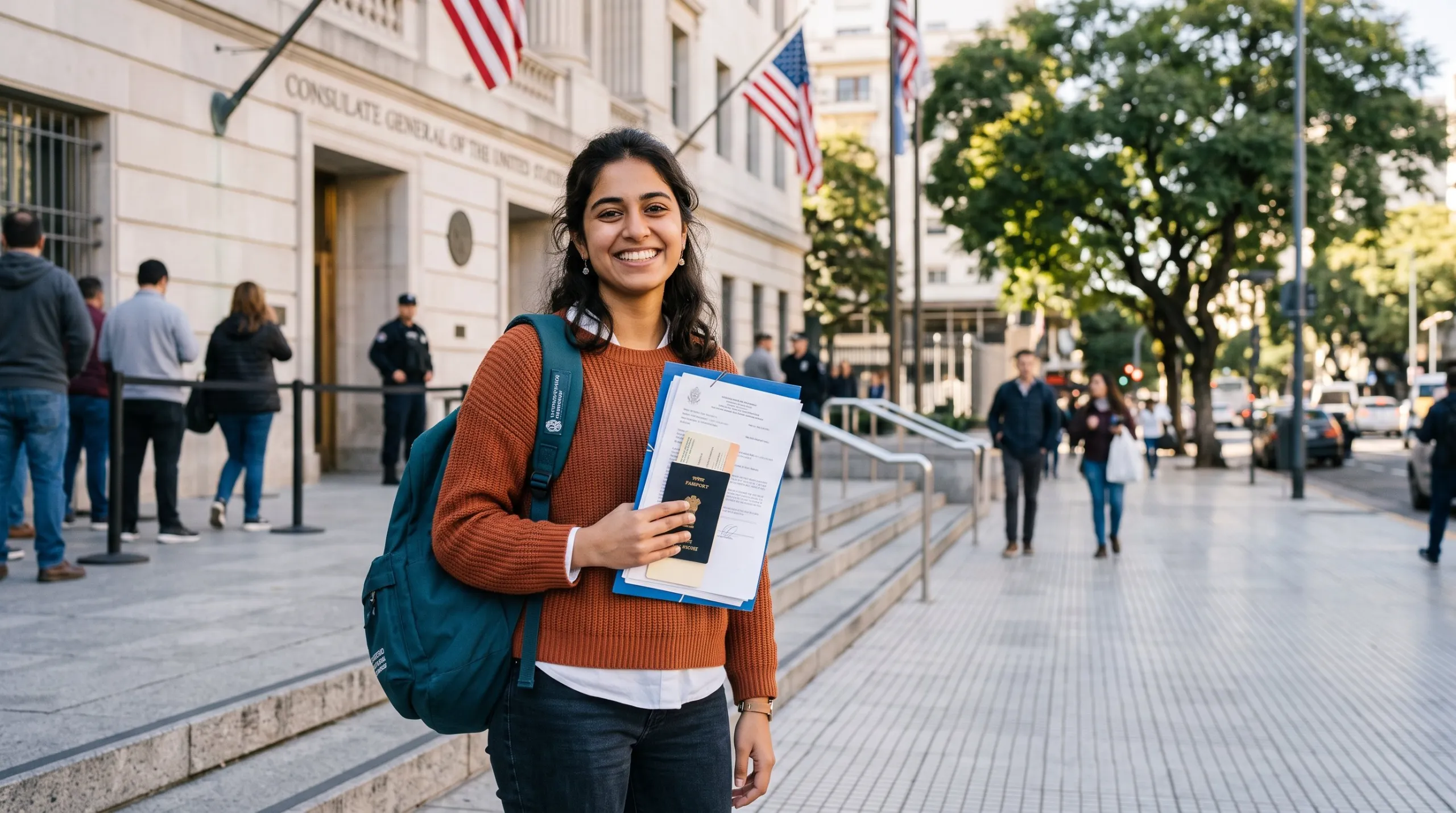

Winning admission and a scholarship gets you to the starting line — the F1 visa interview is what actually gets you on the plane. Unlike a tourist visa interview, an F1 interview digs into your academic plans and your finances in detail, because the officer needs to believe two things: that you’re a genuine student, and that you intend to return home after your studies (or otherwise maintain lawful status). Here’s what’s actually asked and how to prepare.
Before the Interview: Documents That Matter Most
- Form I-20 issued by your university, signed by you
- SEVIS fee receipt (I-901) — pay this before scheduling your interview
- DS-160 confirmation page
- Admission/enrollment letter and, if applicable, your scholarship or funding letter
- Financial evidence covering your first year of tuition and living costs — bank statements, a sponsor’s affidavit of support, or scholarship documentation
- Academic transcripts and test scores (SAT, GRE, GMAT, TOEFL/IELTS as applicable)
If you’re funding your studies with a scholarship, make sure your award letter explicitly states what’s covered — officers frequently ask applicants to explain any gap between the scholarship amount and the total cost of attendance. Our guide on turning a scholarship offer into a visa application covers exactly which documents bridge that gap.
Common F1 Interview Questions
| Question | What to Focus On |
|---|---|
| Why did you choose this university? | Specific reasons — program reputation, faculty, research focus — not just “it accepted me” |
| Why this specific program/major? | Connect it to your academic background and career goals |
| Who is paying for your education? | Be exact — name the sponsor, scholarship, or combination, and be ready to explain the source of funds |
| What are your plans after graduation? | Most officers want to hear you intend to return home or that you understand OPT is temporary, not a guaranteed path to stay |
| Have you been admitted to other universities? | Answer honestly — this checks consistency, not “the right answer” |
| Do you have relatives in the US? | Not disqualifying, but be ready to clarify it doesn’t change your plan to complete your studies and return |
Financial Questions Get the Most Scrutiny
More F1 refusals trace back to unclear or thin financial documentation than to any other single factor. Officers aren’t just checking that you have money — they’re checking that the money is legitimately available, from a plausible source, for the right amount. A large lump-sum deposit that appeared in a bank account a week before the interview raises more questions than it answers. If your funding comes from a sponsor rather than yourself, bring proof of the sponsor’s relationship to you and their own financial capacity, not just a signed letter.
Frequently Asked Questions
What if I don’t know my exact post-graduation plans yet?
That’s normal and fine — you don’t need a fixed career plan, but you should be able to describe a plausible direction (e.g., returning to work in your field at home, or pursuing further study) rather than appearing undecided about whether you’ll leave the US.
Can I apply for the F1 visa before my program starts?
You can apply up to 365 days before your program start date, but you can’t enter the US on an F1 visa more than 30 days before the start date listed on your I-20.
What happens if I’m refused?
You can reapply, but you’ll need to address whatever gap the officer flagged — usually financial documentation or unclear intent — rather than repeating the same interview. There’s no mandatory waiting period, though rushing back in with the same weak file rarely helps.
Related reading: From Scholarship Offer to Student Visa: The Complete Bridge Guide · Best Countries for International Students in 2026 · Student Visas for African Students: Country-by-Country Guide
Already been refused under 214(b)? here is what that actually means and how to build a stronger reapplication.
Official sources to check before you apply or travel
Visa rules, fees, processing times and entry requirements change often. Always confirm the current requirements on the official government website, or with the embassy or consulate, before you apply, pay or travel. One Visa Center is an independent information site, not a law firm or government agency, and this article is not legal advice. Read how we research, fact-check and use AI tools in our Editorial Policy.
Get visa, passport, and travel-planning guides like this one sent straight to your inbox — plus first access to new country guides and scholarship roundups.