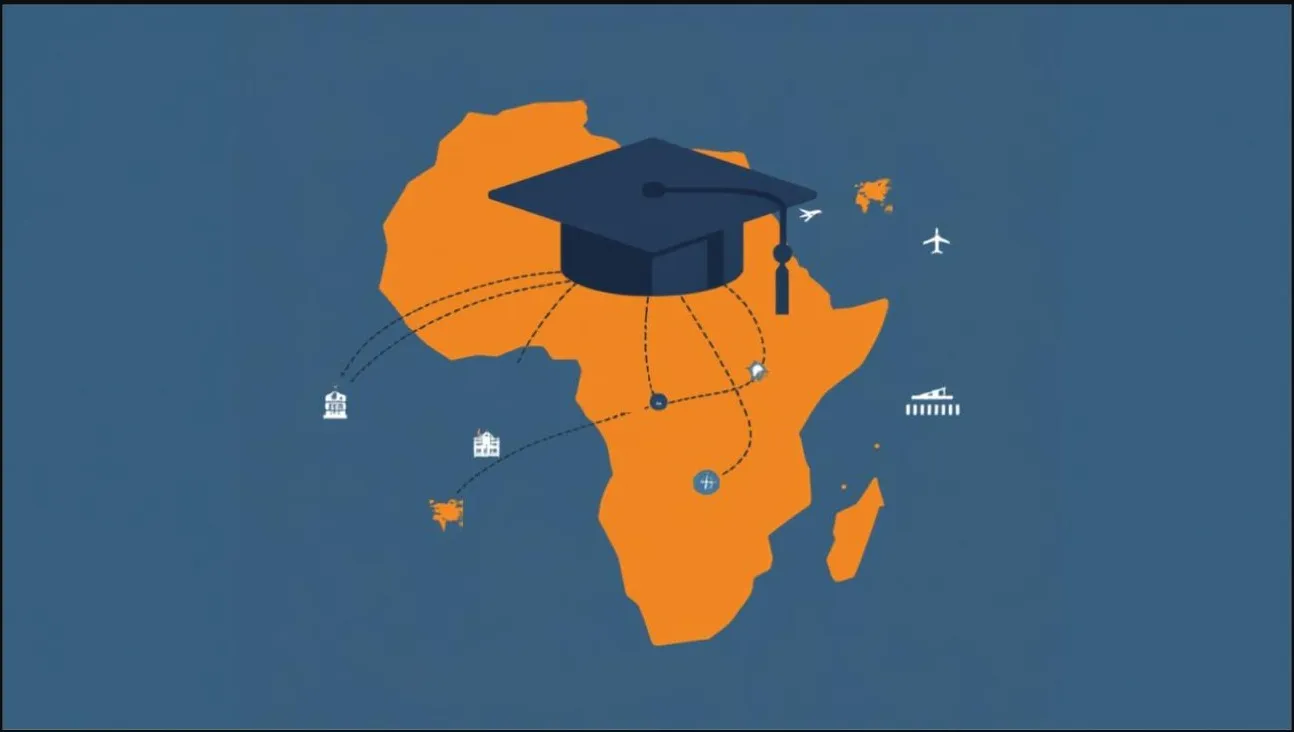

Not every “study abroad” guide is written with African applicants in mind — visa approval rates, financial proof requirements, and community support all vary in ways that matter more if you’re applying from Nigeria, Kenya, Ghana, or elsewhere on the continent. Here’s a country-by-country breakdown built around those specifics.
Affordability by Country
- Germany — the standout for cost: low or no tuition fees at public universities, even for international students. Living costs in cities are moderate to high, but tuition itself isn’t the barrier.
- South Africa — relatively affordable tuition compared to Western destinations, with manageable living costs in cities like Pretoria or Cape Town.
- Canada, UK, and Australia — all carry higher tuition costs. Canada’s costs vary significantly by province; Australia offers more flexible payment plans.
Visa Requirements That Differ From the “Standard” Advice
- Canada — a relatively straightforward process with clear documentation requirements.
- Germany — requires proof of financial resources via a blocked account, scholarship, or formal sponsorship — this is the step that trips up the most applicants.
- South Africa — process varies by consulate, so apply early.
- Australia & UK — require detailed documentation and proof of health insurance; approval rates depend heavily on documentation quality and completeness, not just nationality.
Work Rights While Studying and After Graduation
| Country | Work While Studying | Post-Study Work Visa |
|---|---|---|
| Canada | Up to 20 hrs/week | Up to 3 years |
| Australia | 40 hrs/fortnight | 2–4 years |
| UK | Allowed (rules apply) | Up to 2 years if you apply by 31 Dec 2026, 18 months from 1 Jan 2027 (Graduate Route) |
| Germany | 120 full days or 240 half days/year | 18 months |
| South Africa | Limited, stricter rules than competitors | Not a major pathway |
Where You’ll Find an Existing African Student Community
This matters more than most guides admit. South Africa offers a strong African student community and cultural familiarity. Canada and the UK both have large, active African student networks. Australia and Germany have growing but smaller communities — you’ll need to be more proactive about finding them.
Fastest Visa Approval Right Now
If speed and approval odds matter most, several countries currently process student visas faster than the traditional “big four” (US, UK, Canada, Australia): Poland (10–14 days, high approval), Ireland (4–8 weeks, ~95–97% approval), France (2–4 weeks, often above 85% approval), and the UAE (10–30 days). Across all of them, submit at least 3–4 months before your course starts — approval odds improve significantly with complete documentation and early filing, regardless of nationality.
What You’ll Always Need
- Acceptance letter from your institution
- Proof of financial resources (a blocked account, scholarship letter, or sponsor documentation — format varies by country)
- Valid passport
- Health insurance meeting the destination’s minimum requirements
- Certified translations of any documents not in the destination’s official language
If tuition cost is your biggest obstacle rather than the country itself, it’s often worth starting with the scholarship search before you commit to a destination — see our roundup of fully funded scholarships for African students, plus what happens after you win one in our scholarship-to-visa bridge guide.
Related reading: Fully Funded Scholarships for African Students in 2026/2027 · Best Countries for International Students in 2026
Sources: UniversitySwitch, Kampus Group.
How Much Money You Must Show: Three Examples
Proof of funds is where many African applicants are refused, so it helps to see how differently each country handles it. The figures below were current when this article was updated, and all three governments revise them, so confirm the number on the official page before you apply.
- United Kingdom. The Home Office asks for living costs of £1,529 per month in London or £1,171 per month elsewhere, for up to nine months, on top of your course fees. The money must sit in your account for at least 28 days in a row, ending within 31 days of your application. See the official student visa money requirements.
- Germany. A blocked account (Sperrkonto) currently needs €11,904 for a year, which you can draw down at €992 per month. Instead of a blocked account you can show a qualifying full scholarship or a formal obligation letter from a resident who commits to supporting you. The DAAD is the best starting point for official German study information.
- Canada. IRCC requires first-year tuition, travel costs and an annual living-cost amount, which is updated each year and is roughly C$23,000 for a single applicant under the latest guidance. Officers also want to see where the money came from, so a sudden large deposit with no history is a red flag. Start from IRCC’s study permit guidance.
Why Applications From African Students Get Refused
Official refusal reasons follow a few patterns that are within your control. Funds that are too low or cannot be traced to a credible source top the list. A study plan that does not explain why you chose this program, in this country, and how it fits your previous education is the next most common problem. Officers also look for a believable reason to return home after graduation, inconsistent answers between your forms and your documents, and documents that cannot be verified. Refusal is rarely about nationality alone; it is usually about how well the file answers those questions.
Documents to Prepare Before You Apply
- A passport valid well beyond your intended course end date.
- An admission letter from the institution, or a confirmation of acceptance where the country requires one.
- Bank statements covering the period the country asks for, with a sponsor letter and the sponsor’s own income proof if someone else is paying.
- Academic transcripts and certificates, with certified translations if they are not in English.
- Proof of language ability, such as IELTS or TOEFL, when the course or country requires it.
- Police clearance and medical examination results where the destination country asks for them.
A Timeline That Works Backward From Your Start Date
Start earlier than you think you need to. A workable plan is to shortlist programs and book language tests about 12 months before the intake, send applications around eight to nine months ahead, and begin the visa application as soon as you hold your admission letter. Consulate appointment queues and document verification can add weeks, and a late start is the main reason students miss an intake. If funding is the barrier, read our list of fully funded scholarships for African students first, because a full scholarship can also meet the proof-of-funds requirement.
Official sources to check before you apply or travel
- GOV.UK foreign travel advice (entry requirements by country)
- Government of Canada travel advice and advisories
Visa rules, fees, processing times and entry requirements change often. Always confirm the current requirements on the official government website, or with the embassy or consulate, before you apply, pay or travel. One Visa Center is an independent information site, not a law firm or government agency, and this article is not legal advice. Read how we research, fact-check and use AI tools in our Editorial Policy.
Get visa, passport, and travel-planning guides like this one sent straight to your inbox — plus first access to new country guides and scholarship roundups.