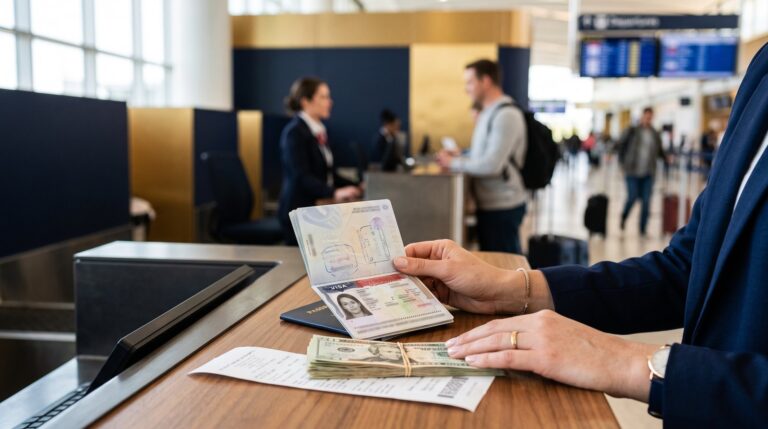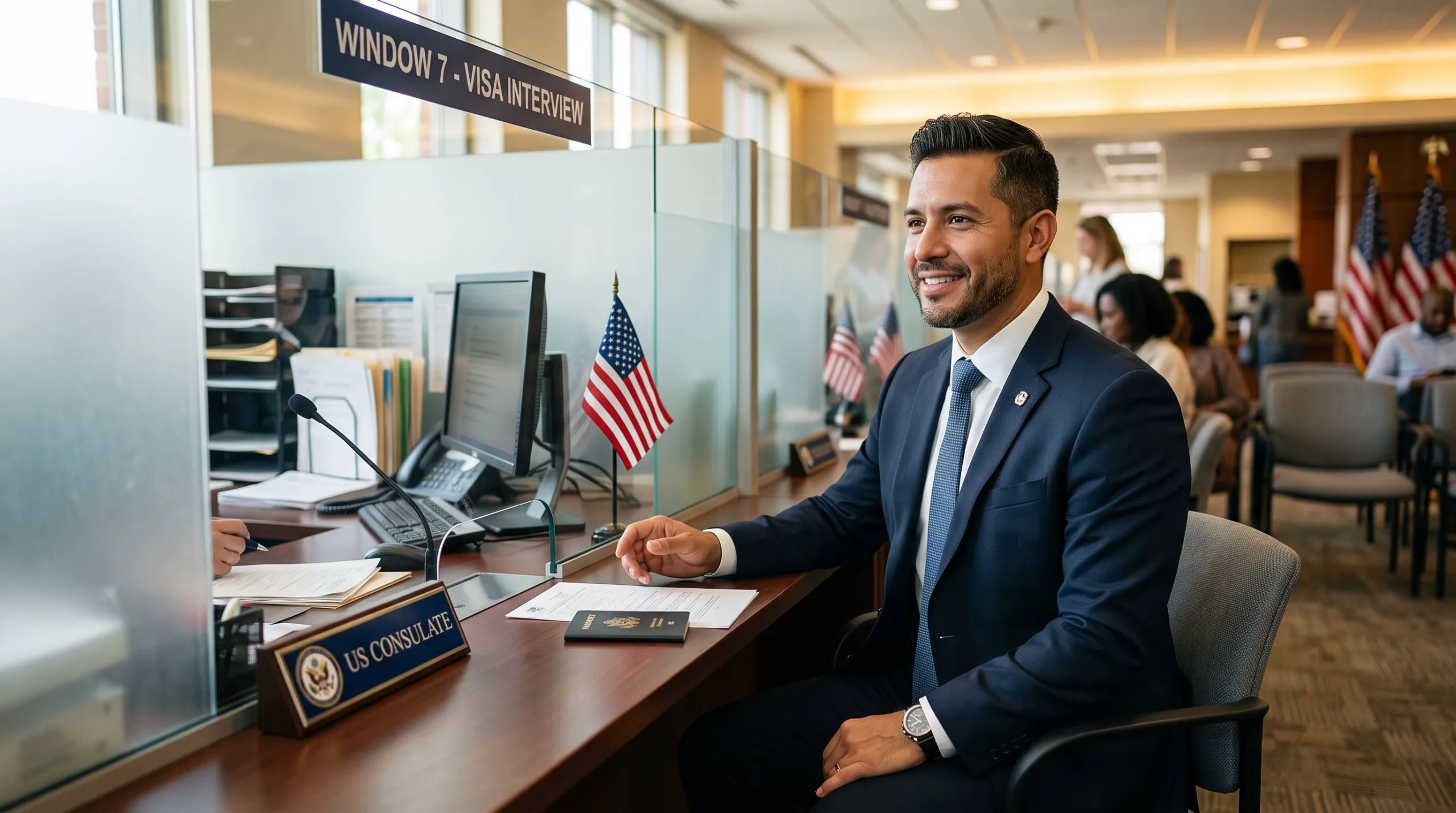

The US B1/B2 visa interview usually lasts under five minutes, but those five minutes decide whether months of planning turn into a stamped passport or a 214(b) refusal slip. Consular officers aren’t trying to trip you up with trick questions — they’re testing whether your answers are consistent, specific, and show clear ties pulling you back home. Here’s what’s actually being asked in 2026, and how to answer without sounding rehearsed.
What the Officer Is Really Evaluating
Every question in a B1/B2 interview maps to one of three underlying concerns: is your trip purpose genuine, can you afford it, and will you return home when it’s over. Once you understand that framework, the specific wording of a question matters less than making sure your answer clearly addresses one of those three points.
Most Common Questions and How to Answer Them
| Question | What They’re Really Asking |
|---|---|
| What is the purpose of your trip? | Give one clear, specific reason (tourism, a named conference, visiting a named relative) — not a vague “to see America” |
| How long do you plan to stay? | State exact or approximate dates that match your itinerary and return flight |
| Who is paying for your trip? | Be honest and specific — if it’s you, show you can afford it; if someone else, be ready to explain the relationship |
| What do you do for work? | Confirms you have a job and income to return to — bring an employer letter if self-employed or on leave |
| Do you have family in the US? | Not disqualifying on its own, but be ready to explain why you’re not planning to overstay |
| Have you traveled internationally before? | A clean travel history with on-time returns is one of the strongest signals you can offer |
| What ties do you have to your home country? | Job, property, family, ongoing studies — anything concrete that pulls you back |
Documents to Bring (Even If Not Requested)
- Valid passport and printed DS-160 confirmation page
- Interview appointment letter
- Recent pay slips or bank statements showing you can fund the trip
- Employer letter confirming your position and approved leave dates
- Proof of ties: property documents, a family registration, or enrollment proof if you’re a student
- A rough itinerary — you don’t need paid bookings, but a plan shows genuine intent
Officers rarely ask for physical documents at the window since most of the file is reviewed digitally beforehand, but having them on hand lets you answer confidently and specifically rather than guessing at numbers or dates.
Answers That Commonly Trigger a 214(b) Refusal
Refusals under section 214(b) happen when the officer isn’t convinced you’ll return home — not because of a single “wrong” answer, but a pattern. Vague trip purposes, inconsistent answers about who’s funding the trip, an inability to explain why you’re traveling now specifically, and weak or unclear ties to your home country are the most common patterns behind a refusal. If you’re refused, you can reapply, but you’ll want a materially stronger case the second time, not a repeat of the same interview. For a look at how a similar appeals process plays out for a different visa type, see our guide to what happens after a Schengen visa rejection and how appeals work.
Frequently Asked Questions
How long does the actual interview take?
Most B1/B2 interviews last two to five minutes. A longer interview isn’t necessarily a bad sign — it can simply mean the officer wants more detail on a specific point.
Can I bring an interpreter?
Generally no for a standard tourist/business visa interview — you’re expected to answer in English or the language the consulate operates in. Check your specific embassy’s policy, as some make exceptions.
What happens immediately after the interview?
The officer will usually tell you on the spot whether your visa is approved, refused, or requires administrative processing (which can add weeks). Approved passports are typically returned within a few business days via the visa center.
Related reading: Schengen Visa Rejected? Here’s Why — and How to Appeal It · The World’s Strongest (and Weakest) Passports in 2026
Also read: US visa bond 2026: who pays $10,000–$20,000 and how to get it back
Official sources to check before you apply or travel
- U.S. Department of State – U.S. Visas
- GOV.UK foreign travel advice (entry requirements by country)
- Government of Canada travel advice and advisories
Visa rules, fees, processing times and entry requirements change often. Always confirm the current requirements on the official government website, or with the embassy or consulate, before you apply, pay or travel. One Visa Center is an independent information site, not a law firm or government agency, and this article is not legal advice. Read how we research, fact-check and use AI tools in our Editorial Policy.
Get visa, passport, and travel-planning guides like this one sent straight to your inbox — plus first access to new country guides and scholarship roundups.