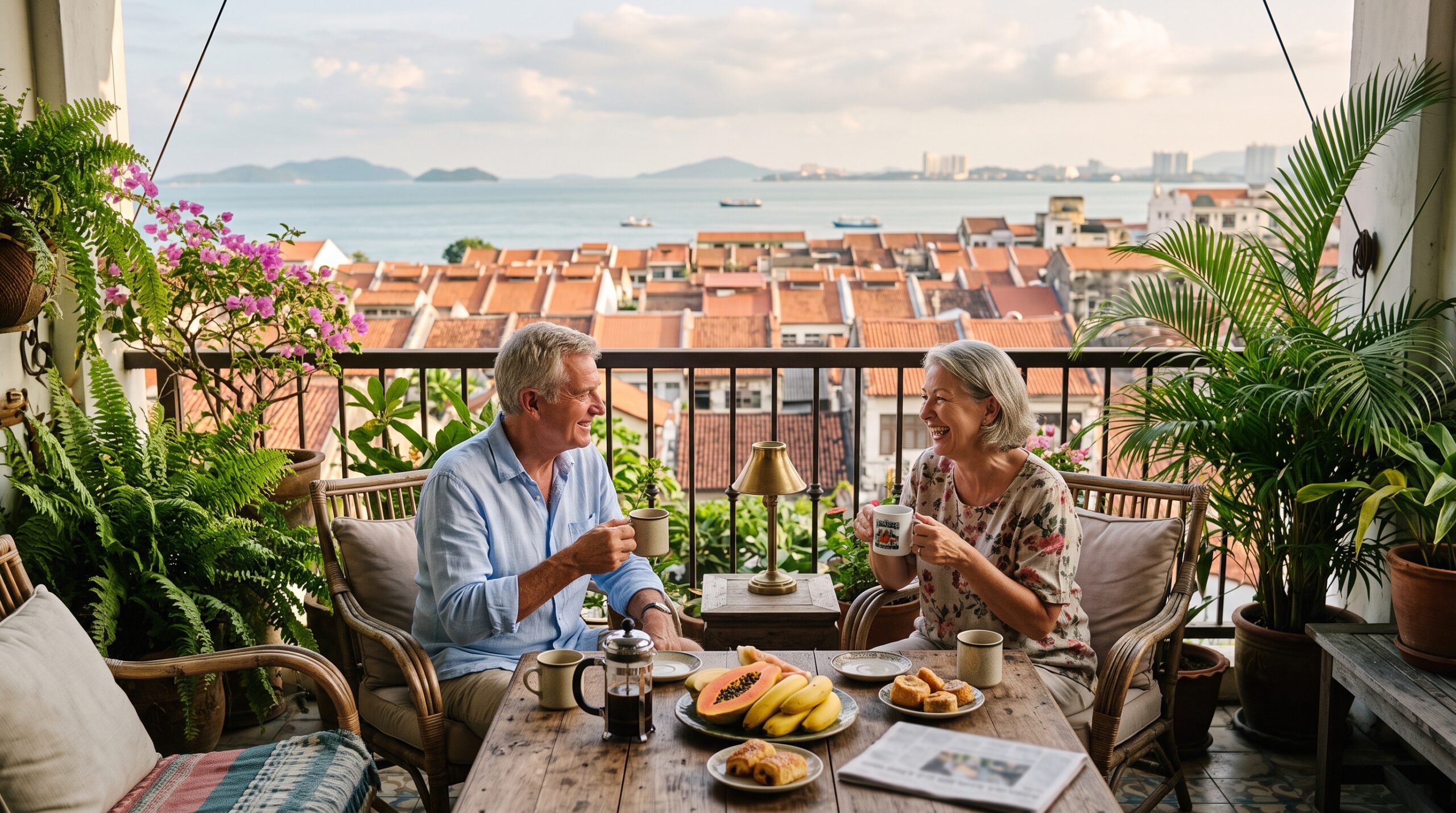

Updated August 6, 2026. The best places to retire comfortably in Asia in 2026 are Malaysia (Penang and Kuala Lumpur) for healthcare and English, Thailand (Chiang Mai and Hua Hin) for lifestyle and value, the Philippines for the lowest formal visa barrier, and Bali for the tropical-village life — with Vietnam as the great value outlier that, honestly, has no retirement visa at all. A comfortable single-person budget runs roughly US$1,500–2,500 a month in most of these places, less in provincial Vietnam or the Philippines, more in Singapore-adjacent comfort. The real differentiator isn’t cost — it’s the visa. Here’s how the retirement visas actually compare, what tightened in 2026, and which country fits which retiree.
This is general information, not legal or financial advice — verify current rules on official immigration sites and consult a professional for your situation.
The visa reality check (read this first)
Across Southeast Asia, 2026 has been a tightening year: larger deposits, more documentation, digital arrival tracking, and — in Thailand’s case — taxation of income remitted into the country. Nobody banned retirement; the improvised version of it (endless border runs on tourist visas) is what’s closing. A properly documented long-stay visa is now the only comfortable way to do this.
Malaysia — the comfort pick
Visa: MM2H (Malaysia My Second Home), rebuilt around three tiers — roughly US$150,000 (Silver), US$500,000 (Gold), and US$1M (Platinum) in fixed deposits, open to applicants 25+ — check current terms on the official MM2H portal, as conditions have changed repeatedly since 2021.
Why it wins: Penang and KL offer arguably the best private healthcare value in Asia, near-universal English, first-world infrastructure at a fraction of Western cost. Comfortable budget: ~US$1,500–2,500/month per person, rent included.
Thailand — the lifestyle pick
Visa: Non-Immigrant O/O-A retirement route from age 50 — THB 800,000 (~US$22,000) in a Thai bank or THB 65,000/month in income, plus health insurance for the O-A. Details via the official Thai e-Visa portal. Note the 2024-era rule that foreign income remitted to Thailand can be taxable — get local tax advice before moving large sums.
Where: Chiang Mai (expat classic, cool season, café culture), Hua Hin (seaside, quieter, royal-town polish), Bangkok (world-class hospitals). Budget: ~US$1,400–2,200/month. Entry rules for scouting trips are in our Thailand visa guide.
Philippines — the lowest barrier (and now the youngest)
Visa: the SRRV (Special Resident Retiree’s Visa) — a genuine permanent-stay visa administered by the Philippine Retirement Authority (pra.gov.ph). Since September 1, 2025, eligibility starts at age 40 — the youngest retirement visa in Asia. SRRV Classic deposits: US$15,000 (pensioner) or US$30,000 (non-pensioner) for 50+, and US$25,000 or US$50,000 for ages 40–49. Our full SRRV requirements guide covers all option tiers; married to a Filipino citizen? The 13A spouse visa is simpler still.
Why: English everywhere, warm culture, the lowest costs on this list outside Vietnam. Healthcare is good in Manila/Cebu, thin in the provinces. Budget: ~US$1,200–2,000/month.
Indonesia (Bali) — the tropical-village pick
Visa: Retirement KITAS from age 55 — roughly US$1,500/month of provable pension income, an Indonesian sponsor (usually arranged through a visa agent, one of the few places agents are the normal route), and annual renewals. Bali’s blend of villa living, expat health clinics, and community is unmatched — our new Bali guide covers the on-the-ground practicalities. Budget: ~US$1,300–2,200/month; villas vary wildly.
Vietnam — great value, no retirement visa
Vietnam has no retirement visa as of August 2026 — retirees there string together 90-day e-visas (how the e-visa works), border runs, or business-visa workarounds, all of which are exactly the improvised pattern the region is squeezing. Da Nang’s cost of living (~US$1,000–1,600/month comfortable) is why people accept the visa hassle. Go in with eyes open: no long-stay certainty until Hanoi creates one.
Cambodia — the easy but thin option
The ER (retirement) extension from age 55 has historically been Southeast Asia’s most casual paperwork, though financial-proof requirements are now enforced. Phnom Penh and Kampot cost ~US$1,000–1,500/month. The trade-off is healthcare: serious cases fly to Bangkok.
What about Japan, Korea, Taiwan?
None of the three offers a retirement visa. Long stays there run through work, family, study, or investment routes. If your dream is Kyoto, plan long tourist stays (90 days visa-free for most Westerners) rather than residence — or compare Europe: our Italy retirement visa guide shows the elective-residence model Asia mostly lacks.
Comparison table
| Country | Visa & min. age | Financial bar | Comfortable monthly budget |
|---|---|---|---|
| Malaysia | MM2H, 25+ | US$150k+ deposit (Silver tier) | US$1,500–2,500 |
| Thailand | Non-O/O-A, 50+ | THB 800k bank or 65k/mo income | US$1,400–2,200 |
| Philippines | SRRV, 40+ | US$15k–50k deposit (Classic) | US$1,200–2,000 |
| Indonesia (Bali) | Retirement KITAS, 55+ | ~US$1,500/mo pension | US$1,300–2,200 |
| Cambodia | ER extension, 55+ | Financial proof (modest) | US$1,000–1,500 |
| Vietnam | None — e-visa runs | n/a | US$1,000–1,600 |
Figures are indicative as of August 6, 2026 and change often — treat the official portals linked above as the source of truth.
FAQ
What is the cheapest country to retire in Asia?
Vietnam and Cambodia run cheapest (comfortable from ~US$1,000/month), but Vietnam has no retirement visa and Cambodia’s healthcare is thin. The Philippines is the cheapest country with a real permanent retirement visa.
Where do most American retirees go in Asia?
Thailand and the Philippines lead, followed by Malaysia. The Philippines’ English fluency and the SRRV’s low deposit make it the most frictionless landing for Americans.
How much money do I need to retire comfortably in Asia?
US$1,500–2,500/month covers a genuinely comfortable single life in every country here — Western-style apartment, eating out, private health insurance, domestic travel. Couples typically add 40–60%, not double.
Which Asian country has the best healthcare for retirees?
Malaysia (Penang/KL) and Thailand (Bangkok) — internationally accredited private hospitals at 20–40% of US prices. Whichever country you pick, budget for private insurance; local public systems rarely cover foreign retirees.
Can I retire in Asia at 50 — or younger?
Yes — Thailand’s retirement visa starts at exactly 50, the Philippines’ SRRV now starts at 40 (since September 2025), and Malaysia’s MM2H has no meaningful age barrier (25+). Indonesia and Cambodia make you wait until 55.
Is retiring in Asia safe?
The destinations above rank among the safer places expats live — petty theft and traffic are the real risks, not violent crime. Check your government’s travel advisories for current region-specific notes.
Planning a trip to Vietnam first? Compare the Vietnam e-visa vs visa on arrival and check the Vietnam visa cost and processing time.
Official sources to check before you apply or travel
- GOV.UK foreign travel advice (entry requirements by country)
- Government of Canada travel advice and advisories
Visa rules, fees, processing times and entry requirements change often. Always confirm the current requirements on the official government website, or with the embassy or consulate, before you apply, pay or travel. One Visa Center is an independent information site, not a law firm or government agency, and this article is not legal advice. Read how we research, fact-check and use AI tools in our Editorial Policy.
Get visa, passport, and travel-planning guides like this one sent straight to your inbox — plus first access to new country guides and scholarship roundups.