
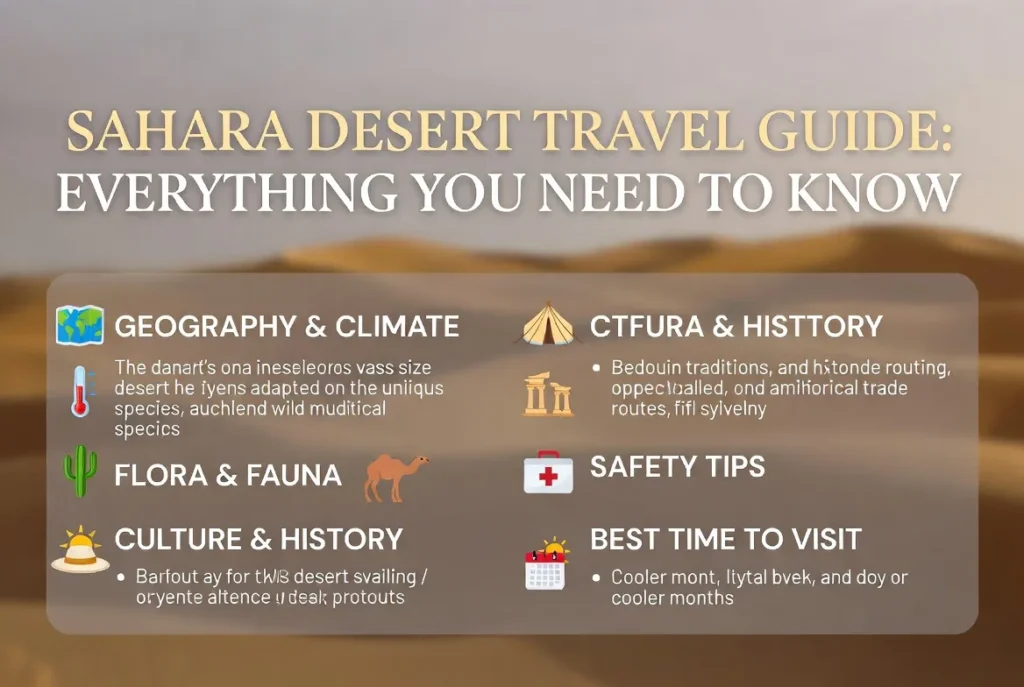
The Sahara Desert is the world’s largest hot desert, covering over 9 million square kilometers across 11 African countries. This guide gives you all the details you need to plan an unforgettable desert adventure, from choosing your destination to packing the right gear.
Key Takeaways
- Best countries for tourists: Morocco, Egypt, and Tunisia offer the safest and easiest access to the Sahara
- Best time to visit: October to April when temperatures are cooler and more comfortable
- Tour costs: Budget shared tours start around $80 to $150, while luxury options range from $380 to $650 per person
- Top destinations: Erg Chebbi (Morocco), Siwa Oasis (Egypt), and Douz (Tunisia) are the most popular gateways
- Essential gear: Loose clothing, sturdy shoes, sunscreen, a scarf or turban, and plenty of water
- Safety rule: Always travel with a licensed tour operator and never wander alone in the desert
What Is the Sahara Desert?
The Sahara stretches from the Atlantic Ocean in the west to the Red Sea in the east. It covers parts of Morocco, Algeria, Tunisia, Libya, Egypt, Mauritania, Mali, Niger, Chad, and Sudan. The name “Sahara” comes from the Arabic word for desert.
Geography and Landscape
Most people picture endless rolling sand dunes when they think of the Sahara. But the desert is actually much more varied than that.
Main landscape types:
- Ergs: These are the famous sand seas with tall dunes, like Erg Chebbi in Morocco
- Hamadas: Rocky plateaus that make up most of the desert
- Regs: Flat gravel plains stretching for miles
- Wadis: Dry river valleys that sometimes fill with water after rare rains
- Oases: Green areas with water, palm trees, and settlements
The highest point in the Sahara is Mount Koussi in Chad at 3,415 meters. The lowest point is the Qattara Depression in Egypt, sitting 133 meters below sea level.
Climate and Weather
The Sahara has one of the harshest climates on Earth. Rainfall is extremely rare, with some areas getting less than 5mm per year.
The desert experiences huge temperature swings between day and night. You might be sweating during the afternoon and shivering by midnight. The dry subtropical climate in the north has cold to cool winters and hot summers, while the southern regions follow a dry tropical pattern.
Best Countries to Visit the Sahara
While the Sahara touches many countries, only a few are safe and easy for tourists to visit. Political instability and security concerns make some areas risky or completely off limits.
Morocco: The Most Popular Gateway
Morocco offers the easiest and most tourist-friendly access to the Sahara. The country has excellent infrastructure, lots of tour options, and stunning desert landscapes.
Main gateway cities:
- Marrakech (most popular starting point)
- Fes (good for reaching eastern desert)
- Ouarzazate (closer to the dunes)
Top Sahara destinations in Morocco:
Erg Chebbi is the most popular spot, with orange sand dunes reaching up to 150 meters high. The dunes stretch 28 kilometers from north to south and sit just 3 to 4 kilometers from the village of Merzouga. This makes it easy to reach by vehicle and perfect for first-time desert visitors.
“Erg Chegaga is at the end of the road. This rolling dune-scape is harder to reach than the more famous Erg Chebbi, and you’ll be rewarded for your efforts with far fewer visitors.”
Egypt: Oases and Ancient History
Egypt’s Western Desert is part of the Sahara and offers a completely different experience. Instead of towering dunes, you get ancient oases, strange rock formations, and deep history.
Top destinations in Egypt’s Sahara:
- Siwa Oasis: The most remote Egyptian oasis, sitting 17 meters below sea level. Famous for the Temple of the Oracle, Cleopatra’s Spring, and the Mountain of the Dead. The Berber culture here is unique in Egypt.
- Bahariya Oasis: Known for hot springs and the Valley of the Golden Mummies. About 6 hours from Cairo by road.
- White Desert (Farafra): Features amazing white chalk rock formations that look like sculptures from another planet. Great for photography and camping.
- Great Sand Sea: Massive dune field west of Siwa where you can go sandboarding and 4×4 driving.
Most Egypt desert tours start from Cairo and last 4 to 6 days. A typical trip visits multiple oases and includes camping in the desert.
Tunisia: Star Wars Landscapes
Tunisia offers Sahara access with a unique twist. Parts of the Tunisian desert were used as filming locations for Star Wars.
Popular destinations:
- Douz: Known as the Gateway to the Sahara. This town is the jumping-off point for camel treks into the dunes.
- Chott el Djerid: A massive salt lake with rust-colored landscapes.
- Onk Jemal: A Star Wars film set you can actually visit.
- Matmata: Home to underground cave dwellings used in the Star Wars movies.
Tunisia tours often combine desert experiences with historical sites like the Roman amphitheater at El Jem. You can find 2-day Sahara tours from coastal cities like Sousse and Hammamet.
How Much Does a Sahara Trip Cost?
Tour prices vary widely based on comfort level, group size, and how many days you travel.
Morocco Desert Tour Prices (2026)
What’s usually included:
- Transportation from your starting city
- One night in the Dades Valley region
- One night in a desert camp
- Sunset and sunrise camel treks
- Dinner and breakfast
What’s usually NOT included:
- Lunches during the drive
- Tips for guides and drivers
- Drinks beyond water
- Entrance fees at some stops like Ait Ben Haddou
Budget an extra $15 to $25 per day for these extras.
Egypt Desert Tour Prices
A 5-day Siwa Oasis safari from Cairo typically costs $300 to $500 per person for a small group. Private tours cost more but offer a more personal experience. Most tours include:
- Private or shared transport
- Hotel or eco-lodge stays
- Desert camping
- Meals
- English-speaking guide
Tunisia Desert Tour Prices
Tunisia offers some of the most budget-friendly Sahara experiences. A 2-day tour from Hammamet or Sousse costs around $100 to $150 per person. Overnight desert camps in Douz with camel treks start around $99.
Types of Sahara Desert Tours
Camel Trekking
Riding a camel into the desert at sunset is the classic Sahara experience. Most tours include a short camel trek, usually 1 to 2 hours each way.
What to expect:
- You ride a dromedary (one-hump) camel led by a trained guide
- The camel has a gentle rocking motion that takes some getting used to
- You may walk short stretches when the terrain is tricky
- Longer treks can last multiple days with camping along the way
Tips for camel riding:
- Hold the front handle firmly when the camel stands and sits
- Lean back slightly as the camel rises to its feet
- Relax your body and go with the camel’s rhythm
- Wear long pants to protect your legs from rubbing on the saddle
- Keep your camera in a secure pocket since the ride can be bumpy
“Camel trekking does not require high fitness, but it does involve physical adjustment. Riding can feel awkward at first, especially during the camel’s rise and descent.”
Most tours are designed for beginners, and guides adjust the pace based on how comfortable everyone feels.
4×4 Desert Excursions
If camels are not your thing, 4×4 tours offer another way to explore the Sahara. These are especially popular in Egypt’s Western Desert and for reaching remote areas.
4×4 tours typically include:
- Dune bashing (driving up and down sand dunes)
- Visits to remote oases and nomadic camps
- Sandboarding on tall dunes
- Access to areas too far for camel treks
Overnight Desert Camping
Spending a night under the stars in a desert camp is unforgettable. Camps range from basic Berber tents to luxury setups with real beds.
Basic camps offer:
- Shared tents with mattresses and blankets
- Communal bathrooms
- Traditional dinner cooked over fire
- Music and drumming around the campfire
Luxury camps offer:
- Private tents with proper beds
- Ensuite bathrooms with hot showers
- Gourmet multi-course dinners
- Sometimes electricity and charging stations
Sample Itineraries
3-Day Morocco Sahara Tour (Marrakech to Merzouga)
This is the most popular route for first-time visitors.
Day 1: Marrakech to Dades Valley
- Leave Marrakech early morning
- Cross the High Atlas Mountains through Tizi n’Tichka pass
- Stop at Ait Ben Haddou, a UNESCO World Heritage Site
- Visit Ouarzazate, nicknamed the Hollywood of Africa
- Drive through the Valley of Roses
- Overnight in Dades Valley or near Todra Gorge
Day 2: Dades to Merzouga Desert Camp
- Morning walk in Todra Gorge (300-meter-high canyon walls)
- Drive through desert towns and palm groves
- Arrive in Merzouga by afternoon
- Hop on a camel for sunset ride into Erg Chebbi dunes
- Dinner and overnight at desert camp
Day 3: Desert to Marrakech (or Fes)
- Wake before dawn for sunrise on the dunes
- Camel ride back to Merzouga
- Breakfast at camp
- Long drive back to Marrakech (or continue north to Fes)
5-Day Egypt Western Desert Safari
Day 1: Cairo to Siwa Oasis
- Early morning departure from Cairo
- Stop at El Alamein World War II museum
- Lunch in Marsa Matrouh on the Mediterranean coast
- Arrive in Siwa by evening
- Swim in a hot spring before dinner
- Overnight in eco-lodge
Day 2: Siwa Oasis Exploration
- Visit the Temple of the Oracle (where Alexander the Great once visited)
- Explore the Mountain of the Dead and its ancient tombs
- Swim in Cleopatra’s Spring
- Watch sunset from Fatnas Island
- Overnight in Siwa
Day 3: Great Sand Sea Adventure
- 4×4 tour into the Great Sand Sea
- Visit a salt lake in the middle of the desert
- Sandboarding on massive dunes
- Swim in the hot spring at Bir Wahid
- Overnight in Siwa or desert camping
Day 4: Siwa to Bahariya Oasis
- Drive across the desert to Bahariya Oasis
- Visit hot springs and the Black Desert
- Overnight in Bahariya
Day 5: White Desert and Return to Cairo
- Morning in the White Desert photographing chalk formations
- Return drive to Cairo
2-Day Tunisia Desert Experience (from Hammamet)
Day 1: Hammamet to Douz
- Morning pickup from hotel
- Visit El Jem Colosseum (Roman amphitheater)
- Drive to Matmata to see underground cave homes
- Continue to Douz, the Gateway to the Sahara
- 4×4 ride 25km into the dunes
- Sunset camel trek
- Traditional dinner and overnight in desert camp
Day 2: Douz to Hammamet
- Sunrise camel ride
- Berber breakfast in camp
- Return to Douz by late morning
- Cross Chott el Djerid salt lake
- Optional stop at Star Wars filming location
- Return to Hammamet by evening
What to Pack for the Sahara
Packing right makes a huge difference in your comfort level. The desert demands specific gear.
Clothing Essentials
Tops:
- Long-sleeve, loose-fitting shirts that breathe
- Lightweight T-shirts or tank tops for layering
- A warm fleece or light jacket for cold nights
Bottoms:
- Loose cotton or linen pants (no skinny jeans!)
- Long shorts for around camp if you prefer
- Comfortable underwear that won’t bunch up during camel rides
Head and Face:
- Wide-brimmed hat or sun cap
- Scarf or bandana for dust protection
- Many travelers buy a traditional Berber turban (called a “shesh”) in Morocco
Footwear:
- Sturdy closed-toe hiking shoes with good tread
- Sandals or flip-flops for wearing around camp
- Make sure shoes are broken in before your trip
Gear Checklist
Tip: You do not need to bring everything to the desert camp. Leave most luggage at your tour vehicle and take only a small bag for the overnight stay.
Safety Tips for the Sahara
The Sahara is generally safe for tourists who follow basic precautions. The main dangers are environmental, not criminal.
Heat and Sun Protection
Heat exhaustion and sunstroke are serious risks, especially in summer.
How to stay safe:
- Drink more water than you think you need (dehydration sneaks up on you)
- Rest during the hottest part of the day (noon to 3pm)
- Cover your skin with loose, light clothing
- Always wear sunscreen and reapply often
- Wear a hat and sunglasses at all times
Signs of heat trouble:
Tell your guide immediately if you feel any of these symptoms.
Navigation and Getting Lost
The desert can look the same in every direction, making it easy to become disoriented.
Golden rules:
- Never wander away from camp alone, even for a short walk
- Stay where you are if you get separated from your group
- Always travel with an experienced, licensed guide
- Carry a small flashlight for nighttime trips to the bathroom
Sandstorms
Sandstorms can appear with little warning and reduce visibility to almost nothing.
What to do in a sandstorm:
- Get inside a tent or vehicle immediately
- Cover your face with a scarf or cloth
- Protect electronics in bags or under blankets
- Wait for the storm to pass (they usually do not last long)
Wildlife
The Sahara is home to scorpions, snakes, and various insects. Serious encounters are rare on organized tours, but take simple precautions.
Wildlife safety:
- Shake out your shoes before putting them on in the morning
- Avoid walking barefoot, especially at night
- Do not reach into dark spaces or under rocks
- Keep your tent zipped closed
Wildlife and Nature in the Sahara
Despite the harsh conditions, the Sahara supports a surprising variety of life.
Animals
The desert is home to about 70 mammal species, 90 bird species, and 100 reptile species.
Mammals you might see:
- Fennec foxes (small foxes with huge ears)
- Desert hedgehogs
- Gazelles (dama and dorcas species)
- Camels (domesticated dromedaries)
- Sand cats
Birds:
Reptiles:
Most wildlife is active at dawn and dusk when temperatures are cooler. You are most likely to spot animals around oases and water sources.
Plants
Plant life in the Sahara is rare but remarkable. The Saharan mountain regions hold ancient survivors from when the desert was wetter, including the famous Saharan cypress trees.
Around oases, you find date palms, fig trees, and various grasses. These green patches are vital for both wildlife and human communities.
Cultural Tips and Etiquette
Respecting Local Culture
The people who live in and around the Sahara, including Berbers in Morocco and Tuareg nomads, have rich cultural traditions.
How to show respect:
- Ask permission before photographing people
- Dress modestly, especially when visiting villages
- Accept tea when offered (it’s a sign of hospitality)
- Learn a few words in Arabic or local languages
Environmental Responsibility
The desert ecosystem is fragile. Responsible travelers help protect it.
Do your part:
- Carry out all trash and waste
- Stay on established routes
- Avoid disturbing plants or wildlife
- Choose tour operators who practice sustainable tourism
Tipping
Tipping is expected and appreciated in North Africa. Budget around $5 to $10 per day for guides and drivers combined. Tip separately if you have a camel handler who takes care of you during treks.
Choosing the Right Tour
With so many options, picking the right tour matters.
What to Look For
Signs of a good tour operator:
- Positive reviews from recent travelers
- Clear pricing with no hidden fees
- Experienced local guides who know the desert
- Well-maintained vehicles and healthy camels
- Proper safety equipment and first aid supplies
Red flags to avoid:
- Prices that seem too good to be true
- Vague itineraries with few details
- Operators who cannot answer specific questions
- Lack of reviews or only very old reviews
Group Tours vs Private Tours
For budget travelers, shared tours offer great value. Families and couples often prefer private tours for the extra comfort and flexibility.
Best Time to Visit
Month-by-Month Guide
October to November: Excellent weather, cooling down from summer. One of the best times to visit.
December to February: Cool days and cold nights. Pack warm layers for evenings. Fewer tourists.
March to April: Warming up but still comfortable. Occasional sandstorms possible.
May: Getting hot. Still manageable with proper preparation.
June to August: Extremely hot. Temperatures can exceed 45°C (113°F). Not recommended unless you have no other option.
September: Still very hot. Wait until October if possible.
Useful Resources and Links
For planning your Sahara adventure, check these helpful websites:
- Morocco National Tourist Office: Official information about traveling in Morocco
- Egypt Tourism Authority: Details on Egyptian desert destinations
- Lonely Planet Sahara Guide: Independent travel advice
- TripAdvisor: Read reviews of specific tour operators
- GetYourGuide: Book vetted desert tours
For safety information, check your government’s travel advisory before booking.
Final Thoughts on Planning Your Sahara Adventure
The Sahara offers one of the most unique travel experiences on Earth. Whether you choose Morocco’s towering orange dunes, Egypt’s ancient oases, or Tunisia’s Star Wars landscapes, you are in for something special.
Remember to book with a reputable tour operator, pack the right gear, respect the local culture and environment, and give yourself time to truly experience the desert’s magic. The Sahara rewards those who come prepared and approach it with respect.
Start planning early, especially if you want to travel during the popular October to April season. Good tours fill up fast, and booking ahead often gets you better prices and more choices.
Related Articles
- Everything you need to know about Vietnam visa
- New Spousal Work Permit Rules in Canada 2025: What Couples Need to Know
- Best places to travel in the US: 30 best places to travel in the US
Official sources to check before you apply or travel
- GOV.UK foreign travel advice (entry requirements by country)
- Government of Canada travel advice and advisories
Visa rules, fees, processing times and entry requirements change often. Always confirm the current requirements on the official government website, or with the embassy or consulate, before you apply, pay or travel. One Visa Center is an independent information site, not a law firm or government agency, and this article is not legal advice. Read how we research, fact-check and use AI tools in our Editorial Policy.
Get visa, passport, and travel-planning guides like this one sent straight to your inbox — plus first access to new country guides and scholarship roundups.