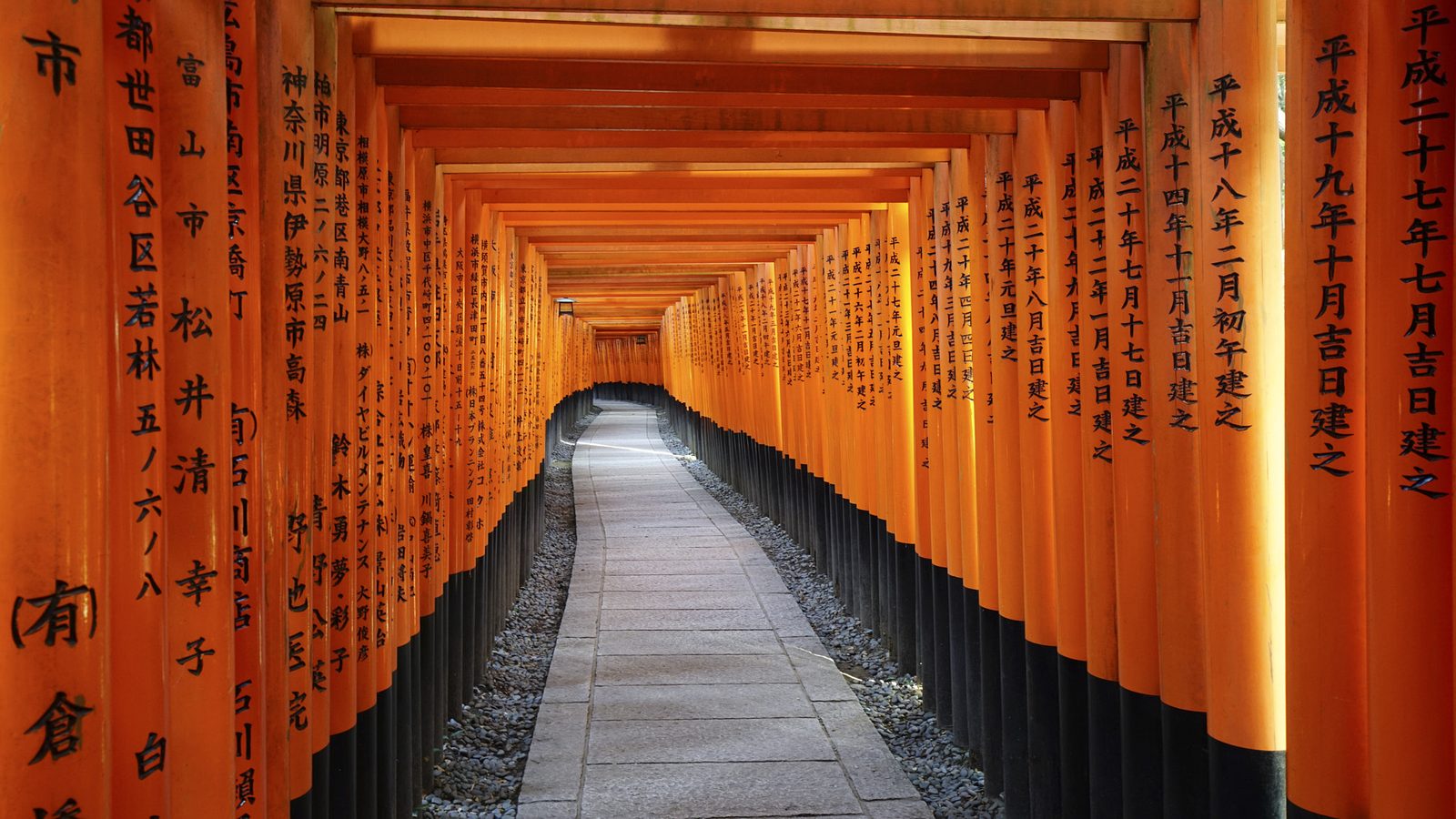

The Golden Route earned its name by being right: Tokyo’s electric present, Kyoto’s preserved past, Osaka’s appetite — strung together by the world’s best railway. This is the itinerary for a first Japan trip of 10–14 days, with the one correction most versions need: Kyoto deserves three full days, not the drive-by it usually gets. Here’s the day-by-day — including the Hakone hot-spring interlude, the Nara deer, the two extensions that upgrade 10 days to 14, and the small logistics (IC cards, luggage forwarding) that make Japan travel feel like cheating.
Journey times are stable; prices are planning figures as of August 2026 — confirm fares and hours when booking. Not affiliated with any operator.
Part of our complete Japan travel hub — entry rules, seasons, the Golden Route, rail passes, and budgets.
Before Anything: The Five-Minute Admin
- Entry: most Western passports get 90 days visa-free, stamped on arrival — set up Visit Japan Web for the QR fast-track (full rules in our Japan visa guide).
- Season: November is the smart pick, sakura needs months of lead time, and Golden Week ambushes the unwary — the full calendar is in best time to visit Japan.
- Money & transit: add a digital Suica/Pasmo to your phone wallet before you land (taps you through every train, konbini, and vending machine), carry some cash for shrines and small restaurants, and skip the pocket-wifi debate with an eSIM.
- The luggage cheat: takkyubin luggage forwarding sends your suitcase hotel-to-hotel overnight for a modest fee — do Tokyo→Kyoto hands-free and thank yourself on the Shinkansen.
Days 1–4: Tokyo — The Electric Present
Day 1: land, activate the IC card, ease in — Shibuya Crossing at dusk, a conveyor-belt sushi dinner, sleep off the jet lag. Day 2: old Tokyo: Senso-ji temple in Asakusa early, the Sumida river, then Ueno’s museums or Akihabara’s electric chaos by taste; izakaya evening in Shinjuku’s lantern alleys (Omoide Yokocho). Day 3: the modern city: Meiji Shrine’s forest calm, Harajuku and Omotesando, teamLab’s digital art (book ahead), Shibuya Sky at sunset. Day 4: day trip — Kamakura (Great Buddha, coastal hiking trails) or Nikko (baroque shrines in cedar forest), or a Tsukiji outer-market grazing morning plus a neighborhood you missed.
Day 5: Hakone — The Exhale
Two hours from Tokyo, the classic Fuji-country circuit: the Hakone loop (switchback railway → cablecar over volcanic Ōwakudani → pirate ship across Lake Ashi), a night in a ryokan with onsen — the single most Japanese 24 hours money buys. Fuji visibility is a lottery (winter mornings pay best); the onsen pays out regardless. Alternative: Kawaguchiko for closer Fuji views.
Days 6–8: Kyoto — Three Full Days, Non-Negotiable
Day 6: east side — Kiyomizu-dera at opening, the preserved lanes of Higashiyama, Gion by late afternoon (geiko district — admire, don’t harass), Pontocho alley for dinner. Day 7: the icons, beaten at their own game: Fushimi Inari’s vermilion torii tunnels at 7 am (the crowds arrive by 9; the upper mountain is empty always), then Arashiyama’s bamboo grove and temple gardens across the afternoon. Day 8: gold and stone — Kinkaku-ji (Golden Pavilion), Ryōan-ji’s rock garden, then the Philosopher’s Path or a tea ceremony; night walk along the Kamo river.
Day 9: Nara — The Day Trip Everyone Remembers
Forty-five minutes from Kyoto: the Tōdai-ji Great Buddha (the world’s largest bronze Buddha in one of the world’s largest wooden buildings) and 1,200 sacred deer who have learned to bow for crackers. Half a day does it; return to Kyoto or roll on to Osaka with luggage forwarded ahead.
Days 10–11: Osaka — The Appetite
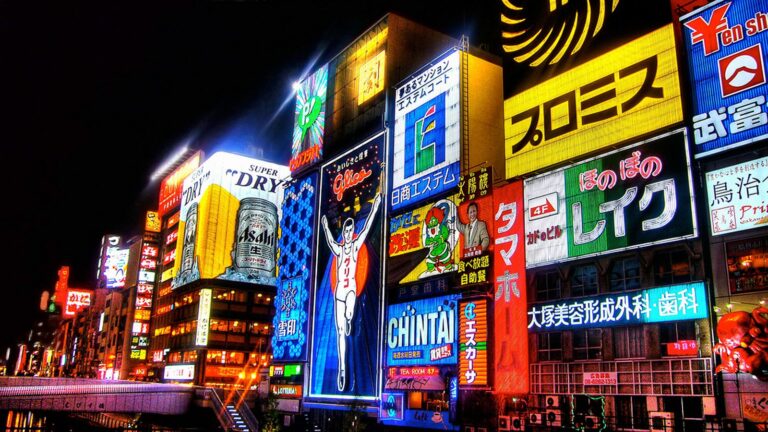
Kyoto’s loud, hungry sibling, 15 minutes away by rail. Dotonbori after dark (the neon canal, takoyaki and okonomiyaki eaten standing), Kuromon market grazing, Osaka Castle’s park, and — with a spare half-day — Himeji Castle, Japan’s greatest surviving fortress, 30 minutes west by Shinkansen. Fly out via Kansai (KIX), which beats backtracking to Tokyo.
The 14-Day Upgrades
| Extension | Days | Why |
|---|---|---|
| Hiroshima + Miyajima | +2 | The Peace Memorial is essential modern history handled with grace; Miyajima’s floating torii and island paths are the poetry after. 1.5–2 hrs from Osaka by Shinkansen |
| Kanazawa | +2 | “Little Kyoto” with a fraction of the crowds: Kenroku-en garden (one of Japan’s official three), a preserved samurai district, and the country’s best seafood market |
Budget Snapshot
Very roughly, per person per day on the ground: backpacker $60–90 (hostels, ramen and konbini mastery), mid-range $120–200 (business hotels/ryokan night, restaurant meals, all entries), comfort $300+. Japan’s open secret: eating brilliantly is cheap — the money goes to beds and trains. Full numbers in our Japan trip cost guide.
Etiquette in Five Lines
- Queue for everything; stand left (Tokyo) on escalators; no phone calls on trains.
- No eating while walking in most contexts — street food is eaten at the stall.
- Shoes off where there’s a step up and slippers waiting; tattoos may need covering at some onsen.
- No tipping — anywhere. It genuinely confuses people.
- Carry a small bag for your rubbish; public bins are rare and streets are spotless anyway.
Frequently Asked Questions
Is 10 days enough for Japan?
Yes — 10 days does Tokyo, Hakone, Kyoto, Nara, and Osaka at a humane pace. Fourteen adds Hiroshima/Miyajima or Kanazawa without rushing anything.
Should I fly into Tokyo and out of Osaka?
Ideally yes — open-jaw tickets (into Haneda/Narita, out of Kansai) save a half-day of backtracking and rarely cost much more.
How do I get from Tokyo to Kyoto?
Shinkansen — about 2¼ hours on the fastest services, running constantly. Reserve a seat on the right side (D/E) for a shot at Mount Fuji around Shizuoka.
Is Kyoto really worth three days?
Yes — it has seventeen World Heritage sites alone. One-day Kyoto is how people end up seeing only crowds; three days with early starts is how you see Kyoto.
Do I need a JR Pass for this itinerary?
For the simple Golden Route, usually not — point-to-point tickets cost far less than the pass since the 2023 price rise. The math flips on longer multi-city loops; our JR Pass guide runs the numbers.
Is Japan good for first-time solo travelers?
Among the best countries on earth for it — safe, navigable, and built on systems that work. English signage is thorough on the tourist trail; translation apps close the rest of the gap.
Sources
- JNTO destination information; operator schedules and current fares confirm at booking
- Photo: Torii gates at Fushimi Inari Taisha, Kyoto — Ilya Grigorik, Wikimedia Commons, CC BY-SA 3.0
Disclaimer: Times and prices are planning estimates as of August 3, 2026 — confirm when booking. Not affiliated with any operator.
Get visa, passport, and travel-planning guides like this one sent straight to your inbox — plus first access to new country guides and scholarship roundups.

.jpeg)